Strengthening Judicial Competence in Morocco through AI Training
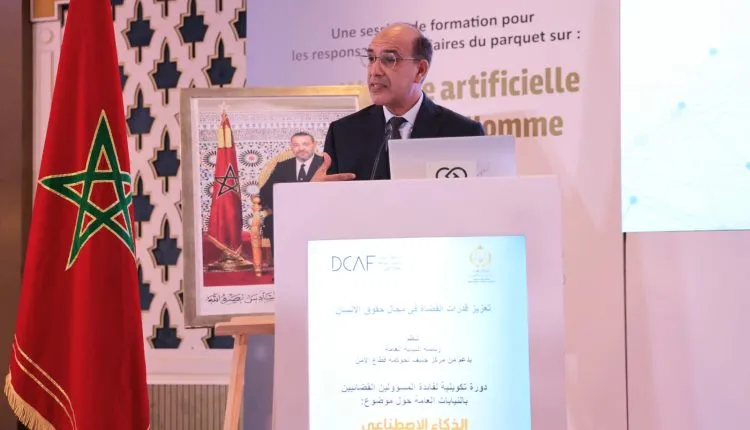
On October 19, 2026, in the historic city of Fes, Morocco, Hicham Blawi, the Attorney General at the Court of Cassation and President of the Public Prosecutor's Office, inaugurated the first training session focused on "Artificial Intelligence and Human Rights." This initiative, organized by the Public Prosecutor's Office with the support of the Geneva Center for Security Governance, aims to enhance the competencies of judicial officials and support the digital transformations currently reshaping the justice sector. The program is aligned with the strategic directions of the Public Prosecutor's Office for the period of 2026-2028, which emphasizes digitization and the integration of modern technologies as key pillars in modernizing judicial work and improving its quality.
Addressing the Challenges of AI in the Justice System
According to a statement from the Public Prosecutor's Office, the organization of this training session comes in response to the rapid advancement of artificial intelligence technologies, which present both opportunities for enhancing operational methods and challenges that necessitate clear regulations to ensure responsible usage while safeguarding fundamental rights and liberties. In his opening remarks, Blawi highlighted the significant potential of artificial intelligence to improve research, investigation, and the analysis of digital data. He noted its capacity to enhance the monitoring of criminal activities and the detection of cybercrimes, as well as transnational crimes. Nevertheless, he stressed the importance of employing these capabilities within a framework that respects the principles of legality and ensures the protection of rights and freedoms.
Furthermore, the Attorney General raised concerns regarding the challenges posed by intelligent systems within the criminal justice system, particularly concerning the accuracy of results and the possibilities for their interpretation and verification. He emphasized the necessity of safeguarding privacy, personal data, and the risks of discrimination, while also ensuring the right to defense and guarantees for a fair trial. Blawi argued that outputs generated by artificial intelligence should not be treated as definitive truths; rather, they require scrutiny, verification, and critical evaluation, distinguishing between technical indicators and evidence that meets the requisite legal standards for admissibility in judicial processes.
The training program, facilitated by two international experts in the field of artificial intelligence, covers various topics including the fundamental concepts of this technology, international governance for its use, its implications for rights and freedoms, and its applications in criminal investigations and digital evidence analysis. The goal of the program is to equip officials within the Public Prosecutor's Office with insights into comparative experiences and best international practices while deepening their understanding of the technical, legal, and ethical challenges associated with the use of artificial intelligence in criminal justice.
In conclusion, Blawi expressed gratitude for the support provided by the Geneva Center for Security Governance in organizing this training initiative. He expressed hope that the sessions would strengthen the capabilities of judicial officials and assist them in navigating the digital transformations in a manner that serves justice and protects rights and freedoms. This initiative reflects a commitment to enhancing the readiness of the judicial system in Morocco to keep pace with technological advancements while ensuring that justice modernization remains contingent upon respecting the law and safeguarding fundamental rights, thus ensuring the conditions for a fair trial.
As reported by assafir24.ma.