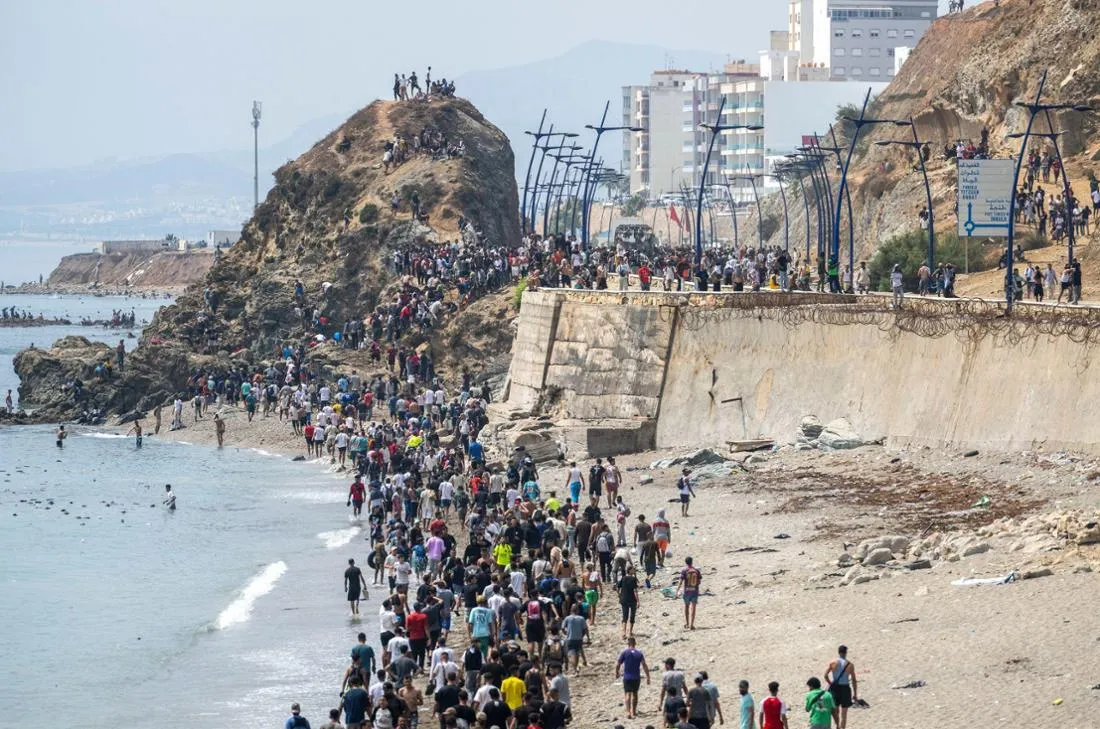

EU Takes Action as Migration Crisis Escalates in Ceuta
The recent migration crisis in Ceuta, a Spanish enclave, has garnered significant attention, particularly after an influx of up to 70,000 individuals entered the region irregularly at the end of August. This situation has prompted the European Union (EU) to take a closer look at the role that social media platforms, specifically TikTok and Meta, may have played in exacerbating the crisis. Many migrants reported that videos and messages circulating on platforms like TikTok created a false impression that the heavily fortified border was suddenly open. This misinformation fostered a widespread belief that accommodations awaited them in Ceuta, paving the way for further travel to mainland Spain. According to the Spanish government, a significant number of these migrants have since returned to Morocco.
In response to these developments, EU Digital Commissioner Henna Virkkunen has indirectly held tech giants like Meta and TikTok accountable for their part in the unfolding crisis. After a meeting with representatives from both companies, Virkkunen suggested that these platforms have not done enough to combat the misinformation that proliferates within their networks. The EU is now committed to enhancing its monitoring of popular social media platforms to better prepare for similar situations in the future.
Stricter Oversight and Growing Concerns Over Tech Giants
Following a special session among EU member states, discussions have emerged around the potential development of early warning systems that would include monitoring social media platforms. In times of crisis, it is imperative that these companies act decisively to maintain the integrity of the digital space, as highlighted by Virkkunen's statements on social media. There is an increasing demand for more oversight and enhanced collaborations with fact-checkers to address the spread of misinformation effectively.
Public sentiment in Germany reflects growing concerns about the power wielded by major U.S. tech companies. A recent survey conducted by YouGov for _Welt am Sonntag_ revealed that 66% of respondents believe that companies like Meta, Amazon, Google, and Apple possess excessive influence in Germany. In contrast, only 18% disagreed with this assertion, while 17% remained undecided. The survey respondents cited worries about Germany's increasing dependence on the U.S., monopolistic structures among tech firms, privacy risks, and the potential manipulation of public opinion through algorithms.
The migration crisis has also stirred political tensions within the EU, particularly between Spain and Italy. In light of the situation, Italy suspended the Schengen Agreement with Spain and instituted border controls. As of Saturday, Spain has reciprocated by implementing entry checks on flights from Italy, with these measures set to remain in effect until September 7, as reported by _Zeit_.
As reported by fr.de.