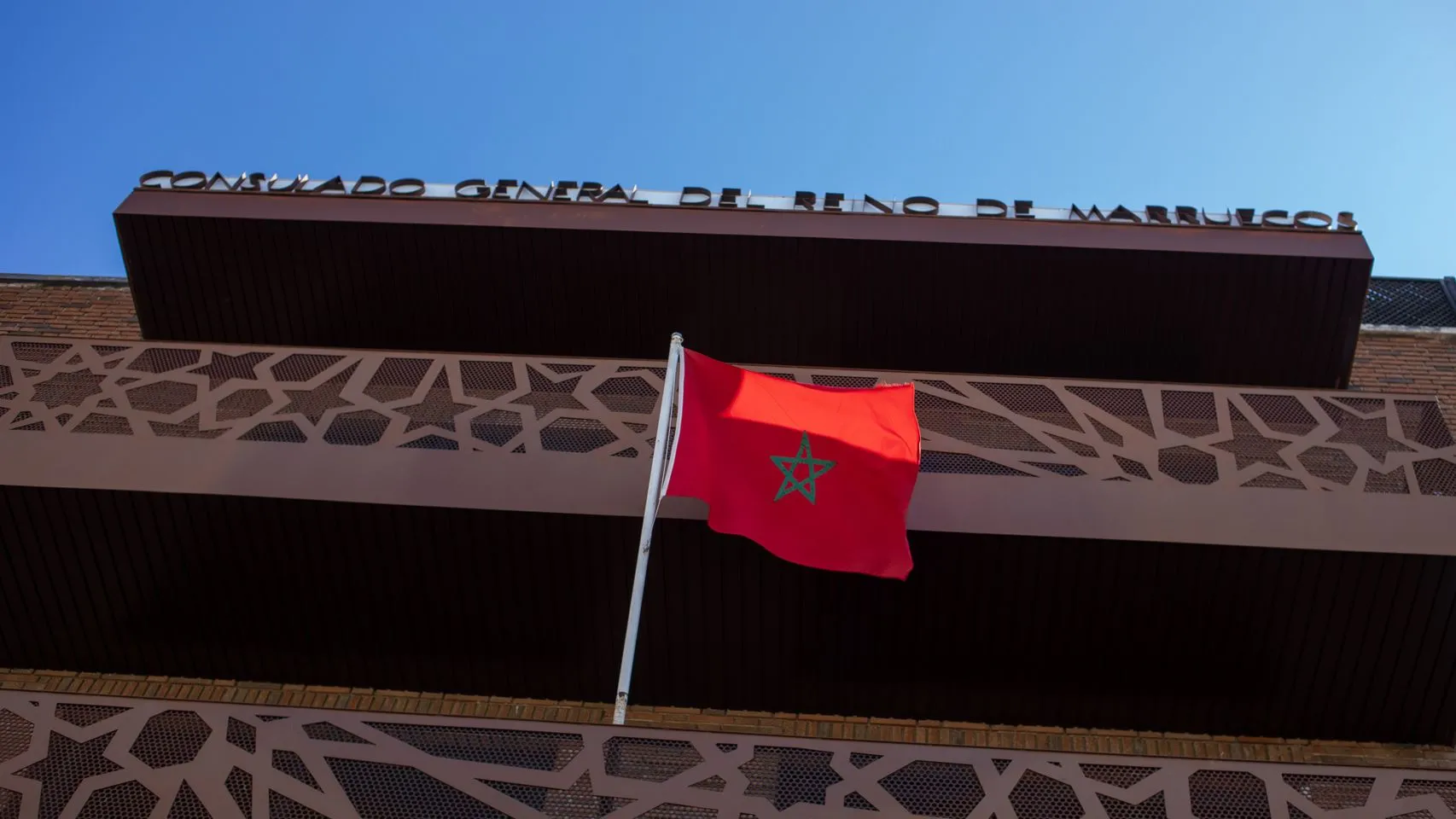

Parliamentary groups within the European Union (EU) are expressing growing apprehension regarding the burgeoning commercial relationship that has developed between China and Morocco, both of which have been identified as preferential partners by the Spanish government under the leadership of Pedro Sánchez. A report compiled by a group of European parliamentarians, which has been accessed by EL ESPAÑOL-Invertia, raises alarms about Morocco's reliability as a partner, describing it as structurally untrustworthy, despite not being overtly hostile towards the Western bloc. The report emphasizes that Morocco's ties with China pose significant risks to the security, economy, and technological sovereignty of the European continent.
This confidential document, attributed by sources in Brussels to reflections from various parliamentary groups, serves to generate opinion currents that can influence future decision-making. Its conclusions emerge amidst ongoing tensions between Morocco and Spain, particularly following the influx of over 70,000 migrants to Ceuta at the end of July, an event that has been linked by a Spanish police report to Moroccan agents. This situation highlights the growing concern over what is described as a "massive Chinese penetration" across various sectors, including industry, telecommunications, intelligence, and military, as a deliberate strategy by Rabat.
The report warns that Morocco is leveraging free trade agreements with the United States and the EU, using its legitimacy before the West to attract Chinese capital and capabilities, effectively using them as leverage against Washington and Brussels. This dynamic increases the dependency on critical technological components produced in Morocco, a country that appears friendly but is becoming a conduit for Chinese influence. Furthermore, it indicates a significant transfer of industrial value, economic rents, and technical knowledge to China, while exposing strategic infrastructure and allied military personnel to cyber and espionage risks from Beijing.
Ultimately, this scenario represents a gradual erosion of Western geopolitical influence in the Maghreb region, favoring Beijing's control. The report posits that Rabat's investment attraction strategy has transcended mere national development, evolving into a geopolitical scheme of commercial triangulation. Morocco is poised to serve as a platform for market penetration, tariff evasion, and capturing critical value chains in service of Chinese interests. Since 2023, commitments from China in sectors such as battery production and critical materials have surged to €10 billion, supported by the emergence of industrial clusters like Tangier Tech, Kenitra, and Jorf Lasfar, enabling Chinese corporations to dominate key segments of the critical components supply chain in North Africa.
This sets up a Chinese production node integrated into Western supply chains, circumventing the regulatory, tariff, and geopolitical costs that China would face if operating directly from its territory. Meanwhile, the West, particularly the EU, maintains energy transition programs that inadvertently reinforce China's supremacy by relying on technological components produced in Morocco. While the EU imposes stringent environmental, labor, and due diligence standards on its manufacturers, it allows the entry of products with varying energy footprints and standards through the Moroccan gateway, creating a structural dependency and vulnerability to price fluctuations or policies dictated by Beijing.
Moreover, the modernization of Morocco's telecommunications infrastructure, heavily reliant on Chinese technology from Huawei and ZTE, raises further concerns. Operators such as Maroc Telecom, Orange Maroc, and Inwi engage in business with Huawei, encompassing various solutions from access radio to cloud services and artificial intelligence applications. The presence of Huawei and ZTE equipment near military training areas and transmission routes poses a structural risk of geolocation of classified personnel and interception of tactical communications. Similarly, the deployment of urban surveillance networks utilizing facial recognition and behavioral analysis technologies from Hikvision in cities like Casablanca, Rabat, Tangier, Marrakech, and Fez potentially provides data accessible to Chinese intelligence operations.
The consolidation of Tangier Tech and the expansion of Chinese operators close to the Tangier Med port further enhance Beijing's influence on the southern shore of the Strait of Gibraltar, through which more than 20% of global maritime trade passes. Tangier Med is Africa's leading container port and a dynamic transshipment hub that connects global value chains, with a notable presence of Chinese logistics operators, storage centers, and trade networks operating under civilian cover. The report also suggests that Chinese penetration in Morocco creates an ecosystem of gradual and covert hybrid threats that combine technological, cognitive, economic, and migratory levers, eroding Morocco's strategic autonomy from the West.
In this context, risks related to cybersecurity, informational influence, economic and diplomatic coercion, and the instrumentalization of migration are highlighted, a factor that may relate to the Ceuta crisis. The document states that with the backing of economic, political, and defense support from China acting as a "strategic insurance," Rabat perceives a diminished exclusive dependency on Brussels. This increased autonomy lowers the political cost of utilizing migration control or border stability as bargaining chips against the EU during moments of discord.
Additionally, Morocco controls approximately 70% of the world’s known phosphate rock reserves, managed through the state-owned OCP Group. This resource is irreplaceable for the production of synthetic fertilizers that sustain global agricultural yields and is increasingly becoming a key component in lithium iron phosphate (LFP) batteries. Therefore, the confluence of Morocco's physical reserves and China's processing capabilities grants both Beijing and Rabat asymmetric power over fertilizer costs in the North American and European markets, directly linking Western food security and energy transition to the Rabat-Beijing axis.
Furthermore, sources within Brussels have noted that the close relationships Spain maintains with both Morocco and China have not gone unnoticed in EU circles. Pedro Sánchez’s evident proximity to Rabat has been confirmed by the Spanish government's reluctance to publicly address the Ceuta crisis. In terms of China, Spain and Beijing have developed a strong commercial relationship, highlighted by Sánchez’s four visits to China and significant investments planned for Spain. Such a relationship raises concerns among the EU and the United States, which have criticized Spain's closeness to China on multiple occasions. As Brussels calls for a reduction in dependency on China in technology and strategic sectors, Spain continues to forge ahead with new trade agreements, remaining resistant to any potential veto.
As reported by elespanol.com.