
Ongoing Challenges in Ceuta Following Migrant Influx
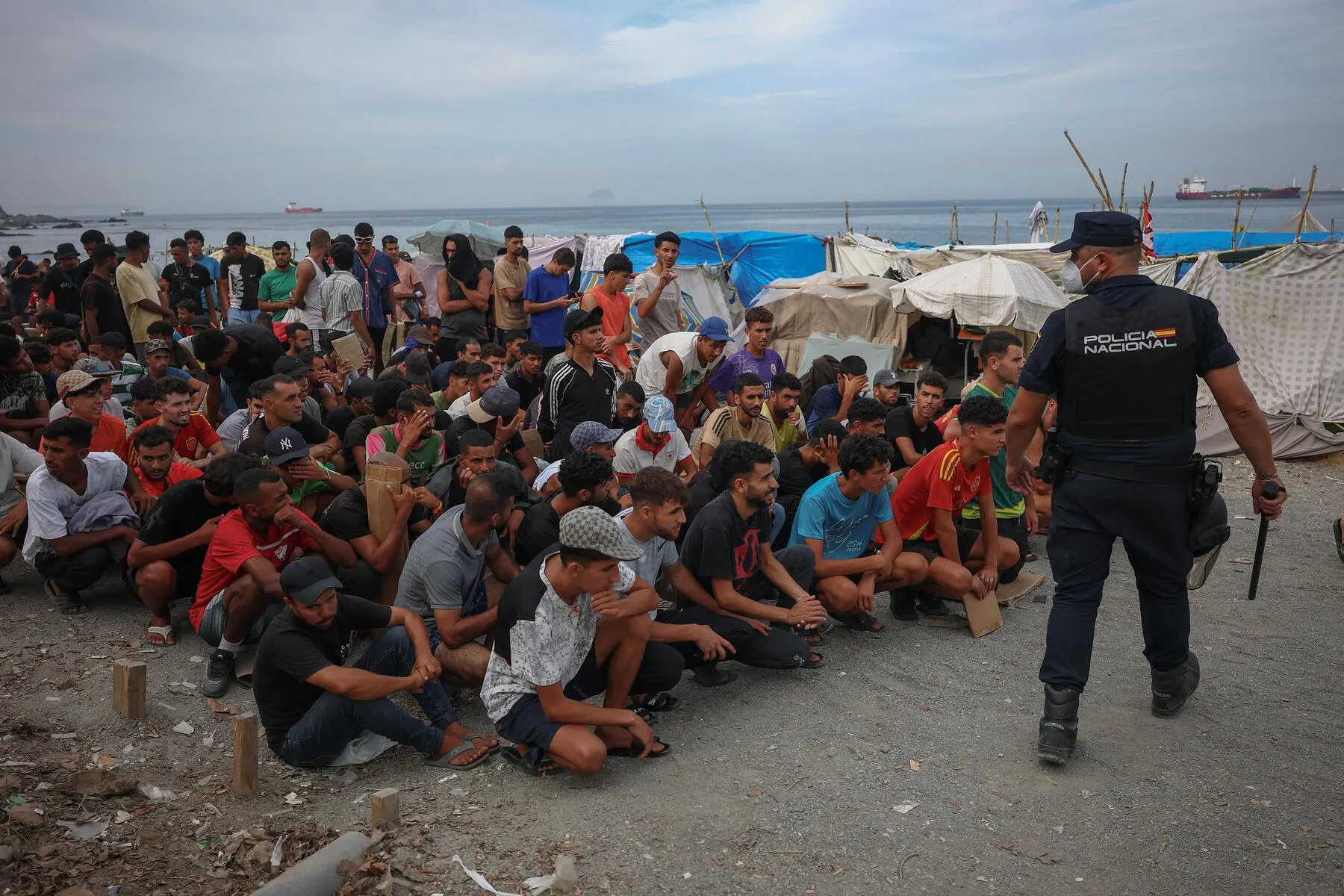
In a recent meeting held in Luxembourg, EU interior ministers deliberated the potential for waiving individual assessments in cases of mass influxes of migrants. The situation in Ceuta, a Spanish border city, remains precarious as normalcy gradually returns, yet it has been far from swift. Two months have passed since a significant surge of approximately 80,000 migrants from Morocco, and the impact of this event lingers visibly in various aspects of life in Ceuta. Some beaches continue to bear the remnants of this crisis, with plastic tarps fluttering in the breeze, clothing drying between makeshift tents and structures, and sandbags placed strategically to prevent flooding from rain. Thousands of refugees and migrants still await clarity regarding their future, underscoring the urgent humanitarian needs in the region.
European Union's Response and Policy Implications
The discussions among the EU interior ministers highlighted the pressing need for a re-evaluation of asylum policies in light of recent events. The proposed 'Rejection Directive' would potentially allow for expedited processes in certain exceptional situations, similar to that witnessed in Ceuta, effectively pausing the fundamental right to asylum for some individuals. Migration Commissioner Magnus Brunner emphasized the necessity of maintaining strong external border protections while also safeguarding human rights, a balancing act that poses significant challenges. Legal experts, such as Walter Obwexer, have pointed out that the European Convention on Human Rights generally prohibits mass expulsions without individual assessments. However, he suggested that if a mass influx compromises a member state's public order and safety, certain exceptions might be warranted.
Austria's Interior Minister Gerhard Karner has expressed strong support for the new regulations, noting that he had proposed the 'Rejection Directive' years ago. The European People's Party (EPP), which includes the Austrian People's Party (ÖVP), recently formalized this demand in a resolution. As discussions progress, the issue will be on the agenda for the upcoming EU summit of heads of state and government scheduled for October 15.
Back in Ceuta, the crisis remains starkly evident, especially along the beaches of Benítez and El Trampolín, where authorities report that approximately 3,000 to 3,500 individuals are still without permanent shelter. Many are living in tents or under plastic tarps, while around 6,000 migrants have been temporarily housed in state-run reception centers. Interestingly, a significant number of those who initially chose to stay are now opting to return to Morocco. In recent weeks, the Spanish government noted that 8,250 irregular migrants have departed Ceuta, with 7,800 doing so voluntarily and 450 being deported.
The pressures of exhaustion, rain, dwindling funds, and low prospects for remaining in Spain contribute to the increasing desire to return. This was evident recently at Benítez beach, where police dismantled makeshift shelters at dawn, transporting residents to a reception center at the border. There, they faced a stark choice: begin an asylum application or return to Morocco. Approximately 200 individuals chose the latter option, leading a police officer to remark that while it may be termed a voluntary return, it often feels compelled.
Spain’s crisis coordinator, Ángel Víctor Torres, noted that the willingness to return appears to rise once formal asylum procedures commence, particularly for Moroccan nationals, who face minimal chances of acceptance due to Morocco's classification as a safe country by the EU. Under the new EU asylum regulations, expedited border procedures are in place for applicants from such nations.
In parallel, Spain is working to improve the humanitarian situation for migrants, with approximately 6,000 state-provided accommodation spaces across six centers and plans for more. The situation for minors is particularly dire, as over 2,400 children and adolescents have been officially registered, with many still living outside official facilities. To aid in addressing these challenges, the EU Commission has pledged €115 million in emergency assistance, while agencies such as Frontex, Europol, and the EU Asylum Agency are collaborating with Spanish authorities to bolster border security and facilitate returns.
During the Luxembourg meeting, interior ministers also approved a new 'Deportation Law' aimed at streamlining and enhancing the efficiency of returns for individuals from third countries residing illegally in the EU. This legislation allows for the establishment of return centers in third countries, with discussions ongoing regarding potential sites in Uganda, Rwanda, and Kazakhstan.
The sudden influx in Ceuta contrasts sharply with broader European migration trends, as the number of irregular border crossings at EU external borders has decreased by 35% compared to the previous year, attributed to increased border controls and closer cooperation with countries of origin and transit, according to Frontex.
As reported by diepresse.com.