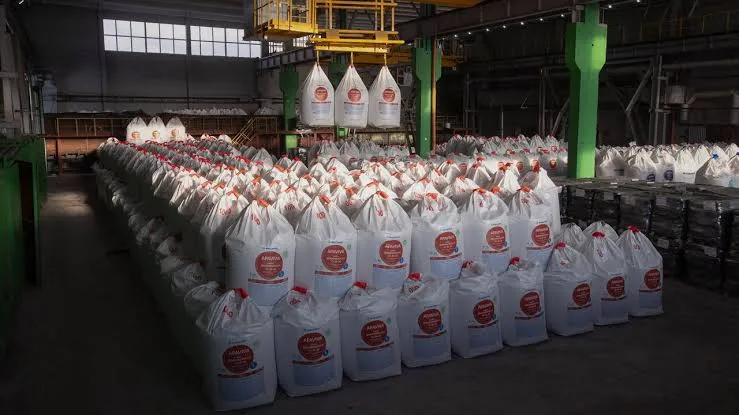

Significant Rise in Phosphate Rock Imports from Russia
In the first half of 2026, European companies imported over €100 million worth of phosphate rock from Russia, according to an analysis of European Commission data by the Swedish environmental firm Ragn-Sells. Russia has maintained its position as the largest supplier to the EU, accounting for more than a third of the Union's expenditure on phosphate imports. The total imports of raw phosphates from Russia reached approximately 436,000 tons during this period. Despite a slight decline in import volumes, the monetary value of these imports increased from €101 million to €105 million, elevating Russia's share of the EU's phosphate import expenditures from 32% to 34%. Morocco remains the second-largest supplier to the EU.
Strategic Importance of Phosphorus for Food Security
Pär Larshans, Chief Sustainability Officer at Ragn-Sells Group, emphasized the critical nature of phosphorus for food security, stating, "A secure access to phosphorus is essential. Europe has prioritized reducing strategic dependencies, yet a third of its expenditure on imported phosphate rock still flows to Russia." Phosphorus is a vital component in mineral fertilizers and animal feed, and the European Union classifies it as a critical raw material. Almost all phosphorus used in European agriculture is imported, as the sole phosphate mine in the EU, located in Finland, contributes less than 10% of the needed supply. Recent disruptions surrounding the Strait of Hormuz exemplify how quickly global supply chains can falter. For such an essential nutrient like phosphorus, Europe cannot afford to rely entirely on external sources.
Innovative solutions are emerging; for instance, EasyMining, a subsidiary of Ragn-Sells, has developed methods to recover high-purity phosphorus from sewage sludge ash. However, it is important to note that according to current EU regulations, recycled phosphorus remains prohibited in animal feed. Sweden has urged the Commission to request a risk assessment from the European Food Safety Authority (EFSA) as a preliminary step towards revising this restriction. Debby Porter Laffitte, Press Officer for Ragn-Sells Group, stated, "Europe is not lacking in phosphorus; it lacks access to its own resources. A simple update to an annex in the Raw Materials Act could unlock significant investments, strengthen its competitiveness, and reduce dependency on Russia."
As reported by live.deutsche-boerse.com.