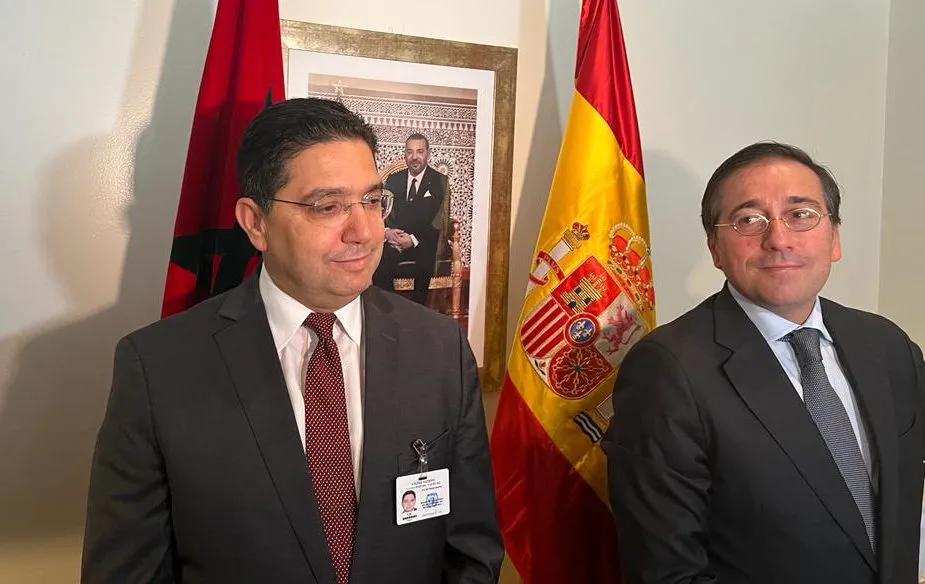

The European Commission issued a call on Thursday for Morocco and Spain to maintain their collaborative efforts in the repatriation of migrants who entered the city of Ceuta during a significant surge of crossings that took place approximately two weeks ago. The Commission emphasized the critical importance of ongoing coordination between the authorities of both countries to ensure the return of the affected individuals in accordance with established regulations.
During a press conference held in Brussels, European Commission spokesperson for Home Affairs, Guillaume Mercier, stated that the European Union views the continued cooperation between Rabat and Madrid as an essential necessity. He noted that the "vast majority" of individuals who crossed into Ceuta have already returned to Morocco, but he underscored that efforts in this area must persist.
This European stance came in the wake of comments made by Moroccan Justice Minister Abdellatif Ouahbi to the EFE news agency, where he criticized the Spanish approach to the immigration issue. He explained that while Morocco is actively working to prevent migrants from departing, Spain is seemingly accepting them. He also warned of the potential suspension of the extradition agreement between the two countries due to what he perceives as a lack of reciprocity from the Spanish side.
Regarding Morocco's threat to suspend the agreement, the European Commission refrained from delving into the core of the dispute. Mercier regarded the matter as a "bilateral issue" between Morocco and Spain, asserting that it is not within the Commission's purview to comment on it. However, he commended the efforts made since the onset of the crisis to manage the situation and secure the return of individuals who crossed into Ceuta.
The European official confirmed that return operations are governed by legal frameworks currently being applied, and he pointed out that a team from the Directorate-General for Migration and Home Affairs of the Commission is present in Ceuta to assess on-the-ground needs and identify potential forms of European support. Furthermore, he clarified that both Frontex and the European Asylum Agency are prepared to enhance their presence and support on the ground if necessary.
As reported by assahifa.com.