
Urgent Action Required for Migrant Returns to Morocco
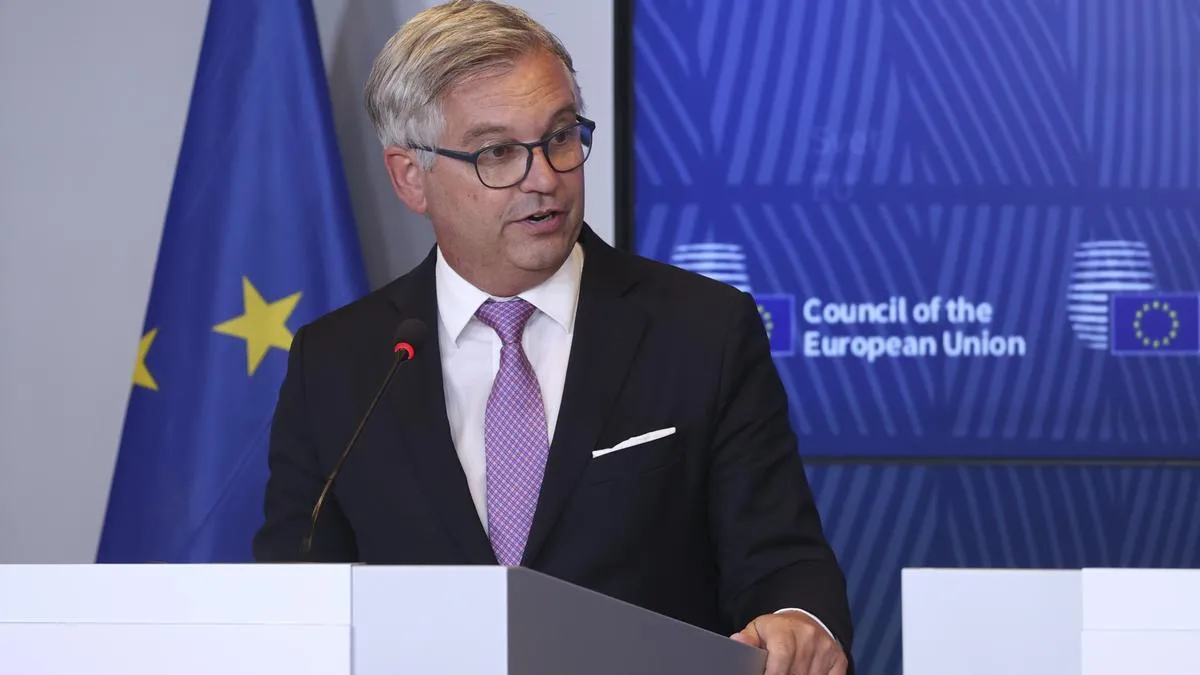
The European Commissioner for Home Affairs and Migration, Magnus Brunner, emphasized the urgent need to swiftly return all individuals who entered Ceuta illegally on July 30 and 31 to Morocco, during a plenary session of the European Parliament on Tuesday. Brunner stated unequivocally that the priority is clear: those who entered illegally and lack the right to remain must be rapidly returned to Morocco. His comments came during a debate in Strasbourg addressing the hybrid threats and the exploitation of migrants in Ceuta.
Brunner highlighted that there are still "thousands" of migrants in the autonomous city awaiting repatriation, including approximately 2,000 unaccompanied minors. This situation, he pointed out, creates significant pressure and public order challenges in a territory that spans less than 20 square kilometers. Expressing solidarity with the local population of Ceuta, which faced an unprecedented influx of individuals nearly equivalent to its 80,000 residents, Brunner extended condolences to the families of those who lost their lives at sea while attempting to reach Spain from Morocco. He passionately declared that these tragedies highlight the lethal nature of human trafficking and that every effort must be made to combat it.
Brunner noted that the crisis on July 30 and 31 tested the European Union’s resilience and response capabilities; however, he emphasized that the majority of those who entered illegally were returned to Morocco within hours. Importantly, he reassured that no one breached the Schengen area due to the effective actions of Spanish authorities and cooperation with Morocco. The commissioner plans to visit Madrid this Thursday for discussions with key ministers regarding territorial policy and democratic memory, interior affairs, and social inclusion, security, and migration.
Although not mentioned in his address, it was previously announced that Brunner would also meet with Alberto Núñez Feijóo, the leader of the Popular Party (PP). He advocated for all member states to implement the tools available in the European Migration and Asylum Pact to strengthen borders and expedite returns. Brunner urged that lessons learned from the Ceuta crisis be utilized to prevent similar situations in the future within the EU, stating, "The events and images from Ceuta indicate that we must redouble our efforts. Both traffickers and illegal migrants need to understand that our Union will enhance its defense." He made a further call for the public to be informed that the situation is "under control."
Call for European Solidarity and Legal Compliance
While acknowledging Morocco's cooperation in facilitating repatriations, Brunner pointed out that more efforts are necessary to curb irregular departures and combat human trafficking organizations. Additionally, he underscored the importance of coordinating with major digital platforms to combat misinformation and called for improved early warning systems to detect new migratory movements. Enhancing Frontex's capacity to bolster border control and monitor criminal networks and their online activities was also part of his agenda.
Iratxe García, the president of the Socialists and Democrats group and leader of the PSOE in the European Parliament, insisted that "Ceuta is not alone" and demanded a European response grounded in solidarity. She articulated that "Ceuta is Spain, Ceuta is Europe, and when a border is under pressure, Europe must respond with solidarity, not division.” García emphasized the necessity for expulsions to comply with legislation concerning minors, immigration law, and European and international regulations.
Furthermore, she urged the PP and Vox to facilitate the distribution of unaccompanied minors among the autonomous communities they govern. Dolors Montserrat, a euro-deputy from the PP and Secretary General of the European People’s Party, characterized the events in Ceuta as a "textbook hybrid war" and held Spanish Prime Minister Pedro Sánchez accountable for failing to react despite being aware of the situation. Montserrat also pointed fingers at Morocco, demanding it act with respect, legality, and recognition, asserting that "Ceuta is not abandoned, negotiated, or sold; it is always defended."
Jorge Buxadé, a euro-deputy from Vox, labeled the incident as “an act of territorial invasion, illegal and violent occupation,” accusing Sánchez of behaving "like an agent of Morocco.” Oihane Agirregoitia, a euro-deputy from the PNV, revealed that the Moroccan government had sent an email to all members of the European Parliament, committing to readmit all affected individuals, including Moroccan citizens, unaccompanied minors, and nationals from third countries. She urged, "This must happen because the images and information we are receiving tell a different story," adding that if Morocco aspires to host the 2030 World Cup, it should demonstrate the capacity to handle these situations and other social inequalities.
Lastly, Estrella Galán, a euro-deputy from Sumar, condemned the use of the crisis to settle scores with progressive Spain, attributing responsibility for the situation to Morocco, the United States, and Israel due to their "geopolitical interests."
As reported by noticiasdenavarra.com.