
Advancements in Renewable Energy Storage in Morocco
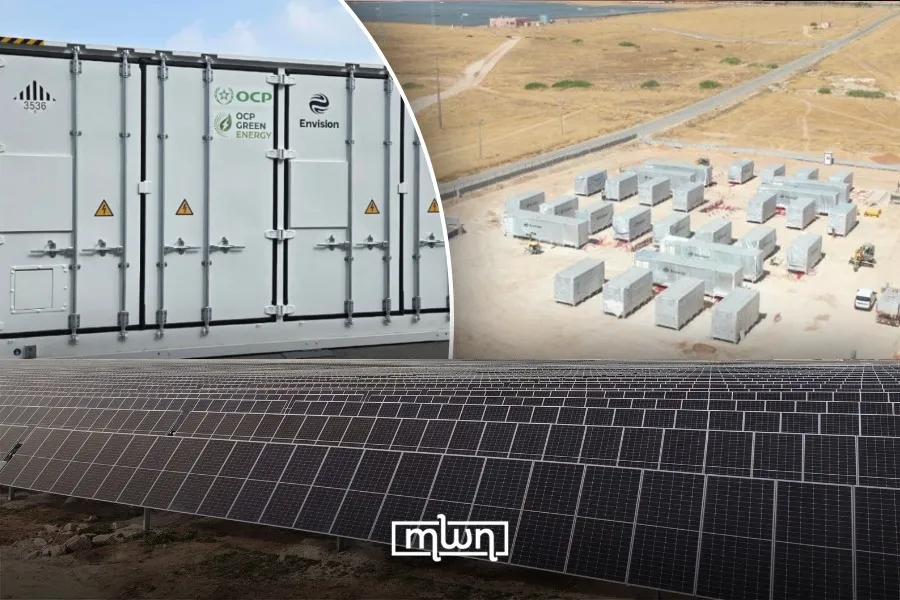
Morocco has made a significant leap toward enhancing its renewable energy infrastructure with the activation of the nation’s first large-scale lithium iron phosphate (LFP) battery storage facility, powered by OCP Green Energy in Benguerir. This Battery Energy Storage System (BESS), boasting a capacity of 25 MW and 125 MWh, is strategically located at OCP Group's mining site and is capable of storing enough electricity to power operations for up to five hours. The initiation of this project marks the commencement of a phased commissioning process that will lead to its full operational status soon.
The implementation of this battery storage solution addresses a pivotal challenge associated with solar energy generation: the temporal mismatch between electricity production and industrial demand. As solar energy is inherently dependent on sunlight, the ability to harness and store this energy for later use is crucial. At the Benguerir site, the battery storage system enables OCP to store excess electricity generated by its solar plant during daylight hours, allowing the company to utilize this stored energy during peak demand periods. This strategic capability not only enhances operational flexibility but also reduces reliance on grid power during high-cost peak hours, ultimately leading to an anticipated 25% reduction in electricity costs during these times.
Integrating Solar Generation with Energy Storage
The new battery facility builds upon the first phase of OCP Green Energy's solar development, which has successfully established 202 MWp of photovoltaic capacity across three locations: 67 MWp at Benguerir, 30 MWp at Foum Tizi, and 105 MWp at Oulad Fares in Khouribga. These solar installations play a critical role in supplying renewable energy to OCP's mining and industrial operations. The introduction of the battery system adds an essential layer of efficiency to this existing infrastructure by allowing the company to retain electricity generated in excess of immediate demands. This advancement ensures that OCP can optimize its use of solar power, preserving energy for future use rather than losing the advantage of daytime production when demand decreases.
Moreover, the battery system contributes to overall power system stability by providing essential services such as frequency regulation and reactive power compensation. Omar Kadir, General Manager of OCP Green Energy, emphasized that this project represents a pivotal phase in the company's renewable energy strategy, highlighting storage as a natural extension that aligns variable renewable outputs with continuous industrial needs, thereby enhancing the reliability of energy supply. He further noted that this battery storage solution could facilitate deeper integration of renewable electricity within Morocco’s national power grid, enhancing flexibility and resilience.
The total investment in this ambitious project amounts to approximately MAD 170 million (around $18 million), which encompasses the procurement of batteries, power-conversion equipment, civil and electrical works, technical studies, integration, and project management. OCP Green Energy chose Envision as the technology supplier through a rigorous qualification process, with the contract being finalized in late 2025. Notably, the procurement occurred at an opportune moment within the battery market, allowing the company to secure competitive pricing for capital costs. Additionally, the project has garnered international climate finance support, receiving $20 million from the Clean Technology Fund (CTF), an initiative spearheaded by the African Development Bank aimed at promoting clean technology projects, including energy storage solutions.
Morocco’s advancement toward renewable energy is not solely confined to the confines of the Benguerir project; it signifies a broader commitment to addressing the inconsistencies between renewable energy generation and consumption needs. As the nation continues to expand its solar and wind capacities, energy storage solutions like this battery facility will be instrumental in mitigating the gap between production and consumption times. Large industrial consumers, such as OCP, are particularly well-positioned to leverage these advancements, as their operational frameworks demand a reliable and steady electricity supply. The Benguerir facility serves as a practical demonstration of how renewable energy can transition from being sporadic in nature to becoming a stable and predictable source of power for industrial use.
In tandem with this initiative, OCP is also working to foster the development of a technological ecosystem for battery production within Morocco. Partnering with Mohammed VI Polytechnic University (UM6P), OCP is focusing on the development of lithium iron phosphate materials derived from phosphoric acid, leveraging its extensive expertise in phosphate chemistry. Research efforts have already yielded LFP materials and associated intellectual property, with ongoing work aimed at scaling up applications to create a comprehensive LFP-based lithium-ion battery ecosystem in Morocco.
In summary, the Benguerir battery project is not just a standalone achievement; it is part of OCP Green Energy's larger vision of transitioning from merely producing renewable electricity to the comprehensive generation, storage, and management of clean energy tailored to meet industrial demands. Established in 2022, the subsidiary aims to fulfill OCP Group's energy requirements through sustainable practices while reinforcing renewable energy as a cornerstone of the group's industrial competitiveness and decarbonization efforts.
As reported by moroccoworldnews.com.