
European Parliament Approves Controversial Resolution
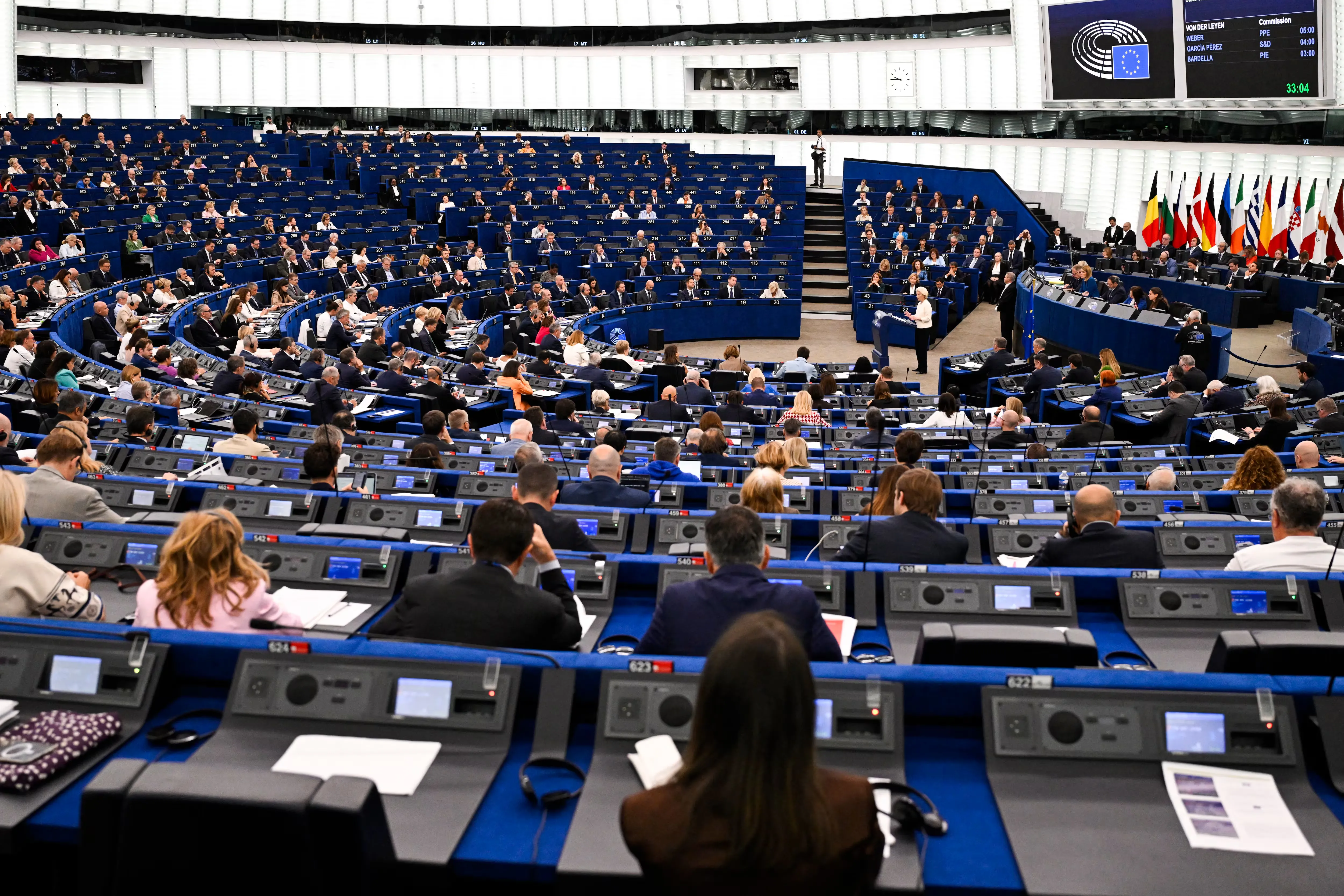
The European Parliament has recently passed a non-binding resolution, spearheaded by the European People's Party (EPP), concerning the mass entries into Ceuta. The resolution garnered 339 votes in favor, 225 against, and 16 abstentions, largely supported by right-wing and far-right factions. The EPP immediately hailed the vote as a European endorsement of its allegations against Morocco. Some Spanish media outlets went even further, claiming that the European Parliament had attributed an 'invasion' to Morocco and described it as a hybrid warfare operation. However, the resolution does not explicitly state this.
The document is indeed strong in its language, criticizing the actions of the Spanish government, labeling the regularization process as a supposed 'pull factor,' demanding expedited returns, and calling for greater cooperation from Morocco on border and migration issues. Yet, it does not explicitly identify the Moroccan state as the perpetrator of 'hybrid warfare' nor does it assert that Moroccan authorities orchestrated the entries, nor does it provide evidence of a planned operation against Spain.
Nuanced and Precise Language in the Resolution
The language chosen by the European Parliament deserves careful interpretation. According to the official summary released by the institution, Members of the European Parliament condemned 'the massive irregular crossings to Ceuta' and denounced 'the instrumentalization of irregular migration as a tool of hybrid warfare against the territorial integrity of a EU member state.'
While the resolution mentions 'Morocco' and 'hybrid warfare' within the same document, it avoids making a direct accusation. The EPP and certain media outlets later established that connection, presenting an institutional conclusion that the European Parliament itself did not articulate. The resolution's structure further reinforces this distinction. When referring to Morocco, it asks its authorities to 'fulfill their responsibilities and commitments' concerning border management, returns, and migration cooperation, but it does not demand that they 'assume responsibility' for having organized the events. The responsibilities of a partner country do not automatically equate to culpability for a specific incident.
Additionally, the Parliament warns that preferential access to the European market and funding must be contingent on effective cooperation, which is a clear political and economic pressure. However, it does not represent a decision to suspend aid or the Association Agreement with Morocco. In fact, amendments proposed by the far-right Vox party calling for immediate suspension of funding and halting the agreement did not succeed, as highlighted by several reports.
The European Parliament also calls for the rapid return of individuals who 'do not have the right to remain in the EU,' including unaccompanied minors, but emphasizes that this must be done in full compliance with European and international law. It does not endorse the automatic return of all individuals who entered Ceuta nor does it eliminate the individual examination of potential protection applications.
In the aftermath of the vote, the EPP's interpretation became even more generous, with party leader Alberto Núñez Feijóo labeling the resolution as a 'historic document' and asserting that it supported the 'immediate' return of all individuals who entered irregularly into Ceuta. Feijóo suggested that this would include Moroccan citizens, nationals from third countries, and unaccompanied minors, despite the resolution explicitly stating that only those without the right to remain in the EU should be returned.
This resolution serves multiple agendas, providing something for each actor to claim as a victory. The EPP can leverage it as a reprimand against the Spanish government and associate Morocco with the term 'hybrid warfare.' Vox aims to establish mechanisms for suspending and reclaiming funds in case of a lack of cooperation, despite failing to cut funding immediately or halt the Association Agreement. The European Parliament has also tightened its border discourse, and certain media outlets highlight the proximity between 'Morocco' and 'hybrid warfare' as a more impactful headline than the resolution itself.
As reported by es.le360.ma.