
The Ongoing Migration Crisis in Ceuta
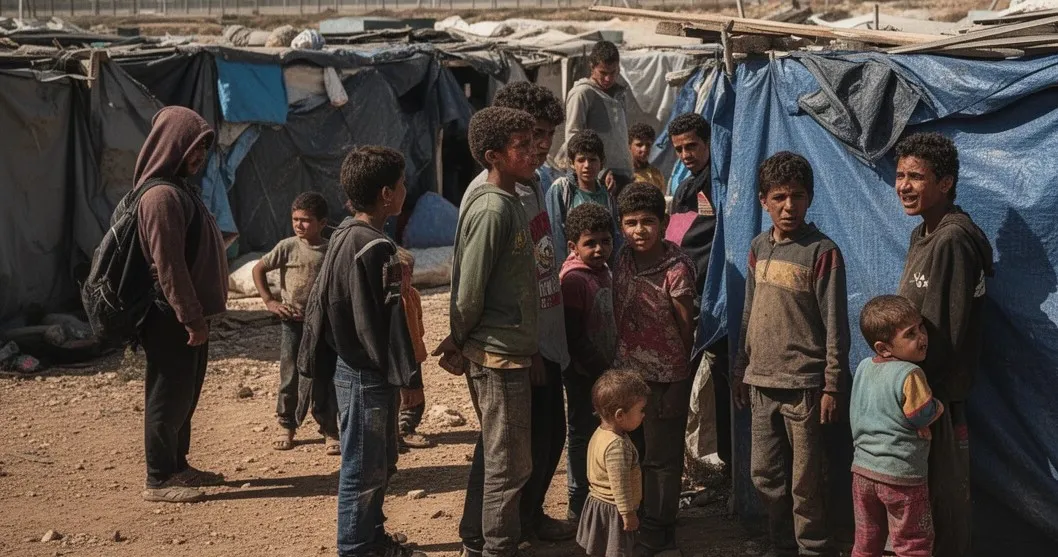
The European Commission has firmly reiterated its expectation for the repatriation of all individuals who entered Ceuta irregularly by the end of July. This includes unaccompanied minors, although Spain is obligated to ensure their special protection. As the political landscape surrounding the migration crisis in Ceuta evolves, the Spanish government is grappling with the challenge of temporarily housing thousands of migrants while simultaneously calming the situation. In this context, Brussels has increased its pressure on Madrid, emphasizing that all individuals who remain illegally in the Spanish exclave following the significant border crossing at the end of July should be returned to Morocco.
Legal and Humanitarian Considerations for Minors
The treatment of unaccompanied minors has sparked considerable controversy. The European Commission has made it clear that European repatriation rules apply to them as well, albeit with special legal protections for children and adolescents. This stance has been reiterated multiple times in recent days. According to Commission spokesperson Markus Lammert, Brussels expects that all individuals who continue to reside illegally in Ceuta will be returned. The Commission's interpretation of European return law encompasses unaccompanied minors, referencing both existing repatriation rules and the new European guidelines established in June.
Brussels insists that returns must comply with EU law and Spain's international obligations. This message underscores the EU's support for Spain in managing the crisis while also expecting organized repatriation for those lacking residency rights in Spain. The situation for minors is particularly sensitive, with the Spanish government preparing to relocate approximately 500 girls from Ceuta to the Spanish mainland to alleviate the tense atmosphere in the exclave and provide adequate accommodation for vulnerable children.
However, Brussels is demanding further information from Madrid regarding the specifics of this relocation plan. Reports indicate that the Commission learned of the concrete plans through media outlets and is seeking clarification on how minors will be accommodated and cared for. The crux of the conflict lies in the procedural aspects: while the EU pushes for repatriations, Spain must navigate the special protection requirements for each affected minor. The Commission's position does not grant Spain the authority to send minors back to Morocco without thorough assessments.
Unaccompanied minors are entitled to special protections under both Spanish and European law, necessitating that safeguards are in place for their transfer to family members, legal guardians, or appropriate care facilities in their home country. Consequently, the indiscriminate repatriation of all minors presents significant legal challenges. A similar dispute arose following the 2021 migration crisis, leading to the return of several hundred minors to Morocco without adhering to essential individual evaluations and procedural steps, which Spanish courts later deemed legally problematic.
The current circumstances starkly contrast a simple political choice between 'repatriation or reception.' As discussions continue in Madrid and Brussels regarding the next steps, the local situation remains tense. Recently, approximately 1,800 migrants were relocated from Playa del Trampolín to prepared accommodations, aimed at dismantling one of the largest makeshift camps in recent weeks and moving individuals from public spaces to organized facilities. Although these temporary shelters aim to stabilize the situation, the existing capacity is insufficient to accommodate all individuals still present in Ceuta, creating a precarious balancing act for authorities. They must dismantle improvised camps while ensuring adequate space, resources, and security structures.
The crisis is increasingly morphing into a domestic political conflict. Alberto Núñez Feijóo, leader of the opposition Partido Popular, is advocating for the return of all individuals who arrived in Ceuta at the end of July, explicitly including minors. Meanwhile, Juan Jesús Vivas, the president of the autonomous city of Ceuta, is calling for a swift resolution and urging the central government for more support. In contrast, Pedro Sánchez's government is committed to a differentiated approach that recognizes the need for repatriation while ensuring humanitarian aid and the special protection of minors.
This divergence highlights two distinct political strategies: the opposition's push for rapid returns to Morocco versus the government's focus on legal procedures and the protection obligations towards minors. Ultimately, successful repatriation hinges on cooperation with Moroccan authorities, who have indicated their willingness to accept individuals returned after entering Ceuta illegally, a policy that also extends to unaccompanied minors.
The collaboration with Rabat is crucial for Spain, as Ceuta, despite being Spanish territory, is situated right at the Moroccan border, making it one of the EU's most sensitive external borders. Brussels is not limiting its response to political demands; the European Commission has offered Spain assistance in managing the crisis, potentially involving European structures like Frontex, Europol, and the EU Asylum Agency (EUAA), along with financial resources from the EU Fund for Asylum, Migration, and Integration. However, as of August 20, there had been no formal request from Spain for this support, according to the Commission.
The unfolding events demonstrate how rapidly a crisis in a small Spanish exclave can escalate into a European-wide issue. Ceuta, as part of Spain, also constitutes an EU territory, and the approximately 20-kilometer border with Morocco serves as a crucial EU external boundary. Consequently, developments in Ceuta impact not only the Spanish government but the entire European migration and border policy landscape.
This ongoing dispute underscores a fundamental challenge: Europe aims to exert greater control over irregular migration and accelerate repatriations while also adhering to extensive legal obligations for particularly vulnerable groups—especially children. In the days to come, the focus will likely be on how Spain addresses the situation of minors still in Ceuta, deciding which children will be accommodated on the mainland, which repatriations to Morocco are legally feasible, and how the necessary individual assessments will be conducted. Concurrently, Madrid must negotiate with Rabat regarding the practical implementation of potential repatriations. For the EU, the political line is clear: individuals without residency rights in Ceuta should be returned to Morocco. For Spain, the challenge now lies in executing these repatriations effectively while ensuring that they remain legally sound.
The migration crisis in Ceuta is far from over; instead, it is evolving into a fundamental test of Spain's migration policy and the European Union's ability to balance security, repatriation, and the protection of particularly vulnerable individuals at its external borders.
As reported by spanienpress.com.