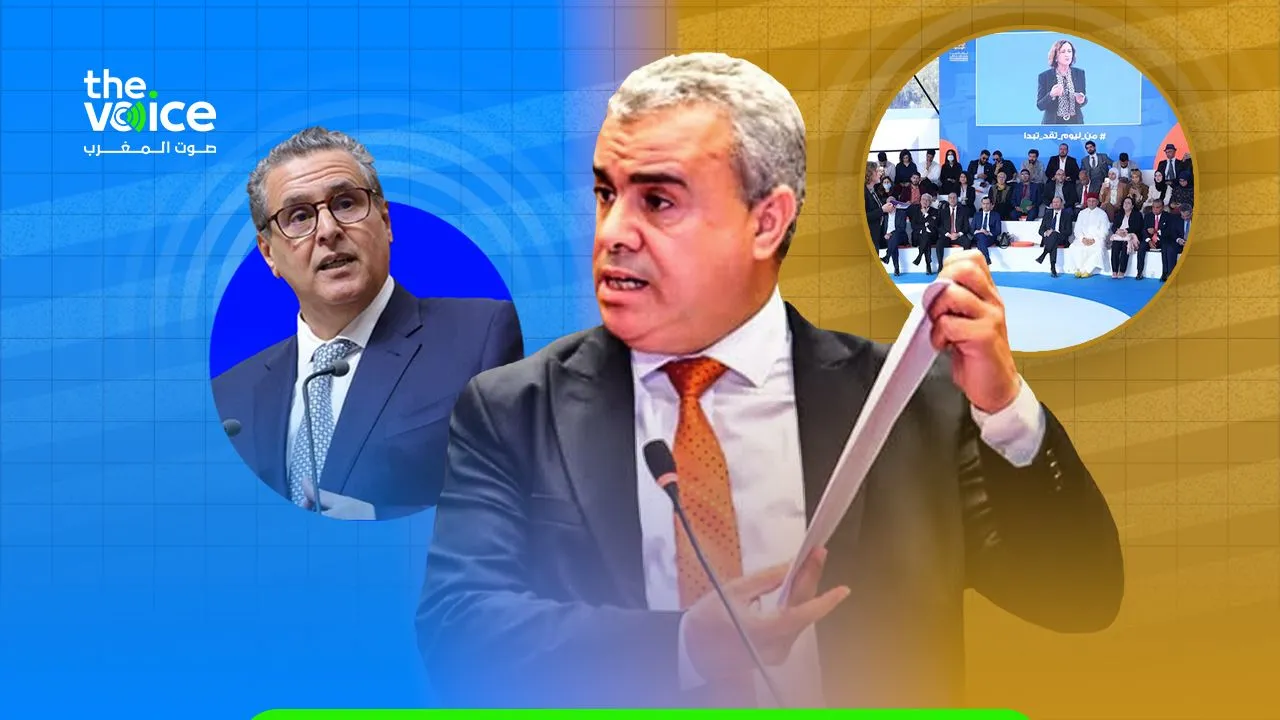

Amid Promises, Questions Arise on Social Commitments
As the current Moroccan government, led by Aziz Akhannouch, approaches the final weeks of its term (2021-2026), significant discussions are unfolding regarding its fulfillment of social commitments made to citizens. Despite notable advancements in social protection initiatives and the launch of direct social support, critics argue that the persistent issues of poverty, social vulnerability, rising living costs, widening disparities, and weak employment opportunities continue to heavily burden Moroccan households. Khalid Al-Satti, a parliamentary advisor from the National Union of Labor in Morocco, expressed that the government’s social performance has not met the expected commitments outlined in its official declaration, emphasizing that job creation remains a critical area of weakness in its overall achievements.
Ongoing Challenges in Health Coverage and Poverty Reduction
Among the government's pledges made in 2021 were the implementation of comprehensive social protection, lifting one million families out of poverty and vulnerability, expanding the middle class, creating favorable economic and social conditions for a burgeoning rural middle class, and reducing social and regional disparities to below 39%, down from 46.4% according to the Gini index. However, Al-Satti pointed out that despite the progress made in social protection and the initiation of direct support schemes, the quality of health services and the actual affordability of treatment costs present significant challenges. He highlighted that approximately eight million Moroccans remain without health coverage, as estimated by the Economic, Social, and Environmental Council, raising serious questions about the underlying causes of this exclusion and the effectiveness of the policies implemented to address it.
Regarding the promise to lift one million families from poverty, Al-Satti indicated that the circulating statistics do not reflect the realization of this goal, with some data suggesting an increase in the number of impoverished families to around two and a half million, alongside a growing prevalence of social vulnerability. In discussing the impact of the COVID-19 pandemic, inflation, and drought, he asserted that these factors should not overshadow the government's responsibility to adopt more effective social policies targeting the affected demographics. Furthermore, he noted that despite discussions surrounding social dialogue outcomes and wage increases, the achievement of expanding the middle class has been limited in the eyes of many citizens. The rising living costs and escalating prices of essential goods and fuels have eroded the benefits of wage increases, leaving a significant portion of the middle class facing increasing challenges in maintaining their standard of living.
Al-Satti cautioned that private sector workers have largely not benefited from similar wage increases, except for the recent rise in the minimum wage, which critics argue remains insufficient for ensuring a dignified living. Additionally, a large segment of retired Moroccans has been excluded from these wage hikes. He stressed that the government has also failed to meet its commitment to create conditions conducive to the emergence of a rural middle class.
In light of the government’s promise to reduce social and regional disparities, Al-Satti noted that despite significant efforts and financial allocations made for this purpose, these disparities remain substantial. He referenced the previous year’s Throne Day speech, which highlighted the existence of a two-speed Morocco, particularly regarding the differences between urban and rural areas, and even within urban contexts themselves. He provided evidence that available indicators do not support the announced goal of reducing the Gini index to below 39%. Concerning the creation of a million new jobs, he indicated that the reported figures, coupled with an unemployment rate exceeding 13%, reflect the challenges in fulfilling this commitment. Ultimately, he concluded that employment remains one of the primary weaknesses in the government’s record, urging the government to acknowledge the failures of the "Awrash" and "Opportunity" programs, which have resulted in significant repercussions for youth, women, and degree holders. He warned that the continued inadequacy in generating decent job opportunities exacerbates social instability and deepens the gap between citizens' expectations and the actual outcomes of public policies.
As reported by thevoice.ma.