Connecting Cultures Across the Atlantic
Although Morocco and Mexico are separated by the vast Atlantic Ocean, the deep-rooted connections between their traditions, architecture, and cultural expressions reveal a relationship that transcends geographical boundaries. An academic initiative is currently underway to document these shared roots through the oral heritage of Bab Taza, located in the Chefchaouen province of Morocco. This research project, titled "Compilation, Translation, and Critical Edition of Oral Tradition Texts from the Chefchaouen Region (Morocco)," is led by Caterina Camastra, a researcher from the Cultural and Social Representations Research Unit (UDIR) and a faculty member at the National School of Higher Studies (ENES), Morelia Unit.
As reported by es.le360.ma, the study is unique in its kind within the state of Michoacán and has few precedents across Mexico as a whole. Its primary aim is to register and translate traditional tales, riddles, lullabies, and proverbs, which are intricately linked to the agricultural cycles of the region.
A Rich North African Heritage
The project is a collaboration between the National Autonomous University of Mexico (UNAM) and the Institute of African, Euro-Mediterranean, and Ibero-American Studies at Mohammed V University in Rabat. Moroccan researchers Rajae El Khamsi and Kaoutar El Amri have also played significant roles in this endeavor, fostering a long-standing academic dialogue between Morocco and Mexico. Camastra argues that the cultural heritage that arrived in Mexico following the Spanish conquest cannot be solely categorized as European, as the Iberian Peninsula itself was shaped by centuries of coexistence and exchange among Arab, Amazigh, and European cultures during the Al-Andalus period.
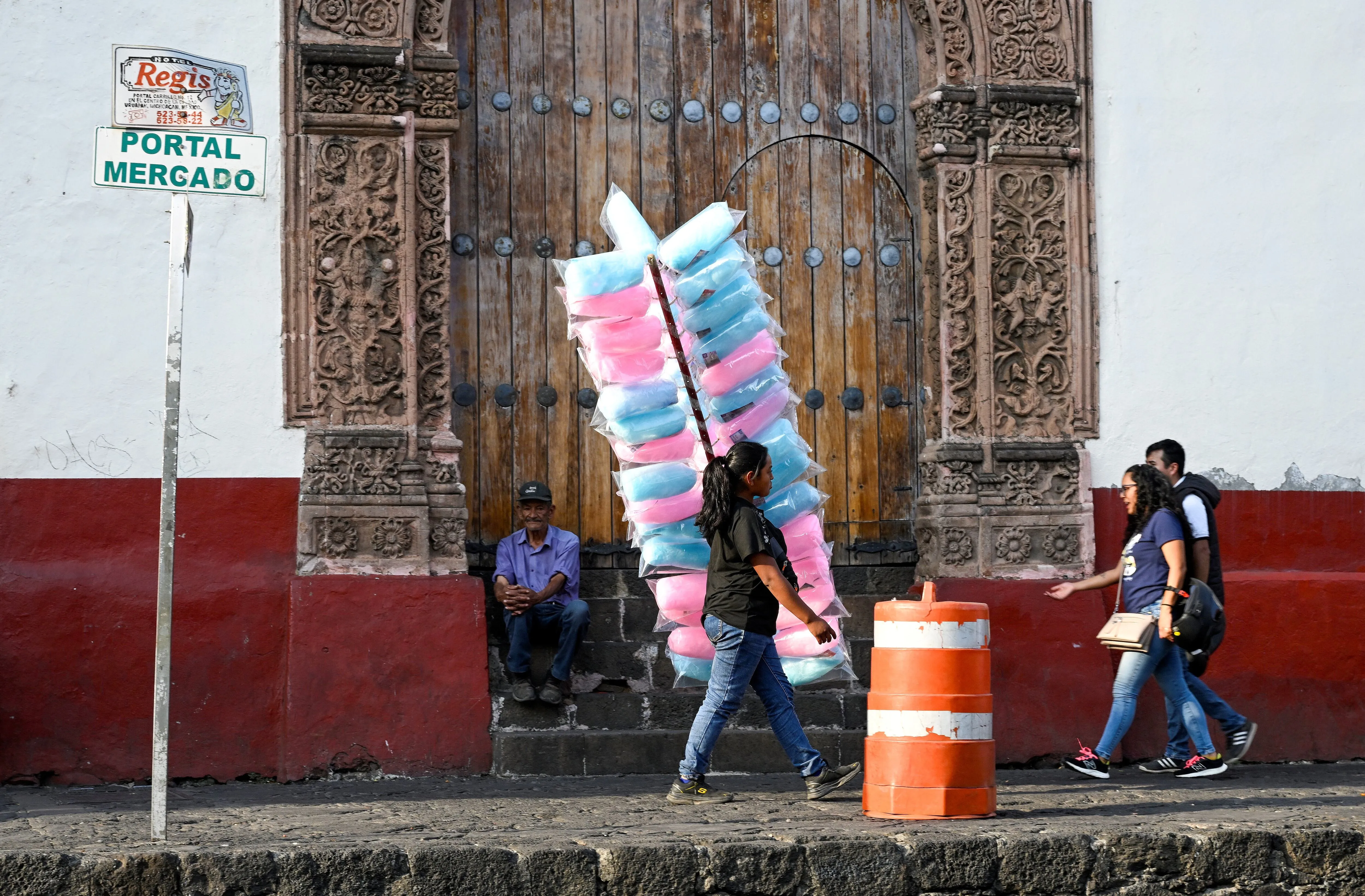
This North African influence is evident in various aspects of Mexican daily life, from the architecture of colonial homes, characterized by their inner courtyards and porticoes, to specific artisanal and ornamental expressions. For instance, Camastra points to the coffered ceilings of the ancient convent of San Francisco in Tzintzuntzan, recognized as one of the rare preserved examples of Mozarabic architecture, as well as the decorative motifs found on the walls of Erongarícuaro and Pátzcuaro, which bear similarities to those seen in Moroccan walls.
"In Michoacán, we have one of the few surviving examples of original Mozarabic colonial architecture: the coffered ceilings of the old convent of San Francisco in Tzintzuntzan. Additionally, on the walls of Erongarícuaro and Pátzcuaro, decorative elements such as stone shells identical to those found in Moroccan ramparts persist. When you dig a little, you start to realize that we are not as far apart as it seems," explains Camastra.
The initiative is now in its second year and is supported by the Program for Support of Research Projects and Technological Innovation (PAPIIT) from UNAM's General Directorate of Academic Personnel Affairs. Its leaders emphasize that the goal is not only to gather materials for academic study but also to establish a genuine exchange of knowledge with local communities. Researchers from UDIR and ENES Morelia are involved through the National Laboratory of Oral Materials (LANMO).
As part of this practical dimension, Andrés Arroyo Vallín, a member of the laboratory, will conduct a workshop titled "Make a Documentary with Your Cell Phone" in Morocco, aimed at youth from the Bab Taza Youth Center. Additionally, the Mexican documentary "Ruta de Cortés," produced by the LANMO team, is slated for screening in both this locality and in Tangier. These activities enjoy the support of the Moroccan-Ibero-American Friendship Association in Tangier, the Dream Zone cultural association in Chefchaouen, the Bab Taza Youth Center, and the ecocultural project Dar Khizana.
Among the significant outcomes of this research will be the publication of an open-access and free bilingual book, which will include the transcription of materials in their original language, the local linguistic variant known as darija jbli, along with their Spanish translations. The translation process poses one of the greatest challenges of the project due to the unique characteristics of the region's dialect and the oral nature of the stories passed down through generations. Additionally, the initiative plans to produce a documentary dedicated to Chefchaouen, its oral traditions, and the individuals who contribute to their preservation.
The collaboration will continue during the Middle East and North Africa Studies Week (SEMONA), scheduled to take place from August 21 to 28, 2026, in Mexico City. As a follow-up to this meeting, Morelia will host a talk in September or October focusing on the representation of traditional midwives in Arabic literature.