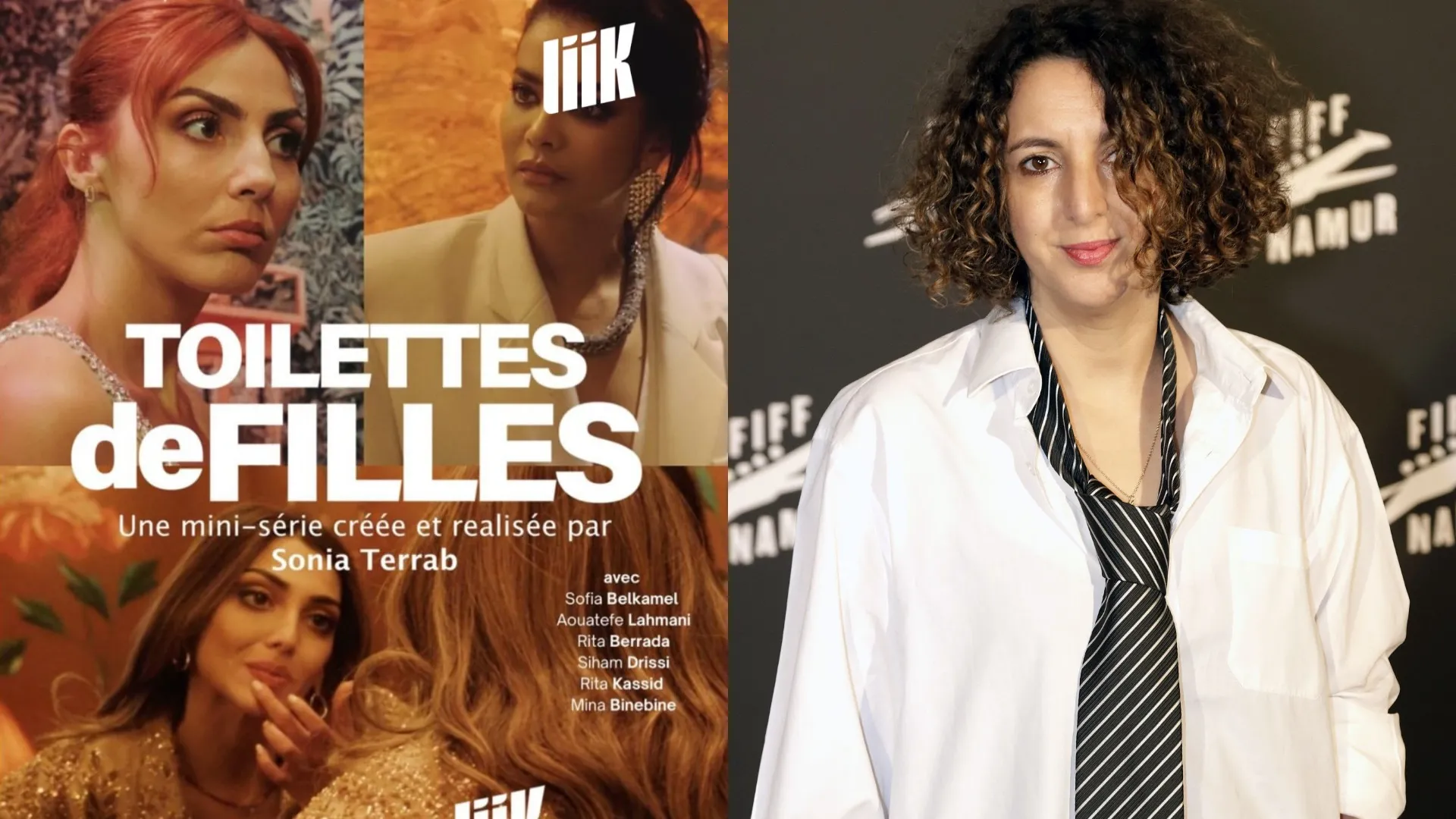

Sonia Terrab continues her exploration of spaces that narrate women's experiences in Morocco, transitioning from her earlier work 'Marokkiat' to her latest web series 'Girls' Toilets'. In an insightful interview with lopinion.ma.
'Girls' Toilets', filmed in Marrakech, transforms a mundane yet significant location of Moroccan nightlife into an intimate theatrical stage. Over the course of seven episodes, each lasting under three minutes, the series delves into themes of harassment, friendship, and the facades that women often wear. Selected for the 16th edition of the Marseille Web Fest in October 2026, this series stands out as one of the most compelling entries in the emerging genre of micro-dramas in Morocco.
The premise is simple yet carries profound social and dramatic weight: Inès, Lina, and Kenza—three childhood friends portrayed by Sofia Belkamel, Rita Berrada, and Aouatefe Lahmani—find themselves night after night in the toilets of Marrakech's most iconic nightlife venues, on the hunt for an unknown aggressor, whose identity and motives remain shrouded in mystery. Their quest intertwines with unexpected reunions, heartfelt confessions shared amidst touch-ups of makeup, and years of accumulated tension due to their separation. Co-produced by Fablabchannel and Meknech, with executive production by New Generation Production, 'Girls' Toilets' will be available on the Liik platform before a full release on YouTube. The project also received support from the French National Cinema Center (CNC).
A Social Space Unveiled: From Casablanca's Streets to Marrakech's Toilets
To understand the roots of 'Girls' Toilets', one must trace back to 2017 and Terrab's first project, 'Marokkiat', where she engaged women on the streets of Casablanca to share significant episodes from their lives as Moroccan women. This initiative aimed to shed light on sexual harassment in public spaces, empowering women to reclaim an environment that often feels hostile. Released coincidentally with the global rise of the #MeToo movement, 'Marokkiat' resonated internationally, highlighting the violence, harassment, and misogyny that women navigate daily.
Nearly a decade later, Terrab sought to extend her investigation into the spaces where the feminine condition in Morocco is often articulated, albeit subtly. She chose a setting that is both trivial and deeply symbolic: the toilets of bars, restaurants, and clubs at night. Describing this space as one of the few remaining social mixing areas in Morocco, she emphasizes its role in fostering moments of camaraderie among women, where laughter, advice, and spontaneous encounters can occur. Terrab initially considered documenting this aspect but ultimately rejected the idea, fearing that placing a camera in this 'safe space' for women would compromise its sanctity and safety. Instead, her producer, Claire Leproust, who had previously garnered acclaim for the Algerian web series 'El'Sardines', suggested a pivot to fiction, enabling Terrab to explore a new narrative realm.
The series was originally envisioned with longer episodes but evolved into a format that ranges from one and a half to three minutes, a decision finalized just four months prior to its release. This shift aligns with a broader trend that Terrab has noted: the rise of two-minute micro-dramas, a format that originated in China and is now gaining traction in Europe and Morocco. Terrab admits to wanting to be a pioneer in this new territory, even if it meant adapting her narrative style during the editing process.
Short Format Challenges: Navigating Distribution and Editorial Choices
The choice of distributor is a pivotal element in this strategy. Liik, a media platform founded by journalist Rachid Arhab focused on Maghreb and Mediterranean pop culture, has built a comprehensive editorial framework around the summer launch of the series. This includes interviews with the actresses, discussions with the director, and narrative accounts of the series' release. For Liik, this marked their inaugural venture into fiction, a milestone that Terrab describes as a shared gamble.
Through 'Girls' Toilets', Terrab aims to portray Marrakech's nightlife beyond stereotypical representations of despair, showcasing women who celebrate, dance, and laugh in carefully selected venues. After previously filming in a slum, she chose to depict luxurious toilets not as a hierarchy of aesthetics but to illustrate the diversity of Moroccan identities and the social fractures that exist within the country. She emphasizes that there is no singular way to portray Morocco or to embody Moroccan identity, and that joy, resilience, and self-affirmation can coexist harmoniously.
The production was made possible by Mohamed Kaghat, the executive producer based in Marrakech, who supported the sensitive subject matter being filmed in equally sensitive locations. The positive reception, including numerous messages from female viewers recognizing locations or sharing similar experiences, confirms that a format born from distribution constraints can also foster collective recognition. Its selection for the Marseille Web Fest underscores a commitment to providing Moroccan women with platforms where their voices can finally be expressed candidly.