
Understanding the Tensions: Iran's Influence in the Region
In a recent discussion hosted by Hespress, experts and researchers deliberated on the contentious role of Iran in the Middle East, highlighting the ongoing debates surrounding its influence and the potential sectarian ramifications. The dialogue showcased contrasting perspectives, with some warning of the dangers posed by Iran's expanding influence, while others advocated for a more nuanced understanding rooted in geopolitical dynamics and respect for international relations.
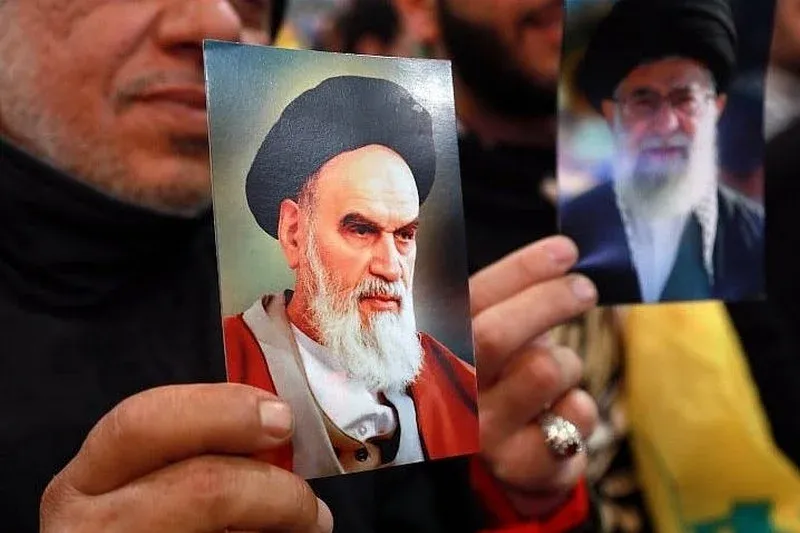
A prominent figure in this discourse, Hamza Khaldi, expressed a particularly cautious and critical stance towards Iran, describing it as a "latent enemy" that disguises itself within the fabric of the Muslim community. He articulated that this hidden threat is, in his view, more perilous than visible adversaries such as Israel. Khaldi elaborated on Iran's constitutional framework, which intertwines state governance with a theological foundation, specifically the doctrine of the Guardianship of the Islamic Jurist. This ideology grants the Supreme Leader extensive powers that, according to Khaldi, often transcend national sovereignty, thereby complicating the political landscape in the region.
Moreover, Khaldi accused Tehran of harboring expansionist ambitions, intent on revitalizing historical Persian dominance in the Middle East. He referenced statements from Iranian officials asserting their influence over several Arab capitals, underscoring a strategic pursuit of regional hegemony. The discussion further touched on the extensive human costs associated with Iranian interventions in various Arab nations, notably citing the significant casualties during the Syrian conflict, particularly in the Ghouta region. Khaldi argued that these statistics raise critical questions regarding Iran's role and its implications for the stability of Arab states embroiled in armed conflicts in recent years.
Contrasting Views: Political Pragmatism and the Regional Landscape
In contrast to Khaldi's assertions, researcher Idris Kanbouri offered a different perspective during the Hespress program, emphasizing the need for political pragmatism in addressing regional issues. He rejected the notion of equating Iran's role with that of Israel, reaffirming that Israel remains the "strategic enemy" of the Arab and Islamic nations. Kanbouri’s stance against military action against Iran is rooted in a commitment to respecting state sovereignty and adhering to international law, cautioning that justifying aggression against one state could set a dangerous precedent for future conflicts in the region.
Kanbouri reflected on the historical nature of the Morocco-Iran relationship, noting that it has predominantly been characterized by political rather than religious dimensions. He criticized the Arab world's failure to establish a competitive Shiite authority that could counteract Persian influence, pointing out that Iran has adeptly leveraged the Palestinian cause as a symbolic and political tool to penetrate Sunni circles. This strategy has, in turn, afforded Iran a degree of legitimacy among some segments of the Arab populace, particularly in light of the declining traditional Arab support for the Palestinian cause.
As the discussion unfolded, it became evident that both speakers raised pertinent issues regarding the internal dynamics within Morocco itself. Khaldi urged for strengthening the national front against potential sectarian or political infiltrations, encouraging Moroccans to rally around the country's official religious authority, which is based on the Maliki school of thought and the institution of the Commander of the Faithful. He warned against succumbing to Iranian slogans or being swayed by sectarian rhetoric that could lead to the emergence of ideologies foreign to Morocco's religious identity.
As reported by hespress.com.