
The Intersection of Geography and Culinary Art in Mohamed Nakhli's Work
In the latest installment of his series "Words on the Road," Dr. Mohamed Nakhli has presented a thought-provoking text in French titled Faites entrer l’artiste. The translation of this title posed a challenge due to its clever wordplay reminiscent of the phrase Faites entrer l’accusé. For the sake of clarity, I have tentatively translated it as "Let the Artist In". At first glance, the narrative appears to recount a lunch gathering in a palm oasis among a lawyer, a university professor, and the renowned artist Mahy Benbih. However, a deeper examination reveals a rich tapestry of geographical, cultural, theoretical, and aesthetic insights, where the location serves not merely as a backdrop but as a sensory and mnemonic apparatus that generates meaning and redistributes the relationship between Marrakech, the sea, the artist, the body, and reality.
Reimagining Place Through Artistic Expression
The central thesis of the text posits that place is not a static geography but an experience shaped by the senses, memory, and art. Marrakech evokes the sea, transforming the dining table into a map, and food becomes a bridge connecting disparate places and cultures. From the outset, the notion of "Let the Artist In" suggests that the artist's entry into a space is not merely a physical act but rather a transformative passage that allows for the rediscovery of the place itself. The artist's presence reconfigures the environment both cognitively and aesthetically, fostering a dialogue between the lived experience and the interpreted space.
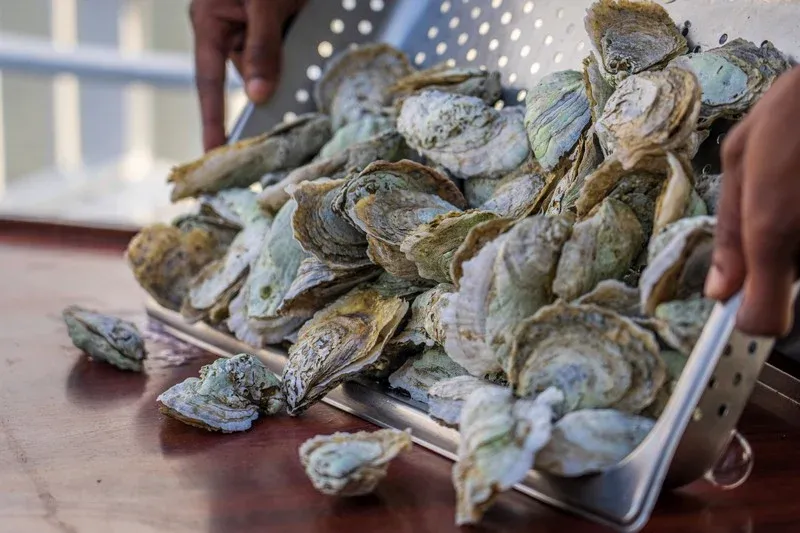
Marrakech, as introduced in the text, is clearly articulated as a reference point—January, cold, a palm oasis, a home in an upscale neighborhood, silence, guests, and a table set for dining. Yet, this geographical reference quickly evolves, shifting from a tangible location to a sensory and imaginative landscape. The bouillabaisse served at the table, for instance, conjures another geography: Marseille, Provence, and the Mediterranean Sea. In this way, a single dish offers the potential to reconstruct a map, as Marrakech—an inland city distanced from the sea—invites the ocean through taste, scent, warmth, and memory.
Interestingly, the sea is not presented as a visible entity but rather as a sensory imprint. The absence of the sea, paradoxically, feels more present than its physical appearance, encapsulating the text's overarching logic: geography is not solely defined by physical distance but also by the potency of sensory and imaginative evocation. Thus, Marrakech transcends geographical boundaries, becoming a Mediterranean moment where the red city intersects with the sea, the near with the distant, and the present with memory.
The choice of a palm oasis is not arbitrary; it exists in the geographical imagination as an intermediary space between desert and urbanity, harshness and intimacy, expansiveness and enclosure. The text enriches this imagery by incorporating silence as a fundamental component, transforming the place into an aesthetic experience. Silence becomes a spatial material, suggesting that the narrator describes not only what is visible to the eye but also what the self feels within the space. We witness a geography of the senses: a place perceived through silence as much as through sight, through scent as through form, and through memory as through physical presence.
The home, as depicted in the text, evolves from a mere dwelling into a living museum, marking a shift in the function of space. While the home serves as a space for habitation, the museum embodies a realm for exhibition, memory, and preservation. Between these two concepts, a third space emerges—a lively environment that retains the traces of time without solidifying into a mere artifact.
The dining table assumes a critical geographical role; it is not just a vessel for food but a micro-stage where geographies and cultures converge. Here, we find Marrakech as the host city, guests from diverse backgrounds, a Mediterranean French dish, a Moroccan artist with multifaceted experiences, old friendships rekindled, and discussions about art, narrative, institutions, and marginalized spaces. The table functions as a map; instead of characters traversing regions and countries, the countries themselves gather around the table, leading to a journey of ideas and cultures without necessitating physical movement.
In essence, travel within this text does not require the physical relocation of the body across geography; one can traverse through aroma, taste, memory, conversation, and art without leaving their seat. The bouillabaisse, as a cultural and geographical signifier, not only carries the essence of Marseille, Provence, and the Mediterranean but also redistributes this geography within the space of Marrakech. Food transcends mere flavor; it conveys climate, water, memory, culture, and history, transforming the salty scent into a memory and warmth into a promise of sea breezes. Hence, the senses produce a geography that traditional maps fail to convey.
Before taking a seat at the table and concurrently with it, Mahy Benbih enters the narrative, altering its internal structure. Initially, the place serves as the focal point of experience, but soon the artist himself—or, at the very least, his name and journey—becomes a cultural space intersecting multiple geographies. His transition from mathematics to painting and from equations to art represents more than mere biographical information; it signifies that the essence of his experience lies in crossing fields. As a writer, painter, and sculptor, the multiplicity of his artistic forms mirrors the plurality of places within the text.
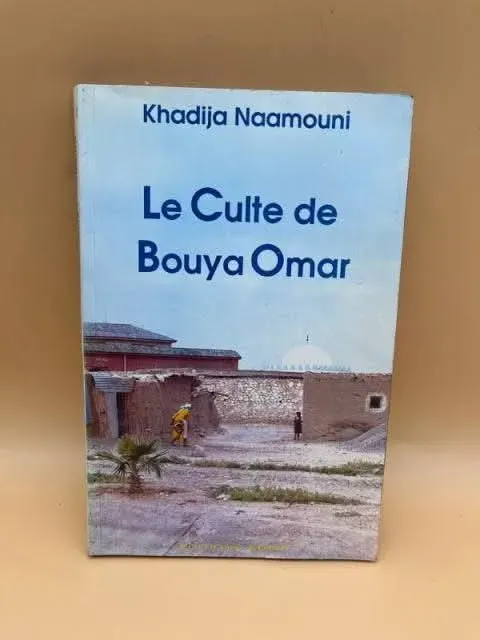
In this context, if modern geography is a network of relationships, the artist transforms into a complex human geography, juxtaposing mathematics with art, writing with form, reality with imagination, Morocco with the world, and memory with the present. Thus, the artist becomes a passageway between diverse cognitive and aesthetic systems. The concept of the maze gains special significance within the text, initially appearing in Mahy Benbih's discourse on bureaucracy and later reemerging in the description of Bouya Omar, a place where the fates of marginalized individuals intersect. Here, a juxtaposition occurs between two mazes: an administrative maze produced by bureaucratic apparatuses and a social and human maze represented by a space where memory, bodies, relationships, and manifestations of exclusion accumulate.
Consequently, the narrative transitions from a geography of place to a geography of the social system. The location no longer merely bears its natural significance but starts to allude to relationships of power, institutions, and the periphery. The text does not merely view Bouya Omar as a narrative subject but as a reality that transcends the realm of imagination. An implicit aesthetic theory emerges: great art does not always begin with the invention of reality but with the ability to unveil what reality conceals from itself. The artist does not fabricate tragedy but reveals it; he does not create place but renders it visible in its nakedness. Thus, the geography of the periphery enters the aesthetic realm, not to beautify what is ugly but to restore its visibility and capacity for thought.
The text proposes a compelling idea that some artists do not select their subjects; rather, the subjects choose them. This shifts art from a realm of free aesthetic choice to one of ethical responsibility toward reality. When marginalized places select the artist, writing becomes a form of testimony. In this sense, place is not a silent backdrop but rather a narrative and ethical agent that calls forth those who can listen to its silence. The function of art is revealed not merely as the beautification of the world but as a compulsion for the eye to perceive what it has become accustomed to ignoring. Here, beauty transcends the notion of decoration, evolving into an ability to reveal truth and redistribute vision and perspective.
According to this perspective, art is neither a mere replica of reality nor a separation from it. It embodies a dual practice: a fidelity to reality while simultaneously transforming it. Beauty does not emerge from fleeing the world but from reorganizing it into an artistic form that allows for new ways of seeing. Consequently, art becomes a means of confronting the world rather than an escape from it.
The text frequently revisits the notions of coincidence and encounter: the invitation, sitting beside an old friend, conversation, the arrival of the dish, the revival of memories, and then parting. However, in the end, coincidence is reinterpreted; lunch transforms from a transient event into a pivotal moment. The gathering reconstructs the place, the meal conjures the sea, the artist evokes Bouya Omar, the conversation revisits its artistic trajectory, and memory reintroduces friendship into focus. Thus, places multiply within a single moment.
In the language of Mikhail Bakhtin, this lunch can be viewed as a "chronotope" in miniature—a point where time intersects with space within a singular event. However, time and space do not remain static; they open to other times and places, from Marrakech to Marseille, from the Mediterranean Sea to Bouya Omar, from the present at the table to the memory of art and friendship. Ultimately, the essence of this gathering—the impact it leaves after the moment has passed—becomes a lasting testament to the interplay of geography, memory, and artistic expression.
As reported by nedaelwatan.com.