
The Remarkable Geography of Vélez de la Gomera
Situated just 85 meters apart, Morocco and Spain share one of the world's most intriguing borders at the tiny enclave of Vélez de la Gomera. This unique geographical feature lies off the northern coast of Morocco near Alhucemas and is known as Badis in Morocco. Unlike the more prominent autonomous cities of Ceuta and Melilla, which also mark the Moroccan-Spanish border, Vélez de la Gomera is one of Spain's so-called 'plazas de soberanía' in North Africa, alongside the Chafarinas Islands and the rock of Alhucemas. These locations primarily serve military purposes, further emphasizing the strategic importance they hold for both countries.
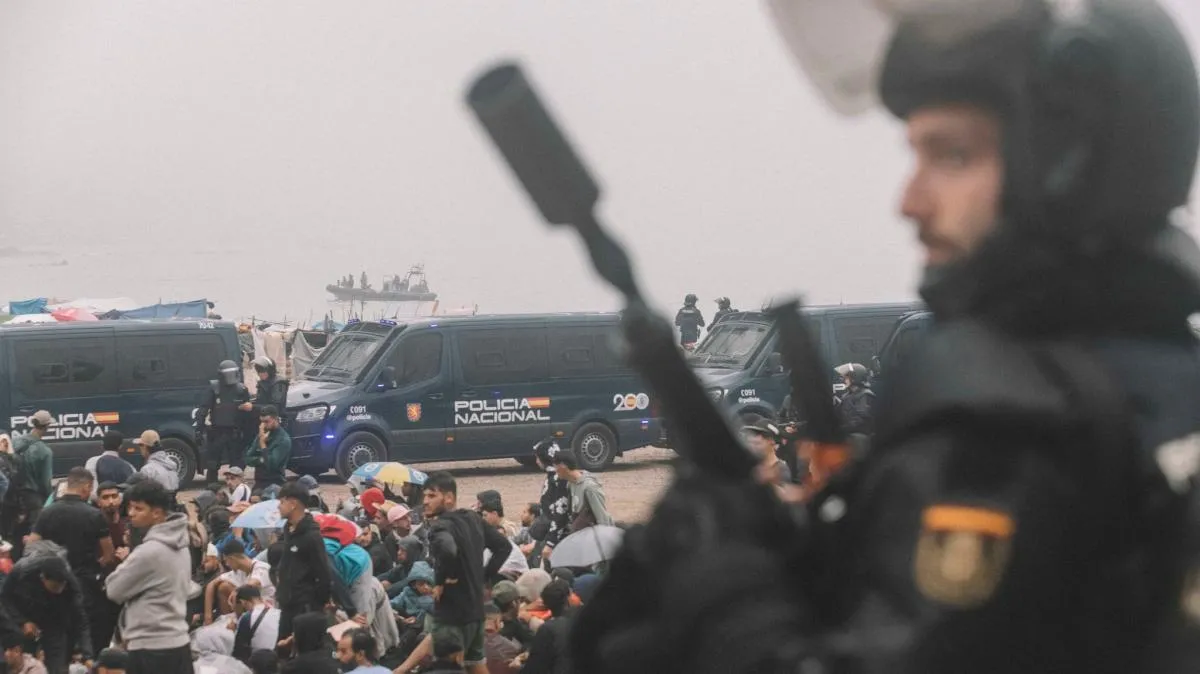
Despite its diminutive size, the enclave's position in the western Mediterranean makes it a focal point of contention, with Morocco asserting its claim as a remnant of colonial times. Recent demands from Rabat have intensified, especially in light of a massive irregular migration incident that saw over 80,000 people crossing into Ceuta, causing an unprecedented humanitarian crisis in Morocco that resulted in numerous fatalities, according to various NGOs. This backdrop of tension has highlighted the fragile state of relations between the two nations.
Strategic Military Presence and Historical Context
Vélez de la Gomera, located approximately 50 kilometers west of Alhucemas, covers an area of 19,000 square meters and rises about 87 meters above sea level. Spanish control of this rocky outcrop dates back to 1508, but it became physically connected to mainland Africa following a 1930 earthquake, which created the very narrow land border that exists today. A simple rope on the ground delineates this limit, with a handful of Spanish soldiers observing the Moroccan side from lookout posts. The Spanish flag marks the entrance to military-controlled areas, and there is no official border crossing, with access heavily restricted.
Amid rising tensions between Spain and Morocco over the Ceuta crisis, the daily life near this unique border appears remarkably normal. Fishermen from Morocco can be seen mending their nets on the beach, seemingly oblivious to the political strife. Nearby, a pedal-powered scooter bearing the name of F.C. Barcelona and a towel with the same emblem dry in the sun. According to one fisherman, “We occasionally see the Spanish on the rock, but they don’t speak to us.”
In the broader context, the nearby Alhucemas Bay features the rock of Alhucemas and the islets of Tierra and Mar, with only the rock hosting a Spanish garrison since its occupation in 1673. Moving further east, the Chafarinas Islands—located just three kilometers from Nador—are home to military units supported by the Navy and helicopters, which have bolstered their security measures in response to the recent uptick in irregular migration attempts.
Spain's strategic interest in these territories lies in their ability to monitor sensitive points in the Mediterranean, particularly concerning drug trafficking and human smuggling. As Morocco's claims over Ceuta and Melilla grow louder, some voices suggest that negotiating sovereignty over these islands and enclaves could be a more viable option. Former Moroccan ambassador to the United Nations, Khalil Haddaoui, has advocated for prioritizing dialogue regarding these uninhabited enclaves as a way forward.
However, the issue of sovereignty over these territories is far from straightforward. The 2002 crisis, triggered by Moroccan military occupation of the islet of Perejil near Ceuta, serves as a reminder of the delicate balance of power in the region. Rabat justified its presence as part of efforts to combat irregular migration, while Madrid responded with a military operation to reclaim the islet, leading to U.S. mediation to ease the tension.
In a region where maritime routes and security cooperation are of utmost importance, these small territories continue to be flashpoints in the complex relationship between Madrid and Rabat.As reported by swissinfo.ch.