
Rising Tensions in Ceuta as Migrants' Plight Deepens
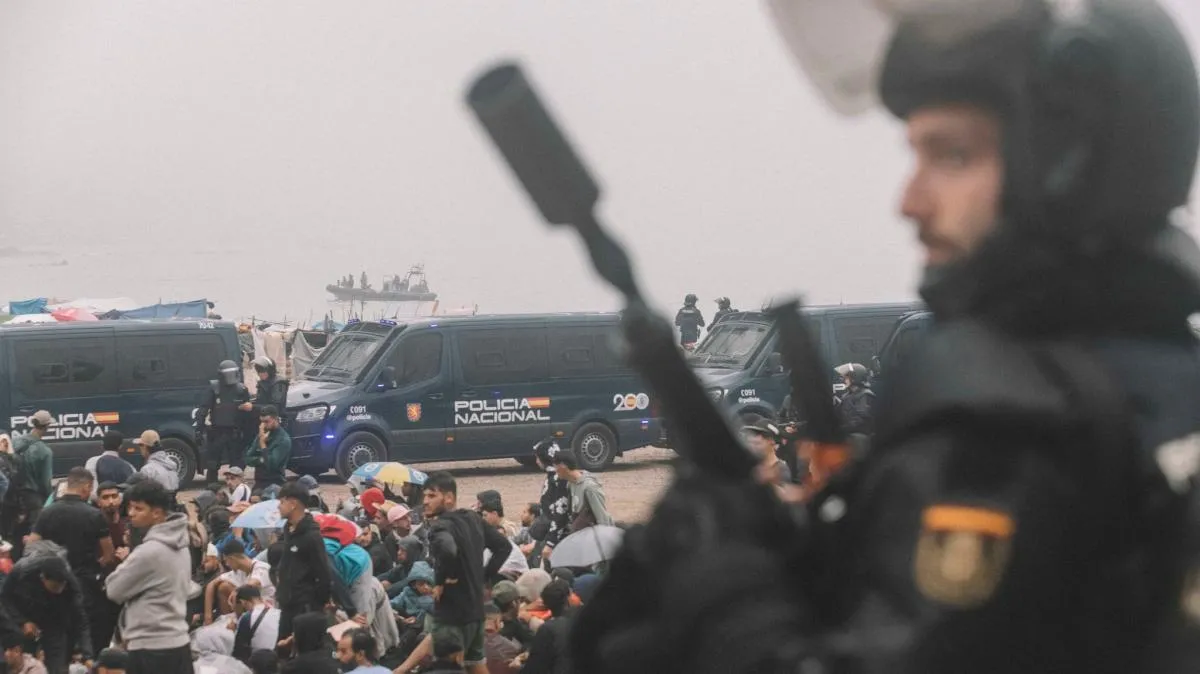
The ongoing crisis in Ceuta has taken a grim turn as authorities continue to clear the area of migrants who sought refuge after a mass influx from North Africa. Heavy machinery is seen pushing debris, including remnants of tents and countless empty tuna cans, toward Morocco, creating an unhealthy environment at El Trampolin beach. This site, once a temporary home for migrants, is now a scene of despair, as Spanish public television reporters observe the situation unfold from a nearby vantage point. A military convoy drives along the coastal road, heading towards a rocky area that marks the border between Morocco and the Spanish enclave of Ceuta. Nearly two months after the mass flight, the remaining migrants are left with very limited space, which has yet to be fully cleared.
In late July, tens of thousands crossed the border in mere hours, with many swimming just hundreds of meters from Morocco to reach the safety of El Trampolin. Tragically, dozens drowned in the process. The situation was aggravated by a viral ruling from Spain's Supreme Court on social media, which was misinterpreted to suggest that anyone reaching Ceuta by swimming could remain there. This misinformation led to a surge of people entering the sea, prompting Madrid to accuse networks connected to Israel and Russia of spreading false information. These countries have denied the allegations, while the possibility of Moroccan influence is still being debated without concrete evidence.
Humanitarian Crisis Unfolds as Migrants Seek Refuge
Ceuta, with its population of approximately 83,000, found itself overwhelmed by around 80,000 migrants from Morocco and other African nations. As the days passed, many newcomers faced dire conditions, with no access to water, shade, or food in the sweltering heat. Approximately 70,000 chose to return to Morocco voluntarily, while about 10,000 remained where they landed, caught in a seemingly endless cycle of uncertainty.
Recently, the situation shifted as military and police forces moved in on the beach, where around 3,000 people still lingered. Authorities reported that they initially relocated 1,200 migrants to a temporary camp, with 900 others choosing to return to Morocco. However, the clearing efforts continued, and the atmosphere grew increasingly tense as the first autumn storm swept over the region, bringing with it heavy rain and challenges for both migrants and reporters on the scene.
Among the migrants are individuals like Mohammed, who expressed his desire to seek asylum but faced obstacles in getting his fingerprints taken. He displayed documents showcasing his activism against Moroccan King Mohammed VI, yet his chances for asylum appeared slim due to Spain's classification of Morocco as a safe country. As the government continues its operations, a game of hide-and-seek unfolds between migrants and security forces, with many finding refuge in forests or abandoned buildings while a significant number remain unaccommodated.
In Ceuta, tensions between local residents and migrants are palpable. Some residents label migrants as "invaders," demanding a stricter governmental response to the crisis. Local organizations like Luna Blanca strive to provide humanitarian aid, but they face backlash from residents who believe such assistance perpetuates the ongoing crisis. The local government's opposition to the Socialist government in Madrid has further stalled potential solutions to the escalating situation. As Spain approaches its upcoming elections, the crisis in Ceuta has become a focal point for political campaigns, with conservative parties leveraging the situation to galvanize support.
As reported by augsburger-allgemeine.de.