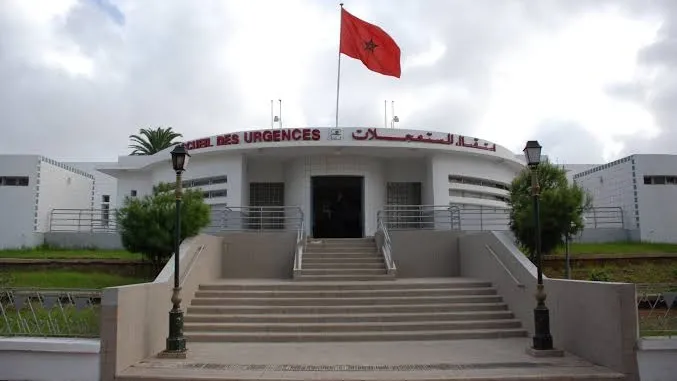

The Urban Ecosystem of Health Facilities
In the vicinity of healthcare establishments, a captive clientele sustains an array of services including pharmacies, eateries, taxis, and accommodations, highlighting an urban dynamic molded by the needs of patients and their families. Just a short distance from the entrances of hospitals, particularly around the Ibn Rochd University Hospital, one finds a bustling environment filled with pharmacies, small restaurants, street vendors, taxis, cafés, photocopy shops, makeshift businesses, and, for those traveling from afar, rental rooms available by the day or week.
From early morning, the areas surrounding hospitals operate with a unique rhythm. Family members often wait with medical files in hand, one phone pressed to their ear, while taxis constantly drop off patients and swiftly return for new fares. Nearby, local businesses have adapted to cater to this specific clientele, who are not there for leisure or casual shopping, but rather to wait, support, nourish themselves, rest, print documents, purchase medications, or urgently find items that the hospital does not provide. As one taxi driver notes, "Families sometimes come from very far away and stay several days."
The Interconnected Commercial Landscape
This phenomenon is particularly fascinating as the commercial offerings are intricately tailored to meet the demands created by illness. A nearby restaurant transforms into a cafeteria for those accompanying patients, while cafés serve as unofficial waiting rooms for individuals who have traveled from near or far for health-related reasons. Taxis become essential links within the healthcare journey, and pharmacies practically extend the prescriptions provided by doctors, while small shops supply water, tissues, mobile chargers, quick meals, and countless minor items that gain significant importance when spending long hours on a chair in a hospital corridor.
Pharmacies, in particular, occupy a unique position within this ecosystem. By 2025, Morocco was reported to have over 14,100 pharmacies, with a significant concentration in major urban areas such as Casablanca-Settat and Rabat-Salé-Kénitra. The revenue generated by these pharmacies exceeded 13 billion dirhams, underscoring their economic impact. However, the economy surrounding hospitals extends far beyond just pharmaceuticals; it is built upon a captive population in the most literal sense: patients whose presence cannot be postponed, families who must stay, companions who wait for hours, and visitors who return day after day. Within the hospital setting, medical time thus simultaneously generates commercial time.
In the streets adjacent to Moulay Youssef Hospital or the August 20 Hospital in Casablanca, this economy manifests in varying forms based on the type of institution and the demographic of its patients. The areas surrounding large public hospitals often feature a more informal, budget-friendly offering, while private facilities shift the commercial landscape towards restaurants, cafés, transport services, and shops aimed at a clientele with greater purchasing power. Taxis may best exemplify this invisible economy, as they connect the hospital to homes, pharmacies, laboratories, train stations, and hotels, often becoming the first confidants for families navigating an unfamiliar city. Some drivers are well-versed in where to find an open pharmacy, where to grab a late-night meal, where to sleep nearby, or how to quickly reach another healthcare facility.
As reported by lopinion.ma.