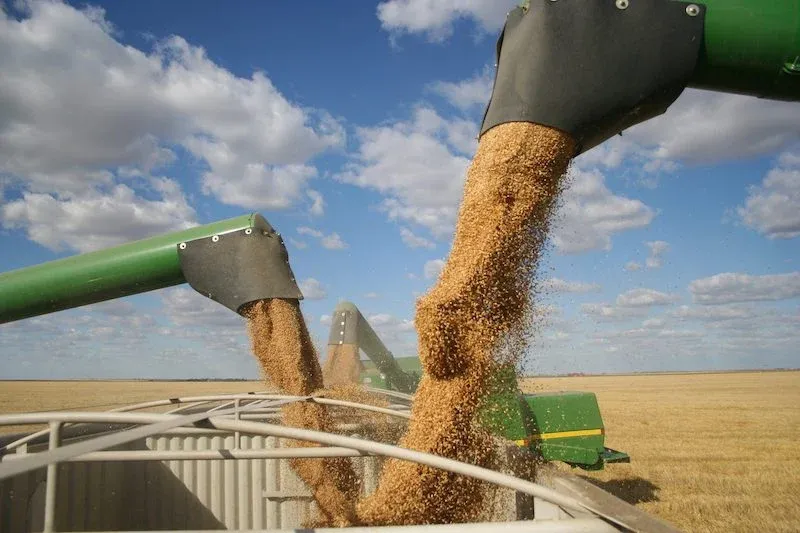

Egypt's Wheat Production Soars to New Heights
The Food and Agriculture Organization (FAO) has released optimistic projections regarding wheat production in the Arab world for 2026, with Egypt taking the lead as the top producer among Arab nations. According to the media center of the Egyptian Cabinet, this information coincides with the conclusion of the wheat supply season. The local wheat production is experiencing continuous growth, driven by an increase in cultivated areas and enhanced productivity. Furthermore, the government is making significant efforts to develop and promote high-yielding varieties that are resilient to climatic challenges, which is essential for boosting local production and reducing reliance on imports.
The FAO's estimates indicate that Egypt's wheat production is expected to reach approximately 10.2 million tons in 2026. This figure positions Egypt ahead of other Arab countries, with Morocco and Iraq both projected to produce around 5 million tons each. Following them are Algeria with an estimated 3.5 million tons, Tunisia at about 1.4 million tons, and Saudi Arabia contributing around 1.1 million tons.
According to the FAO's forecasts, Egypt's wheat production in 2026 is anticipated to rise by about 7% compared to the average output, primarily due to the expansion of cultivated land. The local wheat production is expected to increase by 6.5%, surpassing 10 million tons in 2026, compared to 9.4 million tons in 2025. This increase is reflected in a decrease in wheat imports, which are projected to fall to 12.5 million tons, down from approximately 13.2 million tons the previous year.
Additionally, the area dedicated to wheat cultivation has grown to 3.76 million acres, marking a record increase of 600,000 acres compared to the previous season. The total quantities supplied by the end of the procurement season have reached around 5 million tons, which is the highest historical rate recorded by the government’s supply system.
As reported by hespress.com.