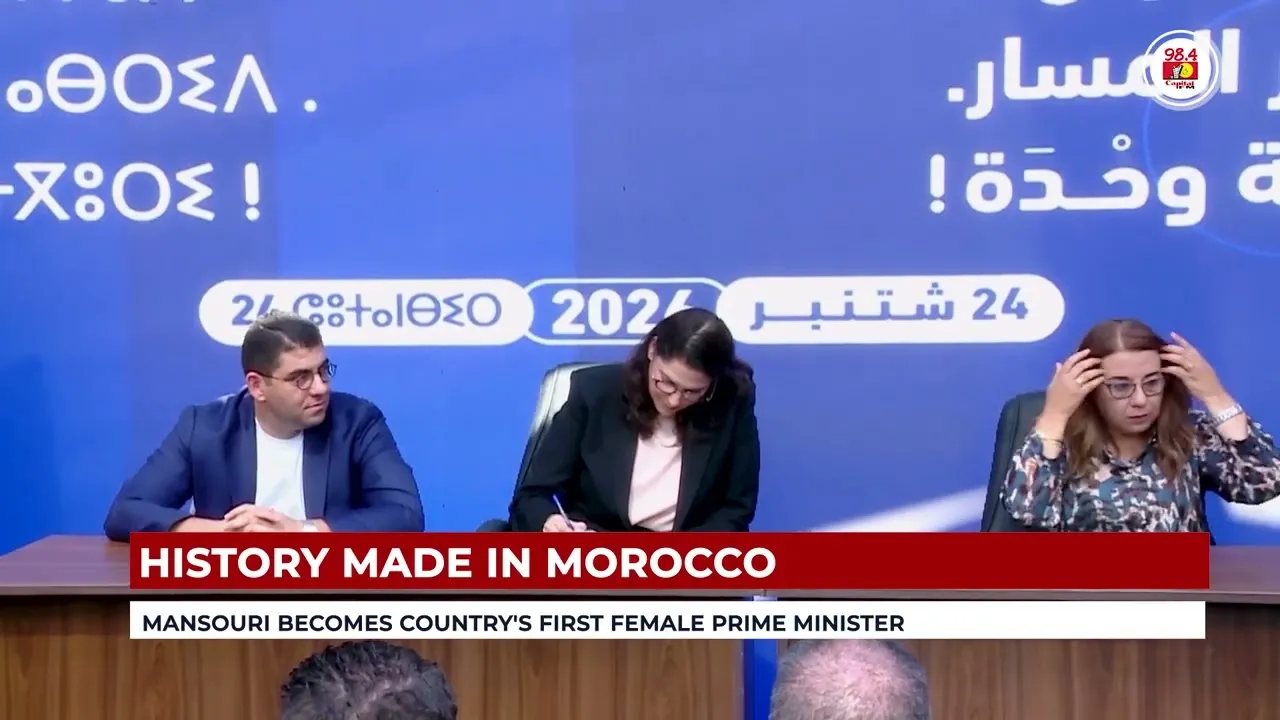

The appointment of Fatima Zahra Mansouri as the head of the Moroccan government is not merely a historic milestone for women in the kingdom; it represents a pivotal moment in the very essence of the Moroccan experience, which now faces a significant test. The question that looms large is whether Morocco can effectively translate the extensive infrastructure, industrial base, tourism sector, and economic openness it has developed over the past years into a robust model capable of generating employment and enhancing the quality of life for its citizens. This first female Prime Minister in Morocco’s history, following in the footsteps of Tunisia’s Najla Bouden, who held office from 2021 to 2023, was selected after the Authenticity and Modernity Party emerged victorious in the parliamentary elections, securing 97 out of 395 seats. Her primary task will be to form a governmental coalition capable of establishing a parliamentary majority.
However, the significance of this experience will not solely be measured by the fact that it is led by a woman; rather, it will hinge on her ability to transform this symbolic moment into tangible political and developmental capacity. Herein lies Morocco's considerable potential. The nation is not stepping into this endeavor from a blank slate; over the past two decades, it has cultivated a growing industrial framework, extensive networks of roads, ports, and industrial zones, alongside a globally recognized tourism base. The World Bank asserts that Morocco has built a strong foundation and has the potential to go further in job creation, deepening private investment, and providing genuine opportunities for youth and women.
The statistics support this narrative with tangible evidence. In the tourism sector, Morocco welcomed 19.8 million visitors in 2025, marking a 14% increase from the previous year, while tourism revenues soared to 138 billion dirhams, reflecting a 21% rise compared to 2024 and a remarkable 75% increase relative to 2019. Furthermore, the number of overnight stays in classified hotels exceeded 43.4 million nights. This indicates that Morocco is no longer merely selling the traditional image of its ancient cities, deserts, and Marrakech; instead, it is constructing a comprehensive tourism industry. Most importantly, the kingdom has begun to forge what can be termed the 'Moroccan brand,' encapsulating Marrakech, Fes, the deserts, the mountains, the riads, Moroccan cuisine, and a narrative of a country that seamlessly merges history with modernity and proximity to Europe.
Even global cinema has played a role in solidifying this brand identity. In 2025, Morocco hosted the filming of 48 foreign film and television productions, attracting investments exceeding 1.16 billion dirhams. Christopher Nolan's film 'The Odyssey' led this influx in terms of investment, with more than 252 million dirhams. Locations such as Ouarzazate and Ait Benhaddou have become ingrained in global cinematic memory, linked to monumental works like 'Gladiator,' 'The Mummy,' 'Kingdom of Heaven,' and 'Game of Thrones.' This underscores a crucial point: a country that becomes a filming site for major films does not merely sell filming locations; it enters the realm of global imagination. This may serve as one of the most potent tools for constructing a national brand in modern times.
The industrial sector presents another equally important narrative, as it pertains to production rather than just image. The automotive sector has emerged as Morocco's largest export sector, with a turnover of approximately 196 billion dirhams in 2024, providing over 250,000 direct jobs. In the same year, industrial investments in the kingdom exceeded 90 billion dirhams, while total industrial employment surpassed one million jobs. Notably, Morocco has progressed beyond merely assembling cars; it is gradually integrating into global value chains. This trend is also evident in the aviation sector, where facilities in Casablanca have become part of Airbus's supply chain, and Airbus has established a site in the city producing components for the A321 and A220 aircraft. Furthermore, Safran has announced substantial investments in Morocco, including an assembly line for the LEAP-1A engines for Airbus aircraft, with a capacity of 350 engines annually and an investment of 200 million euros.
These details are significant as they indicate that Morocco is not only attempting to attract factories but is also striving to ascend within global production chains. Nonetheless, these achievements do not negate the pressing challenges the new government faces. Economic growth has yet to translate adequately into job creation. The World Bank notes that the working-age population has grown at a much faster pace than employment from 2000 to 2024, while female participation in the labor market remains low. Moreover, youth and women are among the groups most affected by unemployment and inadequate job opportunities. The situation is further complicated by drought and declining water resources, as water has become a central economic and social issue in Morocco, not only due to its impact on agriculture but also due to its implications for growth, investment, and social stability. The World Bank identifies water scarcity, unemployment, regional disparities, and human capital as some of the most pressing structural challenges facing the kingdom.
Additionally, there is the challenge of translating the massive investments linked to the 2030 World Cup into sustainable gains post-event. Morocco is heavily investing in railways, roads, airports, sports facilities, and urban infrastructure, which can help drive growth; however, the true test will lie in how this infrastructure is utilized after the tournament to boost productivity, attract new investments, and create sustainable jobs. Foreign relations may provide Morocco with essential markets, investments, and technological partnerships, but they remain a supportive factor rather than a substitute for internal reform and the economy's capacity to convert these opportunities into production and jobs.
Thus, the experience of Mansouri transcends the narrative of a woman reaching the pinnacle of executive power; it unfolds in a country that has successfully built multiple Moroccan brands simultaneously: the tourism Morocco, industrial Morocco, cinematic Morocco, logistical Morocco, and a Morocco capable of attracting global companies like Airbus and Safran.
The most pressing question remains: Can the new Prime Minister weave these threads into a cohesive economic and social policy, ensuring that successes in ports, factories, hotels, and filming locations are not disconnected from the daily lives of citizens? If this can be achieved, the Moroccan experience may evolve into something more than just a notable milestone for women; it could transform into a model worthy of study in the Arab world, illustrating how a nation can forge its identity on the global stage while striving to make that identity a catalyst for development that resonates domestically as well. It is here, in this endeavor, that the potential for the Moroccan experience to serve as an inspiration lies—not because it is devoid of challenges, but because it represents a practical attempt to build development through a long accumulation in industry, tourism, infrastructure, and investment, placing this accumulation before a new political test led by a woman for the first time.
As reported by gate.ahram.org.eg.