
Fatima Zahra Mansouri: A Unique Political Figure
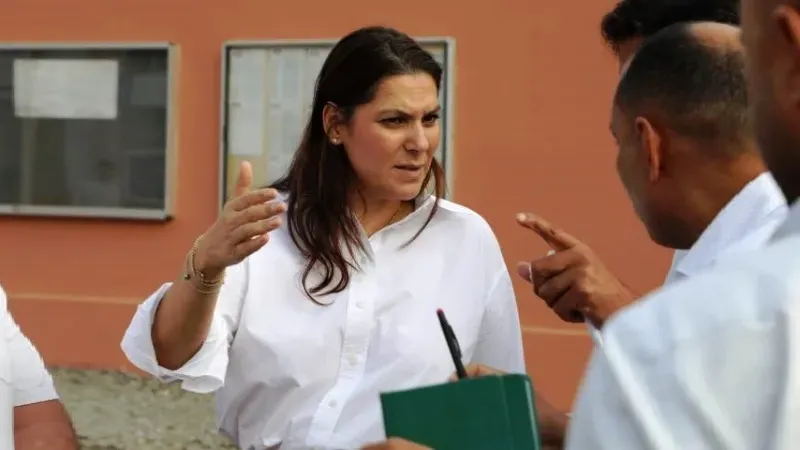
Fatima Zahra Mansouri, a former lawyer and the current president of the Marrakech municipal council, has carved out a distinctive political niche for herself since her appointment as a minister in 2021 and her role as the coordinator of the collective leadership of the Authenticity and Modernity Party (PAM) starting in 2024. With the 2026 elections on the horizon, a critical evaluation of her achievements becomes imperative, driven not by unwarranted praise or preconceived accusations but rather by the realities of her responsibilities and the unanswered questions that remain.
The Rapid Rise from Law to Politics
Born in Marrakech in 1976, Mansouri pursued her legal education at the University of Montpellier before establishing her law practice specializing in commercial and real estate cases. She is the daughter of the late Abdel Rahman Mansouri, a former chief and pasha of Marrakech, who also served as Morocco’s ambassador to the UAE. Her familial ties extend to Fouad Ali El Himma, a prominent figure and one of the founders of the PAM. While these connections explain her proximity to the party’s roots, it doesn’t necessarily indicate that El Himma personally facilitated her entry into politics. Available sources do not provide an official account of her joining PAM, yet they confirm her membership since its inception in 2008, quickly positioning her as a prominent face of the party's first generation: a young, female lawyer from Marrakech.
Mansouri first ran for municipal elections in 2009, securing a seat and subsequently being elected as the president of the municipal council at the age of thirty-three. Her swift ascent to leadership reflects the party's strategy of renewing its ranks and underscores her local influence. Since September 2021, she has held the dual roles of the president of the Marrakech municipal council and minister of national territory development, urban planning, housing, and city policy. In February 2024, she added a third role as the coordinator of PAM’s collective leadership, alongside other party members. This accumulation of responsibilities raises legitimate political questions: how can one effectively lead a major city, manage a strategic ministry, and oversee a national party simultaneously? Mansouri herself has acknowledged the challenges inherent in balancing the council presidency with ministerial duties, highlighting the complexities of capability, potential conflicts of interest, and the need to delineate responsibilities across various portfolios.
Moreover, she has faced scrutiny regarding her management of post-earthquake reconstruction efforts in the Al Haouz region, particularly following the devastating quake of September 8, 2023. During a parliamentary session on November 24, 2025, she announced the issuance of nearly 59,000 building permits and the reconstruction of over 53,000 homes. While these figures indicate significant progress, they do not capture the entirety of the situation, as many families are still living in temporary shelters, particularly in remote areas. The national statistics do not negate the existence of tragic individual circumstances, suggesting that while programs may advance, unacceptable human conditions persist. Mansouri has accused her opponents of politicizing the earthquake recovery efforts, a response that, while understandable, does not absolve the administration from providing precise answers regarding the number of families still without permanent housing, the specific locations affected, the technical or legal obstacles involved, and the anticipated timelines for resolution.
As reported by alousboue.ma.