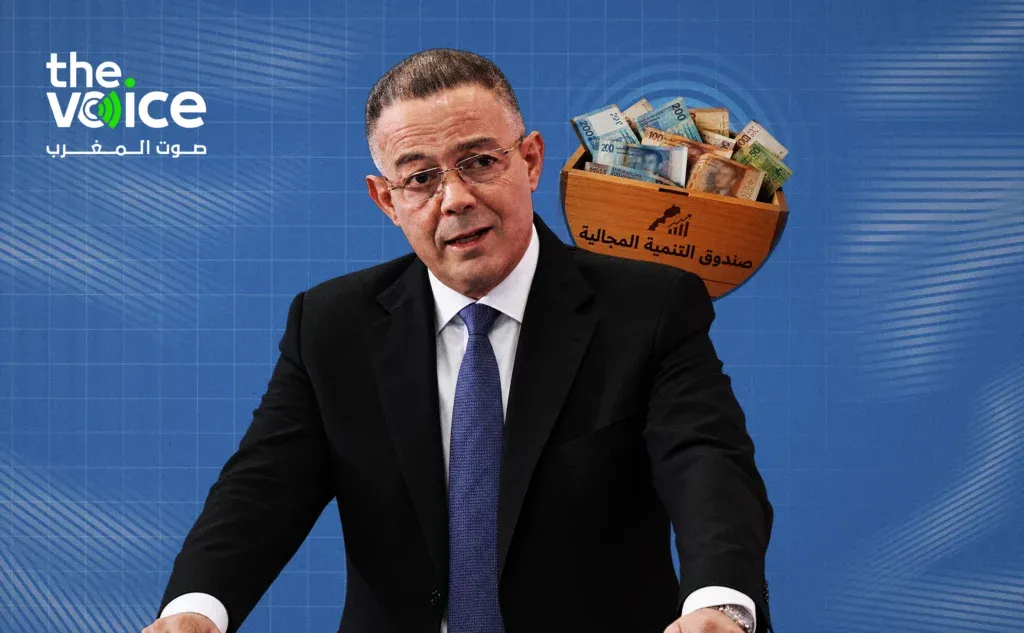

The newly appointed Minister Delegate for Budget and President of the Royal Moroccan Football Federation, Fawzi Leckaj, has emerged as the principal authority overseeing the "Territorial Development Fund." This fund, which finances projects prepared by the Ministry of Interior, is set against the backdrop of Morocco's evolving political landscape. Established in the 1990s, the fund has historically been under the purview of prime ministers and heads of government, with the exception of a notable incident in 2016 when the former Prime Minister, Abdelilah Benkirane, claimed that his Minister of Agriculture, current Prime Minister Aziz Akhannouch, had usurped control of the fund without his consent.
Leckaj's role extends beyond mere oversight; he wields comprehensive authority across all government sectors in relation to this program, facilitated by a national committee theoretically overseen by the Prime Minister, tasked with coordinating and approving various programs. As such, Leckaj is poised to hold significant influence ahead of the upcoming elections, managing a fund dedicated to financing an ambitious new generation of integrated territorial development programs over the next eight years, with a staggering budget of 210 billion dirhams. Furthermore, he has been appointed to lead the recently established "Morocco 2030 Foundation" through a law passed last year (2025).
Transitional Appointment and Expansive Powers
On August 3, 2026, a decree from Prime Minister Aziz Akhannouch officially appointed Leckaj as Minister Delegate for Budget, noting that this appointment is provisional, indicating that the fund's management is subject to change. This role has been a point of contention between the Prime Minister's office and the Ministry of Interior, which has been documented by various reports, including one from "The Voice of Morocco," during discussions surrounding the financial law in parliament.
Some analysts speculate that Leckaj’s affiliation with the Authenticity and Modernity Party may be a strategic move positioning him as a potential Prime Minister if his party secures a majority in the next elections. Following his formal assumption of control over the fund, he swiftly enacted a series of decisions that appointed assistant fund managers and deputies, including governors and local officials, to enhance the administrative efficiency of the fund's operations. Notably, he also granted signing authority for contracts to numerous local and regional officials, ensuring robust management and oversight of financial resources.
20 Billion Dirhams at the Fund's Disposal with 210 Billion in New Projects Ahead
The 2026 financial law revitalized the "Rural and Mountain Development Fund," now termed the "Integrated Territorial Development Fund," allocating 5 billion dirhams as performance credits for the current year alongside an additional 15 billion dirhams as commitment credits that can be utilized against the 2027 budget. However, unlike in 2016, this law did not specify the identity of the fund manager, merely stating that such appointments would be made "in accordance with applicable regulatory texts," leaving room for interpretation until the Prime Minister's decree clarified Leckaj's transitional authority.
This development is particularly significant considering the scale of the projects to be funded. The anticipated costs for this new generation of integrated territorial development programs are estimated at 210 billion dirhams over the next eight years, encompassing initiatives related to employment, education, health, water supply, urban rehabilitation, and reducing regional disparities.
The Ministry of Interior has been proactive in preparing these programs, having issued a directive in August 2025 to initiate the development of the new generation of integrated territorial development programs in line with royal directives. This involved consultations across the kingdom’s 75 provinces, engaging elected officials, civil society, and local stakeholders. As a result, the division of responsibilities was established, with local governors overseeing the preparation and consistency of these programs, while a national committee, led by the Prime Minister, is responsible for coordination and approval.
Leckaj's appointment as fund manager thus clarifies the current governance structure: the Ministry of Interior retains control over the strategic planning of projects, while the Minister of Budget holds the financial key necessary to fund these initiatives. The ongoing debate surrounding the fund's management is not new, as it has been a point of contention since its inception in 1994 as the "Rural Development Fund," evolving into the "Rural and Mountain Development Fund" in 2012, and shifting management roles over the years.
The current dynamics highlight the sensitive nature of the fund, which has historically represented a significant source of influence within the executive branch, balancing developmental functions with political maneuvering. Leckaj’s leadership not only emphasizes his role in managing a substantial budget but also positions him at the intersection of financial decision-making, territorial development, and investments aligned with the 2030 vision, especially in the lead-up to the upcoming legislative elections.
As reported by thevoice.ma.