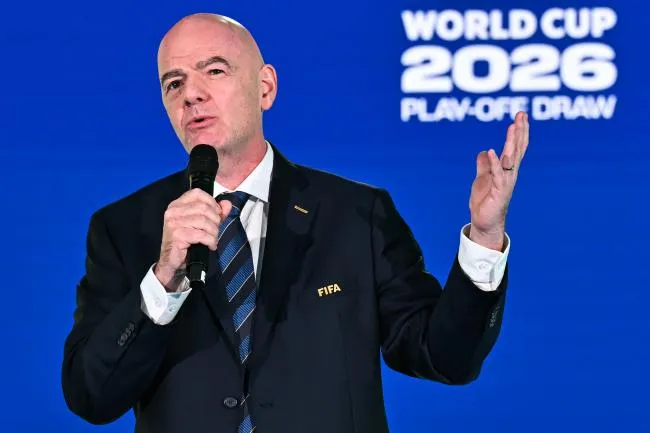

In a recent crisis meeting held in Morocco, FIFA's leadership faced intense scrutiny following its failed attempt to open the organization to private investors. The governing body expressed its acknowledgment of "errors" and extended apologies, while simultaneously reaffirming its unwavering support for President Gianni Infantino. This meeting, which was closed to the press, took place at FIFA's Africa headquarters in the Mohammed VI complex located in Salé, near Rabat.
In a late-night statement, FIFA admitted, "mistakes were made after the proposal leaked to the media," and conveyed its regret for these errors, along with a commitment to ensure they do not happen again. The organization clarified that it never intended to exclude the FIFA Council and its member associations from the decision-making process and acknowledged that the situation should have been handled differently. While the statement did not specifically mention Infantino, it emphasized that all actions taken were in strict compliance with FIFA's regulatory framework.
FIFA's senior executives came to Infantino's defense, especially in light of the recent criticisms directed towards him. The statement indicated that the members of FIFA’s governing body present at the meeting reiterated their full support for Infantino, who is the only elected official by the 211 member associations of FIFA. Furthermore, the statement declared that moving forward, FIFA would not tolerate any threats to its integrity, good governance, or adherence to established procedures, and it would take necessary measures to protect its name and reputation.
Despite the backlash, Infantino seems to be moving forward, reaffirming his support for FIFA's Secretary General, Mattias Grafström, and the administration for their essential and remarkable work in implementing his vision. Grafström expressed regret in a letter to FIFA employees regarding a series of unfortunate and condemnable events.
Infantino, who has led FIFA for a decade, witnessed the unveiling of his controversial initiative to create an external company, FIFA Forward Enterprise (FFE), aimed at managing the organization's commercial activities and tournaments with the involvement of private investors. This proposal, which was unexpectedly revealed last week, was ultimately rescinded due to opposition from numerous football stakeholders, including the European governing body, UEFA.
In recent days, several FIFA executives, including Arsène Wenger, the current director of global football development within FIFA, distanced themselves from Infantino. Additionally, Carlos Cordeiro, Infantino's senior advisor, resigned in opposition to this initiative.
Political pressure has been mounting as well, with Canadian Prime Minister Mark Carney joining British Prime Minister Andy Burnham in criticizing Infantino's leadership. Carney expressed his lack of confidence in Infantino, stating that the notion of good governance entails transparency with close associates. Last week, Burnham labeled Infantino as "the wrong person to lead" FIFA, reflecting a growing sentiment of discontent within the football community.
Both UEFA and Concacaf, the North American and Caribbean confederation, have voiced their concerns, with Concacaf calling for a comprehensive review of FIFA's governance under Infantino. UEFA, which had threatened to boycott World Cups as leverage, has stated that it has "lost confidence" in the FIFA President. Currently, Infantino remains the only declared candidate for re-election in the upcoming vote scheduled for March 2027 in Rabat. The 56-year-old leader will require the support of a majority of the 211 member federations to secure a new four-year term, with a handful of federations, including Finland, Wales, Serbia, and Sweden, having officially withdrawn their support.
As reported by information.tv5monde.com.