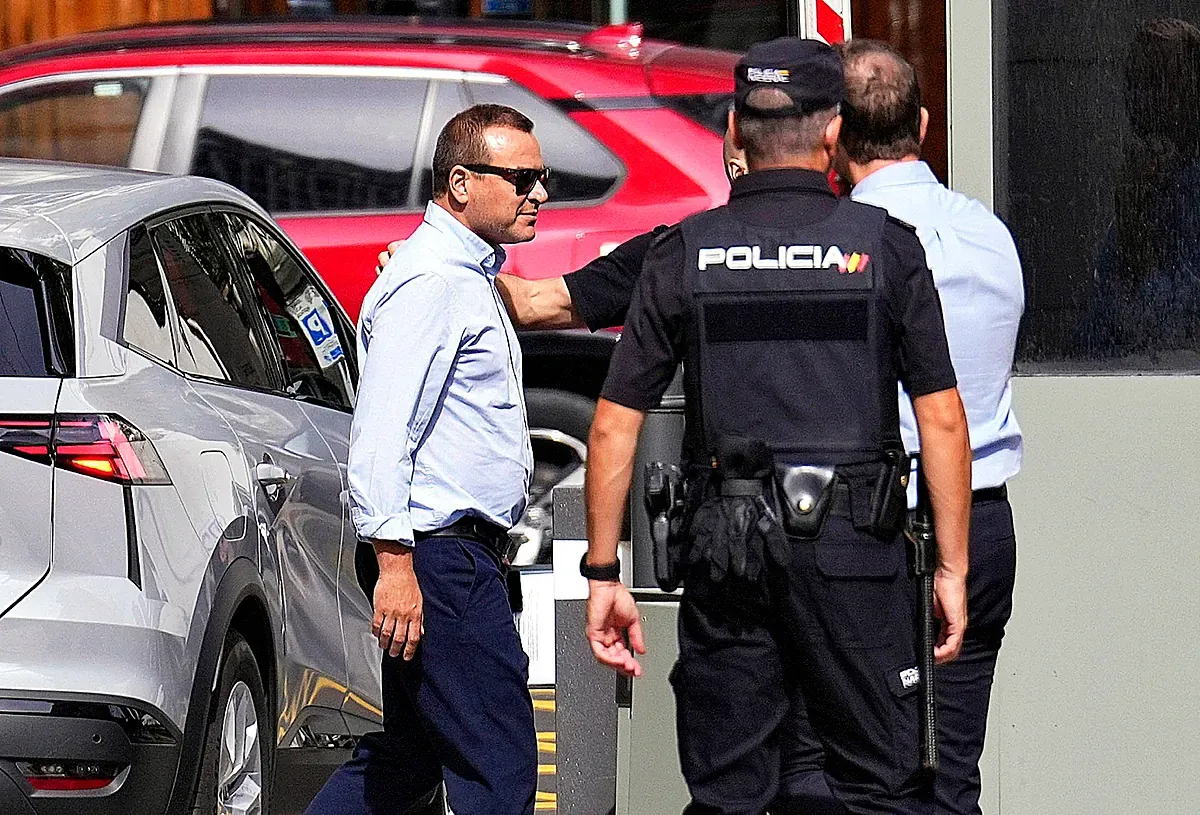

The former Chief of Staff of the Government Delegation in Ceuta, Gonzalo Sanz, testified before a judge that he consistently alerted various ministries about the serious immigration situation facing the city in the days leading up to a massive influx of migrants. His testimony comes in the wake of his resignation, which followed accusations from the Government Delegate, Miguel Ángel Pérez Triano—who also resigned—that Sanz had failed to convey critical alerts from the National Intelligence Center (CNI) prior to the crisis.
During his appearance before Judge María Tardón of the National Court, Sanz affirmed that he had indeed communicated all received alerts to Pérez Triano both verbally and in their original wording. His responsibilities included acting as a liaison with the National Police, the Civil Guard, and the CNI, where he received continuous alerts regarding the risk of mass entries into Ceuta. Sanz noted that while there was significant disparity in how information was relayed, the communication remained fluid.
Before the dramatic events of July 30 and 31, the situation had already been deemed "extraordinary". Sanz shared that there was widespread concern as alarming figures indicated entries exceeding 100 individuals daily. Reports from the delegation implicitly warned of the severity of the situation. He elaborated on his involvement in drafting a joint statement with Ceuta, appealing for "extraordinary, immediate, and joint actions" from the government led by Pedro Sánchez, a move that reportedly did not sit well with Moncloa.
The delegation was actively relaying the situation to various state secretariats, including those responsible for Security, Territorial Policy, Defense, and Immigration. Sanz emphasized that requests for assistance were continuous, asserting that help was sought before, during, and after the crisis. Notably, Pérez Triano only spoke with President Sánchez when the latter decided to visit Ceuta, by which point the number of entries had reached tens of thousands. On July 30, at 11 AM, Pérez Triano proposed military intervention due to escalating panic in the city, but he later retracted that suggestion over jurisdictional concerns.
On that same day, Sanz visited the border, describing the scene as reminiscent of Sarajevo. He encountered approximately 20 Moroccan soldiers at the border and spoke briefly with the Moroccan police chief, ultimately requesting that the border be closed. In response, the Moroccan authorities claimed that the situation was normal at the land border, as entries were primarily occurring via sea at that time, leaving Sanz astonished by their nonchalant attitude.
On the Spanish side, the border remained open, as the Government Delegate lacked the authority to close it, a decision that rested with Minister Fernando Grande-Marlaska. Sanz's two-hour testimony included a folder of documentation from those critical days, but the most significant evidence turned out to be his phone. He revealed that not all of his messages with the CNI had been declassified by the government, although messages warning about social media calls for crossings had been released. He possessed 19 other messages that had not been disclosed, which the judge agreed to copy for later review in the confidential section of the case.
Reflecting on the events, Sanz traced back to early July, noting that after a Supreme Court ruling prohibited the immediate return of individuals who had arrived by swimming, the delegation sought legislative measures to reverse this situation. However, such reforms were not forthcoming. Instead, after the influx subsided, the government chose to install containment measures in the water rather than reforming immigration laws. The ongoing investigation, initiated following a complaint by Iustitia Europa, has the City of Ceuta and the State Attorney's Office as the private accusers, with the latter representing the government. In their questioning, the State Attorney's Office equated the July events with previous immigrant surges, such as that of 2021. Sanz maintained that an alarming report was generated in the delegation on July 23, just a week before the mass entries.
Additionally, the then Chief of Ceuta's Local Police, Sebastián Vega, testified via videoconference, downplaying the activities of his units and the overall situation in Ceuta on July 30, insisting that normalcy prevailed. This prompted rebuttals from the city’s attorney, questioning whether it was indeed normal for residents to be unable to buy bread as shops were closed, highlighting the stark contrast between Vega's assessment and the reality faced by the citizens.
As reported by elmundo.es.