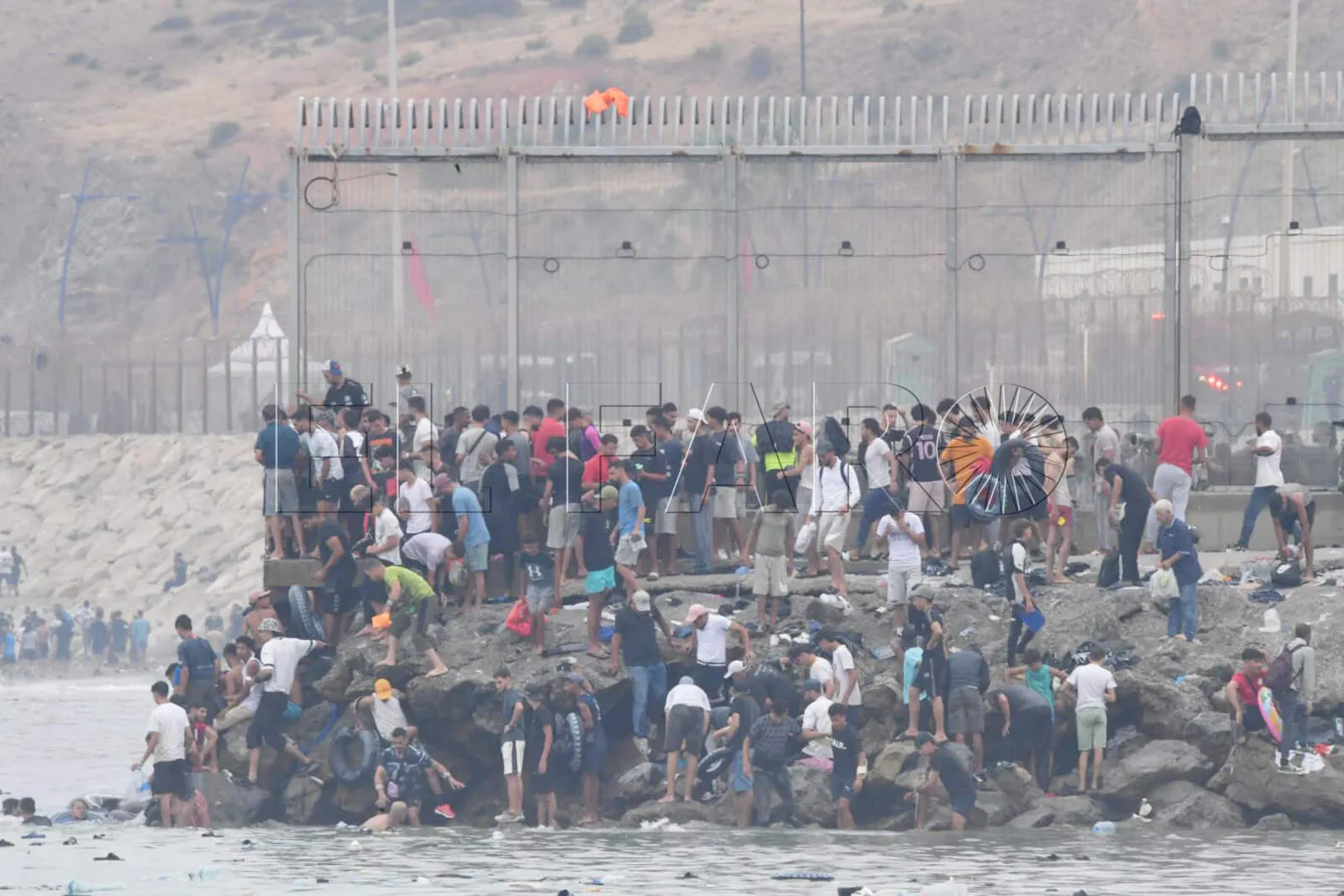

Federico Trillo, the former Minister of Defense and ex-President of the Congress of Deputies, has articulated a strong argument for declaring a state of emergency in Ceuta. He asserts that there is an urgent need for Spain to take decisive actions against Morocco in international bodies and courts, following the mass influx of immigrants that occurred on July 30 and 31. In an interview with Europa Press, Trillo described the situation faced by the autonomous city as tantamount to an "invasion," emphasizing that it necessitates a robust response from the state, both domestically and internationally.
Trillo elaborated that declaring a state of emergency would enable the government to effectively carry out the eviction and repatriation of individuals who have entered Spanish territory unlawfully. He believes that this extraordinary constitutional mechanism would provide the government with exceptional tools to address what he deems an unprecedented situation.
International Accountability for Morocco
In addition to advocating for a state of emergency, Trillo underscored the importance of holding the Moroccan government accountable at international forums such as the United Nations, the European Union, the European Court of Human Rights, and the International Court of Justice. He connected this demand to the tragic deaths that occurred during the mass entry of migrants, insisting that these incidents warrant a thorough investigation to establish potential culpability. Trillo contended that the central government has not demonstrated the necessary firmness in its dealings with Morocco in the weeks following the events at the Ceuta border.
Throughout the interview, Trillo was particularly critical of Prime Minister Pedro Sánchez, accusing him of adopting a complacent stance towards Morocco. He argued that Rabat played a crucial role in the mass entry of immigrants, asserting that there is ample evidence to support this claim. Among the evidence he cited were statements made by Moroccan political leaders regarding Ceuta and Melilla, as well as various reports and investigations that have emerged in recent weeks. Trillo also challenged the government's narrative about the absence of prior alerts, claiming that there were intelligence reports and security force assessments indicating risks at the border.
Support for Judicial Investigation
Trillo expressed his support for the ongoing investigation by the Audiencia Nacional concerning the events in Ceuta, advocating that the courts should determine any potential liabilities. He maintained that it is the responsibility of the judiciary to clarify the circumstances surrounding the mass entry, as well as the level of awareness or action taken by the various administrations involved. However, he deemed it premature to speculate on specific criminal liabilities of the Prime Minister while the judicial inquiry is still underway.
Notably, Trillo recognized Defense Minister Margarita Robles for her recent acknowledgments regarding reports produced by the National Intelligence Center (CNI). He commended her for having shown "an act of courage" by publicly admitting the existence of information related to the situation at the border. Trillo believes that such acknowledgment is vital for maintaining the credibility of the Spanish intelligence service in the eyes of international entities.
Regarding a potential visit by King Felipe VI to Ceuta in September, Trillo stated that such a decision must be made in agreement with the government, as stipulated by the functioning of parliamentary monarchy. Nevertheless, he expressed that the presence of the head of state in the autonomous city would be appropriate once the conditions allow for it. Trillo's statements come at a time when political discourse continues to swirl around the causes, consequences, and responsibilities related to the mass entry that has dominated the news in Ceuta in recent weeks.
As reported by elfarodeceuta.es.