
Strengthening Africa's Defense Capabilities through Local Production
According to the Stockholm International Peace Research Institute (SIPRI), major arms imports in sub-Saharan Africa have surged by 13% in volume between the periods of 2016-2020 and 2021-2025. This surge is complemented by growing requirements for ammunition, spare parts, and maintenance services for military equipment. Across the continent—from Morocco to Burkina Faso and Nigeria—African nations are striving to retain a portion of their military expenditures within their economies. The goal is to foster local production which not only generates employment for local workers and suppliers but also conserves foreign currencies and opens new avenues for export opportunities.
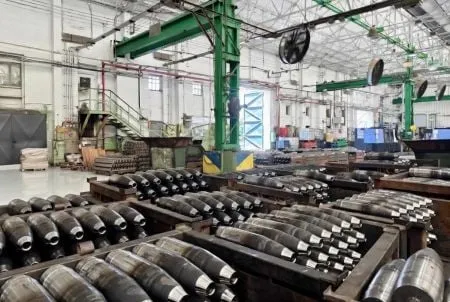
Illustrating this trend, Moroccan Military Industry (MMI) is set to deliver its first batch of military turrets to the Moroccan army in March 2027. The company’s CEO revealed to Reuters on October 8 that these turrets are intended for armored vehicles assembled in Morocco by Indian firm Tata. Furthermore, MMI is preparing to establish a munitions factory in Sidi Yahya, located north of Rabat, which will significantly boost local production capabilities.
Attracting Investment and Retaining Foreign Currency
In Morocco, a law enacted in 2020 has regulated the production of military equipment by both domestic and foreign investors. In June 2024, the Moroccan Council of Ministers approved the establishment of two industrial zones specifically for defense materials, arms, and ammunition. This strategy is anchored in attracting foreign investments and localizing military-related technologies, as explained by Abdeltif Loudyi, the Minister Delegate in Charge of National Defense Administration, on October 7. The Tata factory project, inaugurated in September 2025, is expected to create 90 direct jobs and 250 indirect jobs, with the aim of increasing local component integration from 35% at start-up to 50% through training and the involvement of Moroccan suppliers.
In Nigeria, the 2023 law regarding the Defence Industries Corporation of Nigeria (DICON), a public entity established in 1964 to manufacture weapons and ammunition, aims to attract private capital for research and production. "By localizing production, we save foreign currencies currently lost due to imports, which constitute over 95% of security equipment in Africa, while also reducing our vulnerability to supply chain disruptions and geopolitical pressures," argued Babajimi Benson, the bill's sponsor, in March 2026.
The tangible benefits of this shift are already visible among historical producers. For instance, South Africa's defense exports are projected to reach 10.1 billion rands by 2025, with 4.8 billion rands attributed to ammunition alone. This growth positively impacts subcontractors like Rheinmetall Denel Munition, which employed around 2,500 people and worked with 1,500 direct suppliers as of September 2025.
Furthermore, Egypt is exemplifying how public procurement can cultivate expertise. Out of four Gowind corvettes ordered from French military shipbuilder Naval Group, three are constructed in Alexandria through technology transfer, allowing local maintenance to extend their operational lifespan. In December 2025, Naval Group announced a five-year extension to its maintenance contract for seven Egyptian vessels, including the four corvettes, and indicated plans to recruit more personnel in Egypt while collaborating with local suppliers.
Despite the strides made, challenges remain. In Burkina Faso, for instance, leaders like Ibrahim Traoré emphasize the importance of cost and adaptability to local conditions. He highlighted imported armored vehicles costing nearly 500 million FCFA (approximately $855,000) each, while also advocating for the local production of nearly 300 Nanga vehicles, which are essentially modified pick-ups armored locally. However, the financial data regarding their costs and performance is still insufficient to quantify the economic savings achieved.
Local assembly may still require imported engines, electronic equipment, and other components, thus necessitating a careful evaluation of factory costs, technologies, and public assistance. Ensuring the sustainability of local industries is also a significant challenge. For instance, Denel, the South African state-owned defense company, has faced financial and governance difficulties, emphasizing that its recovery depends on sufficient orders and cash flow to fulfill them.
Moreover, these industries must adapt to the evolving battlefield, characterized by the increasing use of drones. South Africa's Milkor is already producing the Milkor 380 drone in Cape Town, designed for surveillance and combat missions. In Morocco, MMI is developing a counter-drone version of its turret, with locally produced ammunition. The future will hinge on securing funding for research and adapting equipment to meet emerging threats. Beyond inaugurations, the actual deliveries, costs, orders made with local suppliers, and the capacity for maintenance and modernization of equipment will ultimately determine the long-term economic gains for these nations.
As reported by agenceecofin.com.