
The Ceuta Crisis: An Influx of Migrants and Political Ramifications
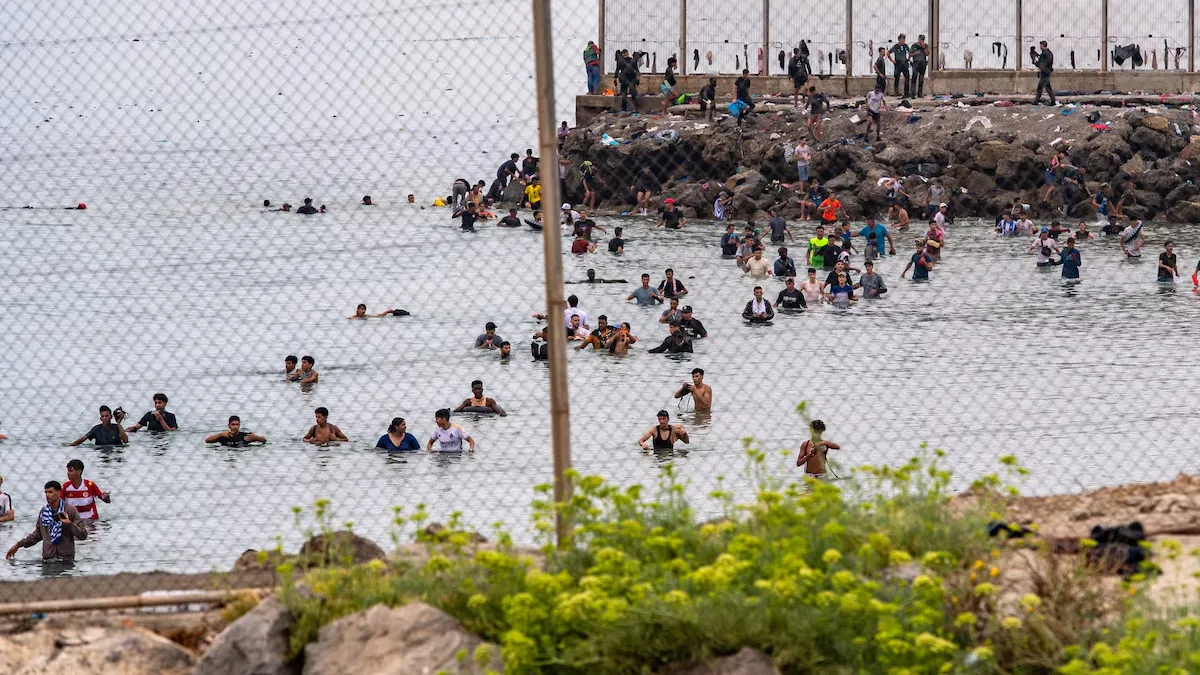
The recent crisis in Ceuta, which erupted on July 30, 2026, has drawn significant attention as tens of thousands of migrants, predominantly young men, crossed the border from Morocco. This unprecedented event has been characterized by Ceuta's Mayor, Juan Jesús Vivas, as an "invasion," a sentiment he expressed during a session in the European Parliament. Mayor Vivas emphasized that this situation was not merely a migratory crisis but rather a call for greater involvement from the European Union, given that Ceuta and its counterpart Melilla represent the sole land borders between Europe and Africa. He conveyed the distress felt by local residents, stating they are "sad, powerless, and concerned" about the ongoing circumstances, particularly as estimates suggest that between 8,000 and 11,000 individuals remain in Ceuta, highlighting an "unsustainable" situation.
While the exact number of individuals who managed to enter Ceuta is still unclear, estimates of those who returned vary from 60,000 to 80,000. The death toll remains ambiguous as well, with figures ranging from 50 to 100, leading to many parents searching for their children who have gone missing since the influx. The lack of clarity surrounding these figures has ignited criticism towards the Spanish government, particularly towards Prime Minister Pedro Sánchez. There exists a divisive sentiment between Spain and Morocco, which has been further complicated by differing positions within the European Union, especially with Italy. The passage of time has allowed for the dismantling of various conspiracy theories surrounding this crisis, which included unfounded claims involving foreign entities such as Israel and former U.S. President Donald Trump.
A Geopolitical Perspective on Spain's Response
From a geopolitical standpoint, the situation in Ceuta can be better understood by examining the actions that were not taken by the Spanish authorities, particularly by the Moncloa Palace and Prime Minister Sánchez. There is a consensus that the lack of foresight and delayed response contributed to the crisis's scale, suggesting that a more proactive government could have mitigated the number of entrants and casualties. The dynamics between Spain and Morocco illustrate a troubling trend where Spain has not effectively utilized its military capabilities as a deterrent, leading to what many see as a retreat in the face of a less powerful nation that is nonetheless gaining influence in the western Mediterranean.
The ongoing tension has been exacerbated by the belief among several European nations that Sánchez's government is inadvertently promoting illegal immigration, an assertion that has become increasingly apparent in light of the current disagreements with Italy. The traditional concept of free movement within Europe has been strained, as Italy's refusal to lift travel restrictions on Spain has prompted Madrid to reciprocate, further fracturing unity within the EU. This situation reflects poorly on Sánchez's handling of the crisis, particularly with upcoming elections in Italy and the significance of migration as a pivotal issue.
Historically, the relationship between Spain and Morocco has been fraught with tension, dating back to events such as the "Green March" in 1975, when Morocco mobilized hundreds of thousands to claim Spanish Sahara. This historical context is crucial in understanding the current situation in Ceuta and Melilla, as both cities represent longstanding territorial disputes and colonial legacies. Despite their geographical location in Africa, Ceuta and Melilla have been under Spanish sovereignty for centuries, a fact that remains unchallenged by international law. However, the perceived inability of Spain to respond adequately has led to questions regarding its sovereignty.
In conclusion, the recent migrant crisis in Ceuta has highlighted significant geopolitical vulnerabilities in Spain's national security and its foreign relations, particularly with the United States and Morocco. The Sánchez administration's focus on ideological commitments over effective governance has not only exacerbated domestic tensions but has also jeopardized Spain's standing on the international stage. The ongoing geopolitical landscape requires a reassessment of Spain's strategies to navigate these challenges effectively.
As reported by infobae.com.