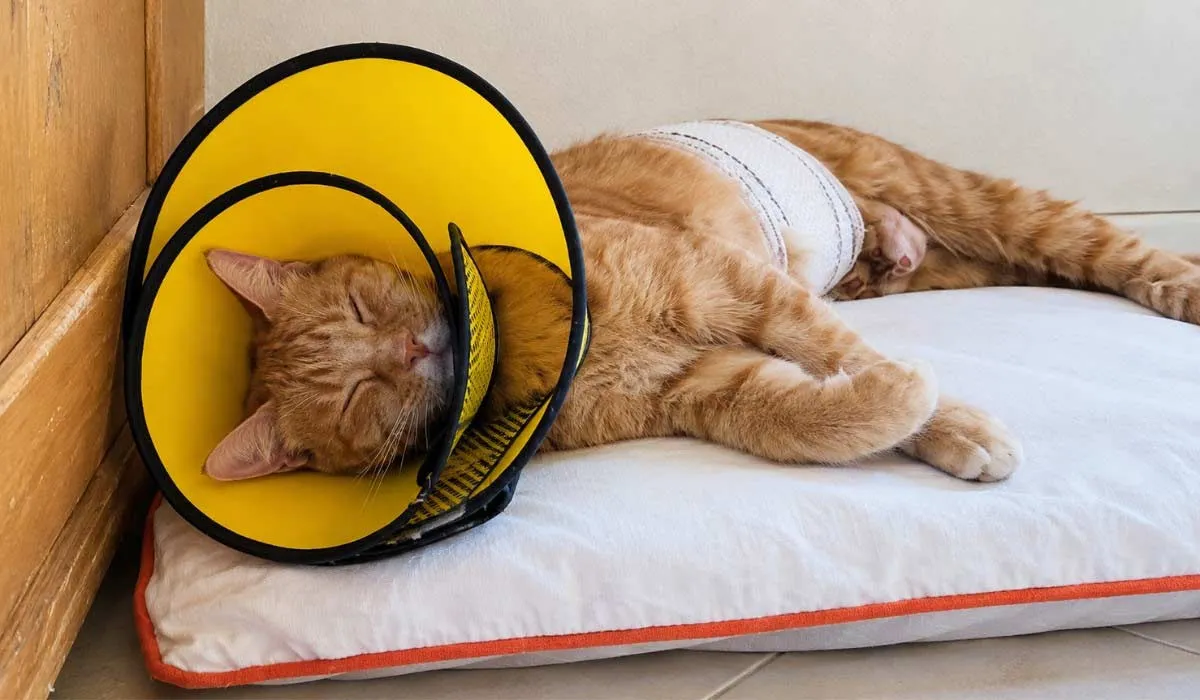

In the vibrant city of Marrakech, the dedicated team at **Le Chat Rouge** has made a profound commitment: to respond to urgent animal rescues while ensuring a sustainable future through sterilization. The mission became strikingly clear one August afternoon in 2026 when a distressing message arrived via social media. A female cat, named Goldie, was in labor but was suffering from a hemorrhage, with one of her kittens stuck in the birth canal. Immediate action was crucial.
Upon receiving the alarming news, the team quickly contacted a veterinarian. The kind individual who reported the situation transported Goldie to the clinic. Just hours earlier, she had endured a brutal beating and was unceremoniously abandoned by an owner who no longer wanted her. Despite her traumatic experience, Goldie was a socialized cat, accustomed to human interaction, and she was pregnant.
At the clinic, Goldie was stabilized with IV fluids and underwent emergency surgery, ultimately surviving the ordeal. Additionally, she was sterilized to prevent future pregnancies. After a few days of careful monitoring, she was released from the clinic, albeit with a significant scar across her abdomen—a visible reminder of her painful past. However, the most significant scars she bore were invisible, linked to the loss of her kittens and her subsequent struggles with mental health.
Initially, Goldie exhibited signs of deep sadness, spending most of her time sleeping and shunning any form of interaction. It was evident that she was grieving. Shortly thereafter, Goldie returned to the clinic due to an internal stitch failure, leading to another hemorrhage. It would take over a month of diligent care, patience, and love before Goldie began to show signs of improvement, eventually exploring her surroundings and gradually reclaiming her zest for life.
Goldie's Rescue: What Happens Next?
This brings us to a critical question that constantly lingers in the minds of the team: what happens after a cat is rescued? For Goldie, returning to the streets was simply not an option. Unfortunately, the adoption of adult cats is an uphill battle, which means that finding her a loving forever home became a priority. Goldie's plight serves as a stark reminder of a fundamental truth in animal welfare: intervention often occurs only after a crisis has manifested.
At **Le Chat Rouge**, our vision is to act preemptively.
Responding to Urgency While Planning for the Future
Often, our interventions begin with a call from concerned neighbors who have grown frustrated with the increasing number of stray cats in their vicinity. Cat populations can quickly spiral out of control, leading to an uptick in cries for help, sick kittens, and rising tensions in the community. In some cases, residents threaten to involve animal control or resort to extreme measures like poisoning the cats. To address the issue effectively, we must first assess the situation on-site.
These cats are typically familiar to the locals, with certain residents having fed them for years. These compassionate individuals become our allies, providing valuable insights into the cats' habits and hiding spots, which is essential for successful capture. This collaborative approach ensures that we are working **with** the community rather than against it.
Once we capture the cats, they are taken to our partner veterinarians for sterilization. When their health allows, they are returned to their original environment the following day. Pregnant females usually stay in a recovery home for about a week to monitor their healing process.
Yet, a single veterinary operation is not enough. Cultural and religious reservations about sterilization are common, and we respect these perspectives. To foster understanding, we engage in discussions, offering reassurance and actively listening to concerns. Sometimes, this requires multiple visits to build trust.
We believe in leading by example rather than confrontation. The outcomes often speak louder than words. In neighborhoods where we implement these strategies, the birth rates and tensions gradually decline, fostering a shift in community attitudes.
Moreover, we also assist low-income families in having their pets sterilized to prevent overpopulation. Frequently, we encounter families who love their pets but are overwhelmed by an unexpected litter. Tragically, some pregnant cats, like Goldie, find themselves abandoned. We also respond to individuals who have taken in numerous stray cats, often stemming from a generous impulse. However, this can quickly escalate to an unsustainable number, straining their resources and capacity to care for the animals. By the time we are contacted for assistance, it may already be too late.
Thus, our mission encompasses both **preventive measures and remedial actions**.
As of 2025, **Le Chat Rouge** successfully sterilized 476 cats. In the first eight months of 2026 alone, we have already achieved **355 sterilizations**, with **145 remaining** to reach our annual goal. Behind these numbers are countless lives—those of the cats, the compassionate neighbors who reach out to us, volunteers who help with captures, families fostering post-surgery cats, and veterinarians offering their services at reduced rates.
The cost of sterilization is approximately **€40 for females and €20 for males**. To fund these vital interventions, **Le Chat Rouge** relies on a remarkable chain of solidarity: **sardines**. Our colorful sardines are sold by volunteer partners at various local businesses, including shops, riads, hotels, and restaurants. Each partner becomes a vital link in the **protection of Marrakech's cats**, allowing us to continue our work.
Looking ahead, we are also anticipating changes in Moroccan legislation concerning stray animals. We believe that animal protection cannot solely depend on the goodwill of citizens, associations, or volunteers. It is imperative to establish collective solutions tailored to the realities on the ground, involving **residents, organizations, veterinarians, and local authorities**.
Our goal is not merely to manage **emergencies** but to reduce their occurrence.
Goldie is now safe, but her story continues to resonate within us. She serves as a poignant reminder that after rescuing an animal, we must also ensure they have a future. Goldie is currently searching for her forever family. If you are interested in adopting her and providing a loving home, please do not hesitate to reach out. We cannot allow her to return to the streets after everything she has endured.
Goldie's journey highlights why we must act before more animals experience abandonment and suffering. Together, we can make a difference.
We still have 150 sterilizations to fund to achieve our 2026 goal. You can help us reach this target because while rescuing addresses urgent needs, sterilization paves the way for a brighter future.
To make a donation:
As reported by savoir-animal.fr.