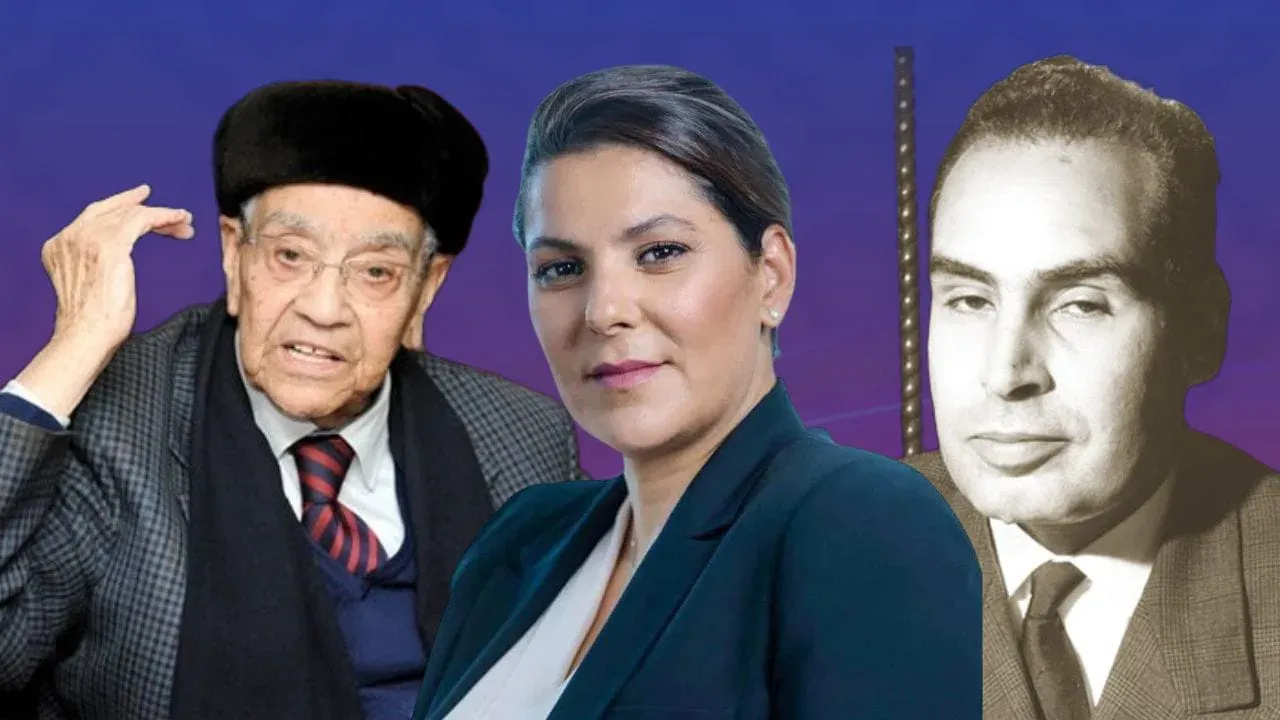

Si Mohammed Bousta, a revered professor and political activist, was on the brink of becoming the head of the Moroccan government, epitomizing the qualities of a true statesman. Hailing from Marrakech, he was widely respected for his integrity, knowledge, and commitment to national development. Prior to Bousta, Abdallah Ibrahim served as the Prime Minister during the reign of the late King Mohammed V, a period notable for the initiation of significant economic and financial projects that marked a pivotal moment in Morocco's history. Unfortunately, his leadership faced an abrupt halt due to a politically motivated upheaval that thwarted the promising reforms aimed at elevating Morocco to the ranks of emerging nations.
The conversation today inevitably circles back to the Samir refinery, which has faced numerous operational crises and mismanagement issues. It serves as a stark reminder that during Abdallah Ibrahim's tenure, alongside the architect of the then-economic policy, Abd Rahim Bouabid, there was a concerted effort to implement transformative changes that could have spared Morocco from the subsequent economic and political turmoil. Notably, those opposing reform were often absent from the frontline battles against colonialism, whether politically or militarily, during the national resistance movement.
As we turn our focus to the newly appointed prime minister, who hails from the Rahmani lineage and shares roots with Marrakech, it is essential to recall how Si Mohammed Bousta and his fellow political coalition laid down conditions before the late King Hassan II to agree on forming a government between 1993 and 1995. At that time, the Democratic Federation was not in a position to effectively implement its political agenda following elections orchestrated by the late Interior Minister Idriss Basri. Consequently, Bousta and his counterpart, Yassine, stipulated that Basri would not participate in the government formation, alongside other prerequisites to usher in a new political era.
The era of Abderrahmane Youssoufi's government marked a renewed commitment to political engagement through a fresh perspective on economic restructuring and enhancing public governance integrity. However, the continuation of this government was not anchored in a true democratic methodology, as reflected in the Socialist Union's statement following Idriss Jettou's appointment as prime minister, succeeding Youssoufi, whose party had emerged victorious in the elections.
Now, the first woman emerging from a Rahmani family, who grew up like many in Marrakech, finds herself in a significant political position. Both Abdallah Ibrahim and Si Mohammed Bousta were nationalists nurtured in the land of the national movement and the resistance, having fought for the establishment of a post-independence state grounded in institutions. They faced numerous challenges yet remained steadfast in their political beliefs, embodying the essence of patriotism that endures in Morocco’s history. Despite understanding the trajectory that led Fatima Zahra Mansouri into politics, including her roles as the mayor of the Red City and a minister, Moroccans hope that her political journey will transition from mere rhetoric and promises to tangible accomplishments. This includes confronting economic disparities and addressing social inequities, whilst opposing any elements that undermine political ethics.
Ultimately, the responsibility lies with the citizens, who have frequently found their position diminished within institutions, often reduced to mere electoral commodities exploited by those who profit from electoral transactions, all while perpetuating the existing inequalities.
As reported by lemaroc35.ma.