
Revolutionary Paleontological Find in Eastern Morocco
In a remarkable paleontological breakthrough, Moroccan researchers have uncovered the fossilized skeletal remains of a previously unknown dinosaur species in the Eastern region of Morocco, an area that has long been considered a treasure trove for paleontological discoveries. This significant find, dating back over 100 million years, was officially announced in mid-March 2026, marking a pivotal moment for the study of prehistoric life in North Africa and providing invaluable insights into the region's ancient ecosystems.
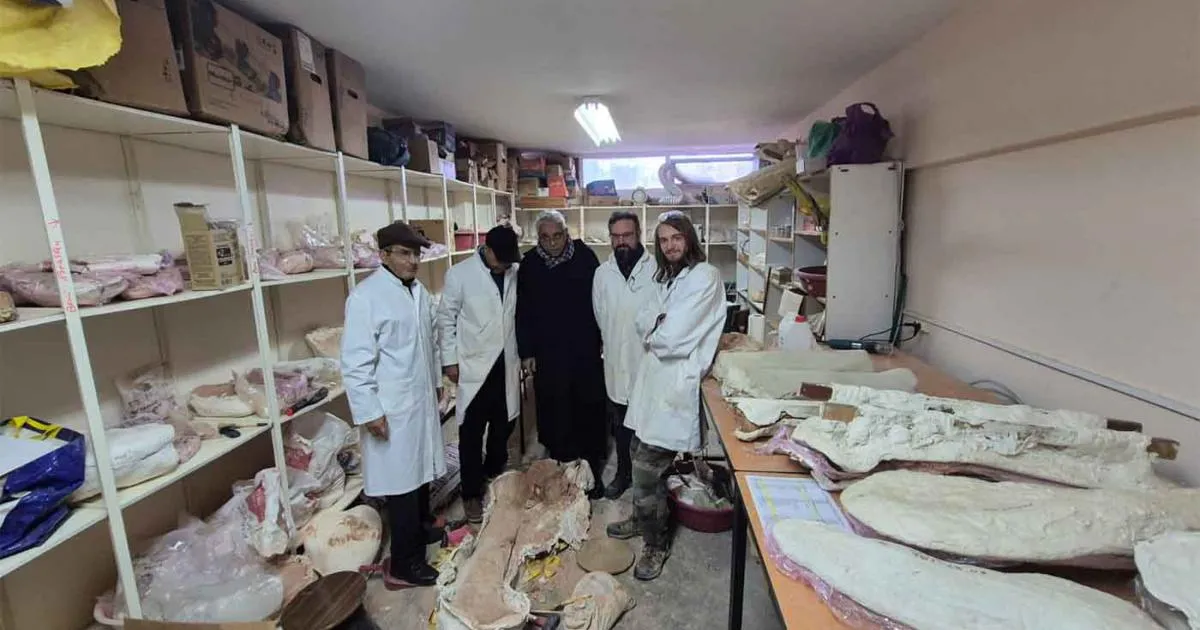
The fossils were meticulously excavated in the Tendrara area, located in the Oriental region of Morocco near the Algerian border. A dedicated team from the Faculty of Sciences at Mohammed I University in Oujda, in collaboration with international experts, invested years in the careful recovery of these bones, employing specialized extraction and preservation techniques to ensure their integrity. The President of the university, Yassine Zarhloule, celebrated the significance of this discovery on social media, emphasizing that the skeleton emerged after extensive fieldwork, showcasing the commitment and perseverance of the research team.
Initial reports from faculty members describe the newly discovered dinosaur as a herbivore, suggesting it belonged to one of the primary groups that coexisted with carnivorous species in ancient Morocco. While specific details regarding the species, size, and complete anatomical structure remain sparse at this stage, the evidence points to the possibility that this find may represent a new taxon. These remains confirm that eastern Morocco was once a flourishing habitat for large prehistoric creatures during the Cretaceous period, significantly predating the more commonly recognized Late Cretaceous ecosystems.
Unlocking the Secrets of Morocco's Fossil Heritage
This discovery further emphasizes the rich yet underexplored fossil heritage of the region. Eastern Morocco, particularly the Tendrara area, lies outside the renowned Kem Kem beds located farther south, which are famous for iconic theropod dinosaurs like Spinosaurus and Carcharodontosaurus. Both of these species originate from a similar timeframe of around 100 million years ago. The geological formations at the Tendrara site may align with those from the Cenomanian stage of the Early to Late Cretaceous transition, a period when much of North Africa was characterized by diverse river deltas and floodplains that supported a variety of dinosaur communities.
Paleontologists have underscored that this area continues to harbor untapped secrets regarding Earth's prehistoric past. The recent discovery adds valuable data to the understanding of plant-eating dinosaurs that once roamed these ancient landscapes, enhancing Morocco's growing reputation as a hub for dinosaur research. In recent years, other significant discoveries have emerged from Morocco, including the world's oldest ankylosaur, Spicomellus, found in the Middle Atlas Mountains, and the earliest known cerapodan ornithischian fossils, reinforcing the nation's crucial role in the field of dinosaur paleontology.
Looking ahead, the university and its collaborating teams intend to conduct further analysis and preparation of the specimens, with plans to publish their findings in scientific journals to formally describe this remarkable specimen. This discovery not only highlights the potential of eastern Morocco as a key site for future paleontological expeditions but also promises more revelations regarding the diversity and evolution of dinosaurs in Africa during a vital chapter of Earth's history. As global interest in African paleontology continues to rise, this find serves as a reminder that much of the dinosaur narrative—especially from underrepresented regions—still remains concealed beneath the sands.
As reported by middle-east-online.com.