

Guinea Affirms Support for Morocco's Sovereignty Over Western Sahara
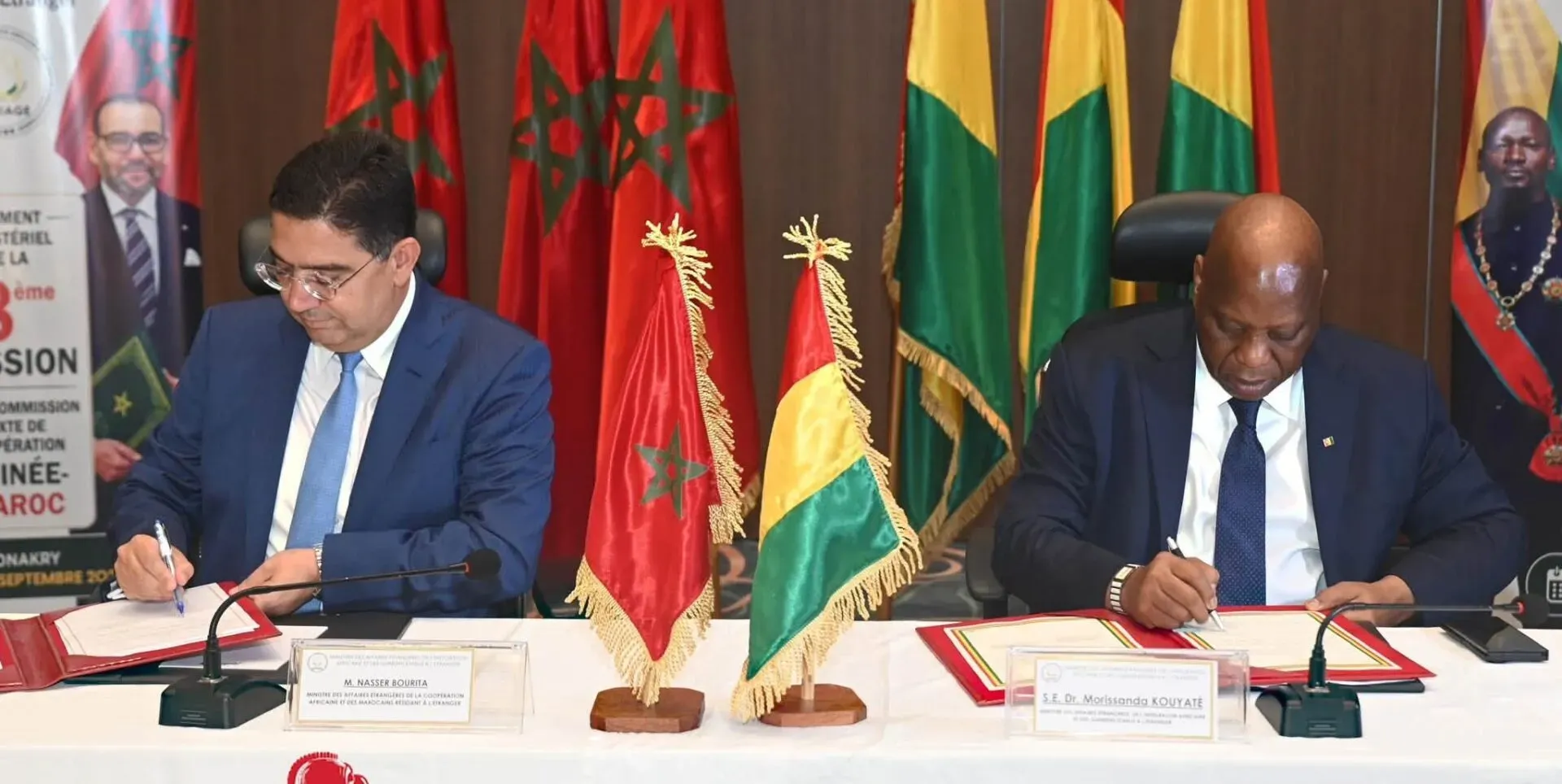
As diplomatic tensions continue to rise between Rabat and Algiers over their influence in Africa, Guinea has decisively clarified its position regarding one of the most sensitive issues in the Maghreb region. During a recent meeting in Conakry with Moroccan Foreign Minister Nasser Bourita, Guinean Foreign Minister Morissanda Kouyaté unequivocally expressed his country's backing of Morocco's claims to Western Sahara.
The conclusion of the 8th session of the Joint Cooperation Commission, held in Conakry on August 8, 2026, brought together the Moroccan Minister and his Guinean counterpart. The two delegations reviewed various areas of cooperation, leading to the adoption of new legal instruments. Minister Kouyaté praised the "valuable achievements, guided by the strategic visions of our two governments and aware of the richness of our natural potentials as well as the quality of our human resources," emphasizing that the delegations prioritized "strong actions in essential sectors."
However, Kouyaté emphasized that these advancements should be viewed through the lens of tangible results rather than mere diplomatic formalities, stating, "Behind every agreement lies an expectation; behind every signature, a responsibility. Our true success will thus not be measured by the number of texts signed but by the concrete changes they produce for our populations."
It was on the issue of Western Sahara that the meeting took on a particularly significant tone. The Guinean minister took the opportunity to clarify Conakry's stance on the dispute, which has pitted Morocco against the Polisario Front, backed by Algeria, for nearly five decades. "The Republic of Guinea unequivocally reaffirms its unwavering support for Morocco's sovereignty over the Sahara and its territorial integrity," said Dr. Morissanda Kouyaté.
To provide context, Western Sahara remains one of the oldest and most rigid territorial disputes on the continent. Since the end of Spanish colonial rule in 1975, Morocco has administered most of the territory, claiming full sovereignty, while the Polisario Front, supported by Algeria, seeks independence and the organization of a referendum for self-determination under UN supervision.
Relations between Rabat and Algiers, historically strained, officially broke down in August 2021. Algeria accused Morocco of strategically aligning with Israel and gaining increasing support from Western powers, with the United States recognizing Moroccan sovereignty over the territory in 2020, followed by France in 2024. Since then, both Maghreb capitals have engaged in a continuous battle for influence, each attempting to rally as many countries, particularly in Africa, to their respective positions.
In this context of continental rivalry, Guinea's declaration in Conakry carries significant weight; every statement made by an African state on this issue impacts the balance of power between Rabat and Algiers as they seek to solidify their influence, particularly in West Africa.
As reported by ledjely.com.

