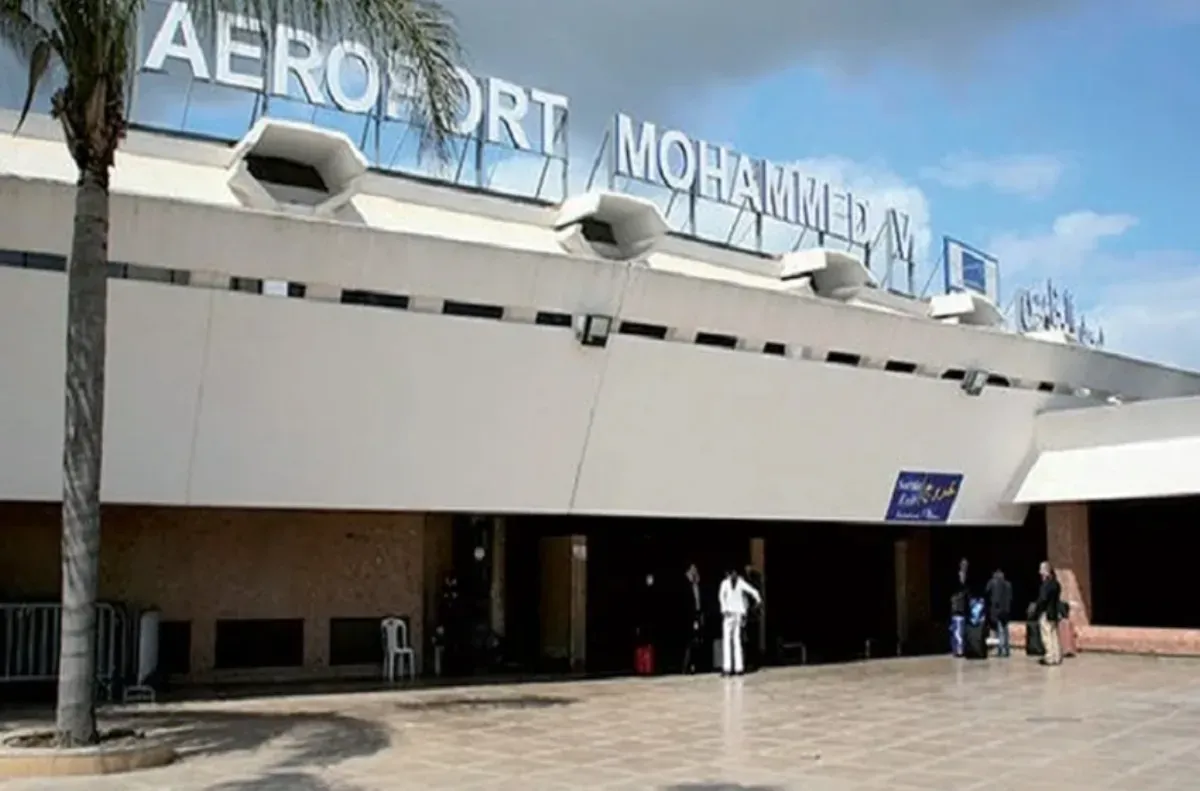

At Mohammed V Airport in Casablanca, security teams have been deployed at the boarding gates for certain flights, particularly those arriving from Tunisia and Turkey. According to various sources, including the Spanish daily La Razón, Algerian and Tunisian travelers are now required to present a return ticket and a hotel reservation before being allowed entry into Morocco. Passengers who fail to provide these documents are immediately turned back to their country of departure.
This measure affects nationals who typically enjoy visa exemptions for entering Morocco. Thus, it does not represent a general change in the visa regime but rather a targeted enhancement of entry controls.
The Ceuta Precedent
Rabat justifies this measure by asserting a desire to prevent Moroccan territory from being used as a transit point for individuals seeking to migrate northward to Ceuta. However, this justification is questionable based on observed migration patterns. During the migratory wave that saw tens of thousands attempting to reach the Spanish enclave in late July, the individuals identified were predominantly Moroccan and sub-Saharan African migrants. Available information regarding these movements did not indicate a significant presence of Algerian or Tunisian nationals.
Despite this, some Moroccan media and Spanish digital outlets connected to Rabat have pointed to an "Algerian hand" in the migratory issues. Images and videos purportedly showing Algerians involved in the arrivals at Ceuta circulated widely; however, several of these pieces of content were later verified as outdated, taken out of context, or unrelated to the events of July. Regardless of these fact-checking efforts, Moroccan media continued to suggest the involvement of the "neighbor to the East."
A Political Message
While it is a fact that Ceuta is used as a stepping stone to Europe by clandestine migration candidates, the notion of an "Algerian route" to the Spanish enclave is much less clear. Moreover, the reverse movement exists: some Moroccans travel to Algeria to subsequently take migratory routes to Europe.
The choice of nationalities targeted by the entry restrictions occurs within a specific political context. The Ceuta crisis has sparked a narrative battle regarding the origins of migration flows, their organization, and the responsibilities that might be involved. In this confrontation, Algeria has frequently been identified, directly or indirectly, as a potential factor to consider.
The new Moroccan measures contribute to this framing by categorizing Algerian and Tunisian nationals as a specific group to monitor, under the pretext of preventing passage to Ceuta. This focus arises at a time when available evidence regarding the Ceuta crisis does not indicate significant participation from Algerians or Tunisians in the late July movements.
Additionally, this tension emerges amid reports from some media and political circles in Spain openly accusing Moroccan security services of having exploited, or at least tolerated, migratory assaults to exert geopolitical pressure. By spotlighting an alleged threat of Algerian infiltration at its borders, Rabat seeks to shift the discourse, diverting public attention away from internal socio-economic challenges and the discontent of a local youth population eager to leave the country, while simultaneously reigniting a narrative of firmness toward Algeria in an already strained bilateral climate.
As reported by maghrebemergent.news.