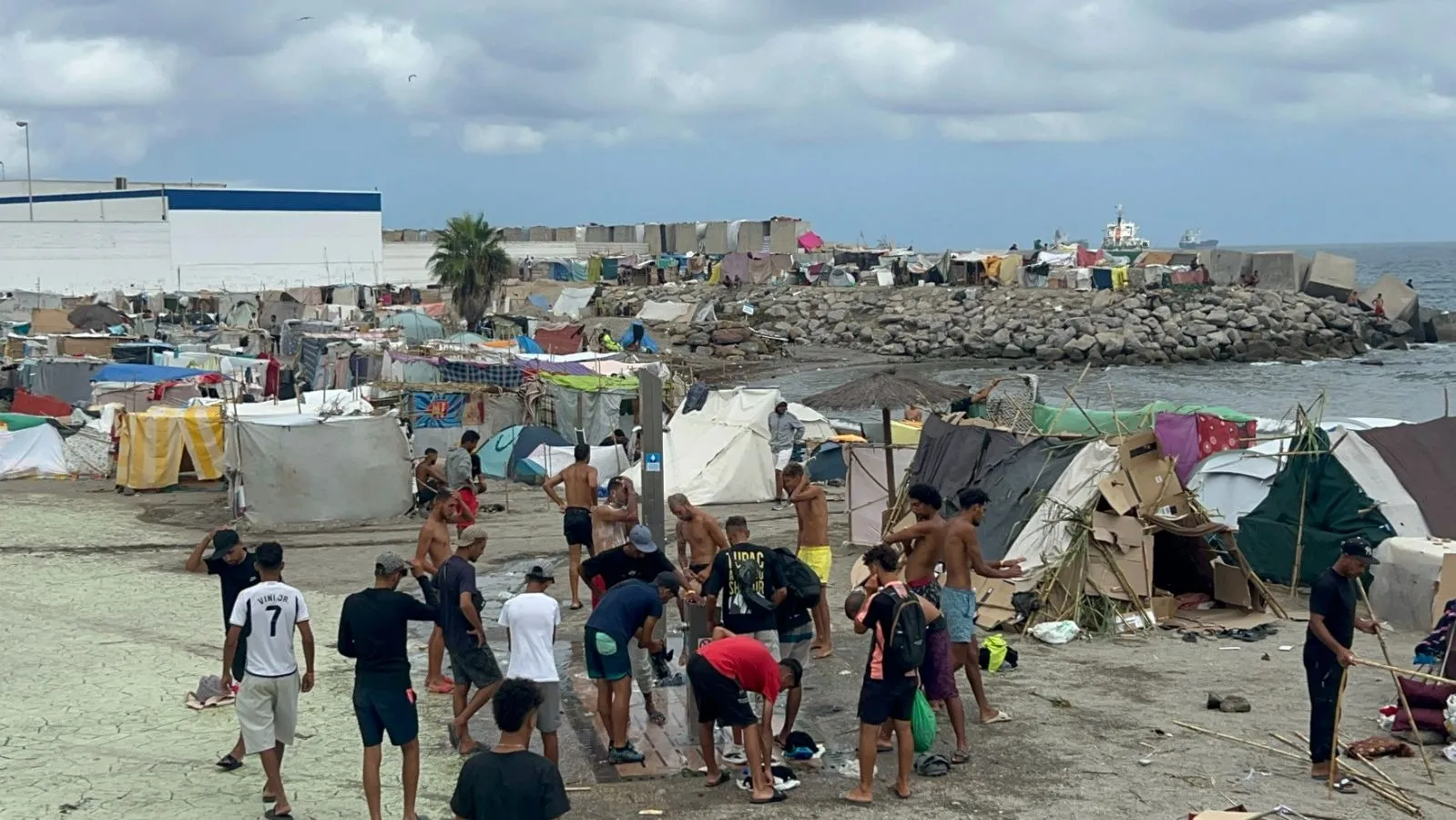

Unprecedented Migrant Influx in Ceuta and Melilla
In a stunning turn of events, the Spanish enclaves of Ceuta and Melilla are experiencing a historical surge of migrants, with approximately 60,000 individuals reportedly crossing from Morocco within just a few days. This overwhelming influx, which has been characterized by chaotic scenes at the borders of Fnideq and Beni Ansar, has led to clashes involving water cannons, burning vehicles, injuries, and tragically, at least 34 fatalities at sea. In response to this crisis, the Spanish government has entered emergency mode, deploying military forces, the Guardia Civil, drones, boats, and divers to manage the situation. Thousands of people have been returned to Morocco at a staggering rate, described by officials as "150 people per minute," highlighting the logistical challenges faced in border management. Prime Minister Pedro Sánchez has portrayed the incident as an "attack" on Spain's territorial integrity, amidst underlying geopolitical tensions, as Morocco has long claimed sovereignty over both enclaves while remaining publicly silent on the recent escalations. Furthermore, a recent ruling by the Spanish Supreme Court against immediate returns of migrants at sea may have intensified migration pressures, or as the Interior Ministry suggests, provided smuggling networks with new opportunities for profit.
Ongoing Clashes and Government Response
The situation at the borders of Ceuta and Melilla has escalated dramatically, with thousands of crossings reported in a short period. Clashes between migrants and Moroccan security forces have been particularly intense at the Fnideq border crossing, where authorities have utilized water cannons in attempts to prevent further crossings. Similar confrontations have occurred at the Beni Ansar crossing in Melilla, where reports from the Moroccan Human Rights Association indicate that at least three vehicles were set ablaze, resulting in injuries to both migrants and security personnel. Throughout the night, a constant stream of individuals continued to arrive in Ceuta, as reported by AFP, with many being young men and adolescents, although the overall numbers were lower than during the daytime surge. The ongoing situation has seen many women, minors, and children among the arrivals, with officials confirming that at least 34 lives have been lost at sea. The Spanish Interior Ministry has indicated that approximately 25,000 migrants were returned to Morocco within a single day, emphasizing the urgency of the crisis.
In light of these developments, Prime Minister Sánchez has labeled the influx as an assault on Spanish territory, asserting that the events represent a violation of Spain's territorial integrity. The Moroccan authorities have yet to publicly comment on these occurrences. Despite gaining independence from France and Spain in 1956, Morocco still claims the two Spanish enclaves, where thousands of individuals, primarily from sub-Saharan countries, wait for opportunities to enter the EU. In response to the escalating crisis, the Spanish government has mobilized military support to assist the Guardia Civil in Ceuta, although specific troop numbers have not been disclosed. Reports suggest that the personnel strength of the Guardia Civil is set to double from its current figure of 80 officers. Additionally, divers, boats, and drones have been dispatched to the region to aid in managing the border situation.
Many individuals have managed to reach Ceuta by swimming or crossing over land, with AFP reporters witnessing hundreds navigating around border barriers. In the wake of this surge, Sánchez announced further measures to secure the border, including the installation of buoys between the Moroccan coast and the beach at Tarajal in Ceuta, creating a physical barrier. He also outlined plans to expedite procedures for the return of irregular migrants. In response to the situation, both France and Italy have stepped up border controls, with Italy's far-right Prime Minister Giorgia Meloni even suggesting the possibility of expelling Spain from the Schengen Area. Her government is convening relevant bodies to discuss extraordinary measures, calling the images emerging from Ceuta "shocking." The backdrop to this significant border activity is a recent ruling by the Spanish Supreme Court, which prohibits the immediate expulsion of migrants intercepted at sea, a decision that the Interior Ministry attributes to smugglers exploiting legal loopholes.
As reported by zeit.de.