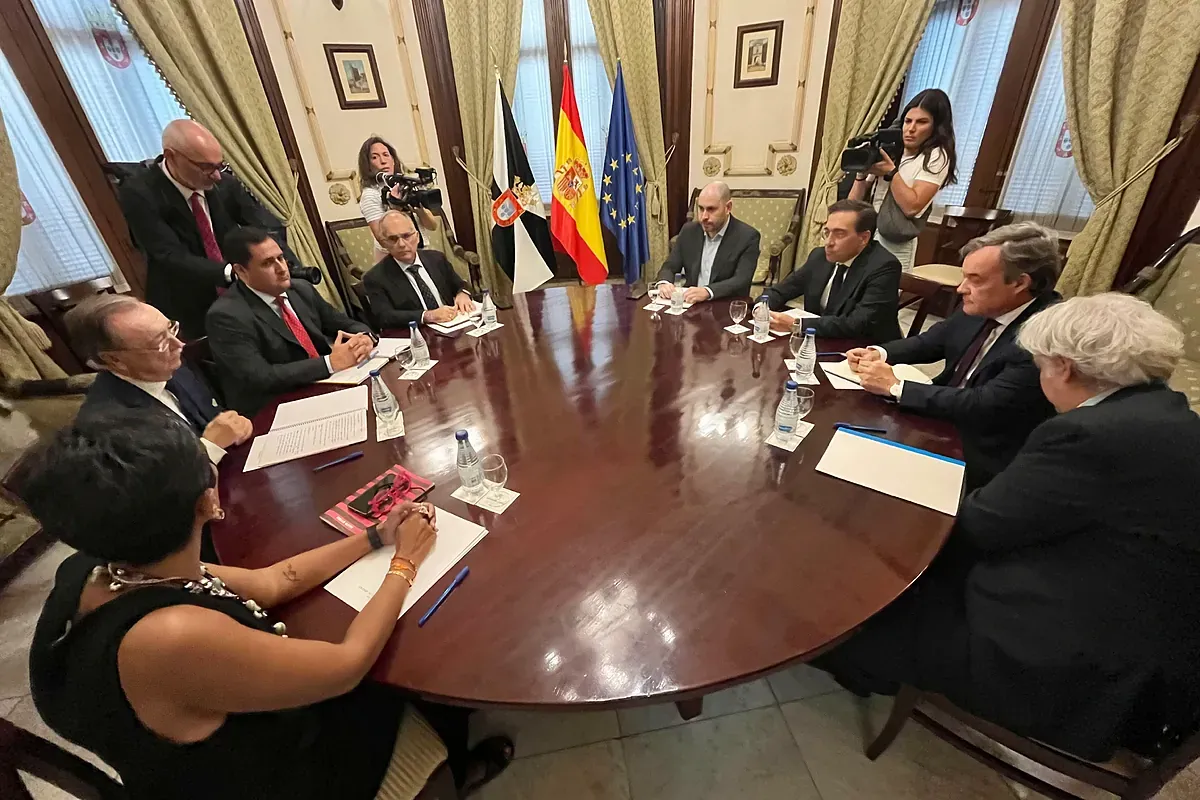

In a significant diplomatic milestone, Spain's Minister of Foreign Affairs, José Manuel Albares, made a historic visit to Ceuta for the first time in history, twelve days following an unprecedented influx of migrants at the border. This visit marks a notable event as it is the first instance of a Spanish foreign minister setting foot in Ceuta. During a press conference after meeting with the city’s autonomous president, Juan Jesús Vivas, Albares emphasized the importance of his visit beyond the timing of the recent border crisis.
Albares focused heavily on the collaboration with Morocco, asserting that despite the recent surge of around 80,000 individuals entering Spain on July 30, the diplomatic dialogue remains robust. He mentioned, “I speak with my Moroccan counterpart every day, sometimes multiple times a day,” highlighting that this ongoing communication was pivotal in navigating the acute phase of the crisis. Albares claimed that Morocco has consistently expressed its intent to prevent such situations from recurring, although he did not specify how the overwhelming influx occurred without prior warning from Rabat.
In another key point during his address, Albares made a firm commitment that every individual who entered Spain irregularly would be returned to Morocco. He reiterated that Morocco's willingness to facilitate these returns has been unwavering, stating, “They have not asked for any quid pro quo in exchange, and their disposition has remained the same.” This assurance is a critical aspect of the diplomatic negotiations between the two nations.
When discussing the causes behind the recent territorial integrity crisis, as described by Prime Minister Pedro Sánchez during his visit on July 31, Albares absolved Morocco of any blame, suggesting that the incident was not a result of any diplomatic fallout. He asserted that the diplomatic channels had functioned effectively from the onset, allowing for the rapid return of most individuals who crossed into Ceuta illegally. Albares delineated that the root cause of the surge was linked to human trafficking networks and misinterpretations of a Supreme Court ruling regarding the prohibition of 'hot returns' for those who swim across the borders. He firmly stated, “No one will remain in Ceuta, nor in Spain or Europe,” countering narratives circulating on social media and calling for a joint reflection with Morocco to devise preventative measures for future occurrences, particularly in light of the new dynamics introduced by social media.
Recently, the southern border crisis has escalated tensions between Spain and Italy, with Albares pointing fingers at a “reactionary international” network that includes connections in Europe and Spain, notably referencing the PP-Vox alliance and Italian Prime Minister Giorgia Meloni. Following Italy's persistent criticisms of Sánchez’s immigration policies, Albares directly reproached Meloni, stating, “One cannot speak with the lightness and frivolity that the Italian government has displayed.”
Regarding unaccompanied minors, the Minister of Presidency and Justice, Félix Bolaños, revealed that the number of unaccompanied foreign minors in Ceuta has risen to 1,527, a necessary step for the authorities to assume their guardianship. During a visit to the construction of the intermodal station in Almería, he mentioned that the Spanish government is working with Morocco to ensure that all children and teenagers can be reunited with their families in their countries of origin. Furthermore, he has condemned some leaders from Vox, implicitly referring to Deputy José María Figaredo, for inciting hate by suggesting the need to “hunt” irregular immigrants who have not yet been returned after the mass arrival on July 30. The Ministry of Equality has taken steps to involve the prosecution in investigating these statements made by the far-right politician during various interviews.
“We must ensure that individuals with extreme and violent rhetoric do not hold positions in autonomous governments or any level of authority,” added Bolaños, criticizing the PP for allowing such extreme right ideologies to flourish, particularly in regions like Andalucía, where Vox exerts influence. This commentary aligns with the PSOE’s electoral strategy of warning against a prospective government led by Santiago Abascal as vice president.
In a related development, Defense Minister Margarita Robles is set to address the Senate next week regarding the crisis in Ceuta, following pressure from the PP, which has accused the government of avoiding accountability. The PP insists that Robles must clarify the military's role during the crisis triggered by the influx of 72,000 migrants at the Ceuta border. They have expressed commitment to ensuring that both Interior Minister Fernando Grande-Marlaska and Foreign Minister Albares fulfill their responsibilities by attending extraordinary sessions before the Senate amid this national emergency situation.
As reported by elmundo.es.