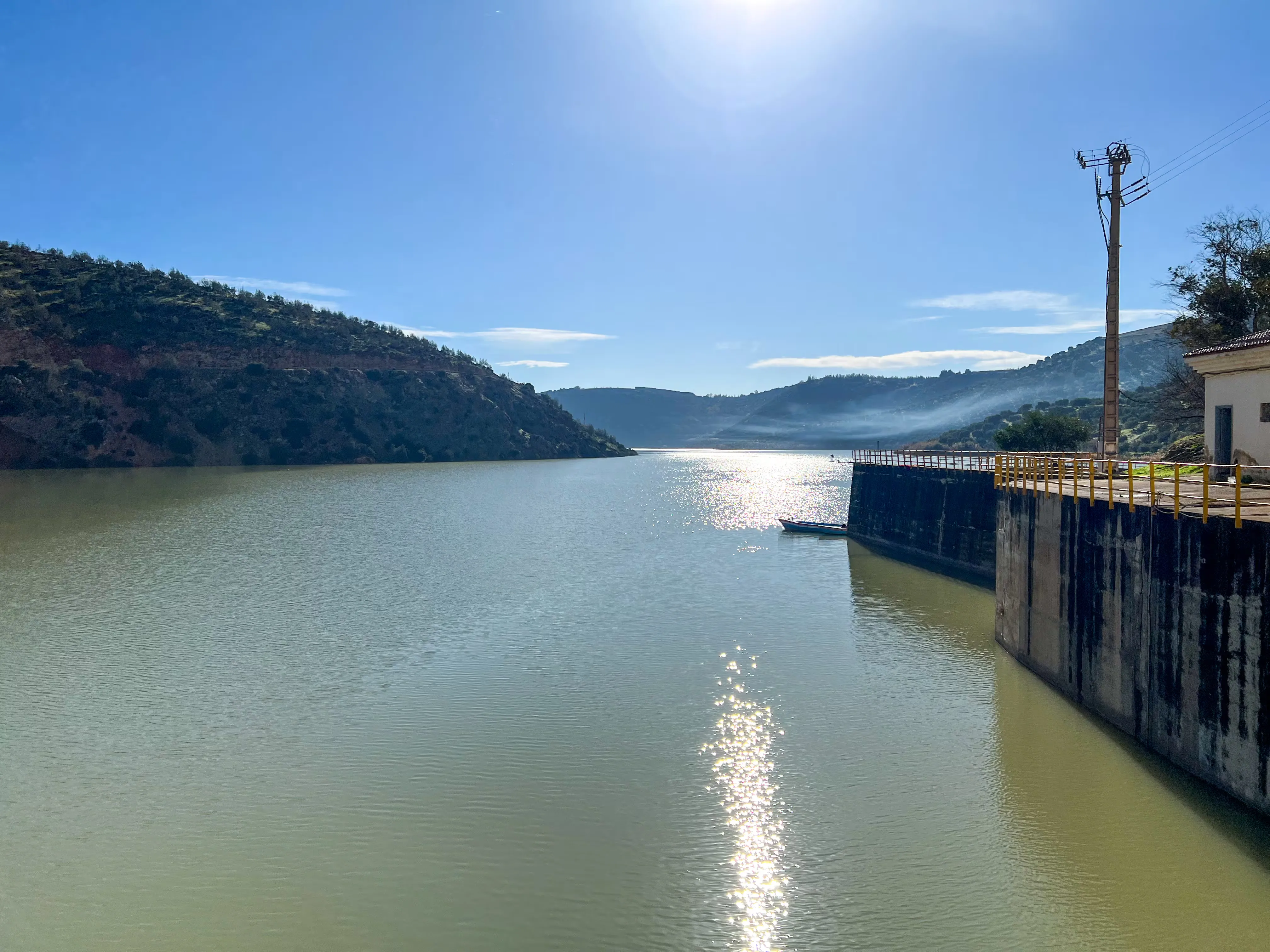

Current Hydropower Situation of Morocco's Dams
As of mid-August 2026, Morocco's dams are exhibiting comfortable water levels, despite the country having entered an advanced stage of the summer season, which typically sees increased pressure on water resources due to rising temperatures and heightened demand for drinking and irrigation water. This trend indicates a notable improvement in the water situation compared to the previous year, with high storage levels being maintained even amid increased consumption during this time of year.
According to the latest official data released on Monday, August 17, by the "Water Dialna" platform affiliated with the Ministry of Equipment and Water, the overall filling rate of dams nationwide stands at 68.66%, with a total water storage volume nearing 11.69 billion cubic meters out of an aggregate capacity of 17.03 billion cubic meters. This marks a significant increase from the 34.54% filling rate observed during the same period last year, representing an improvement of over 34 percentage points.
At the regional level, the Sebou basin, the largest in the country by capacity, has recorded a filling rate of 81.67%, with a water storage volume of approximately 4.39 billion cubic meters, placing it second nationally after the Tensift basin, which leads with a filling rate of 82.99%. Following closely is the Loukkos basin, which has a filling rate of 81.37%.
Performance of Key Dams
The performance of various dams within the Sebou basin reflects this positive trend, with significant filling rates observed in several of its key dams. The Al Wahda dam, the largest in Morocco and the third largest on the African continent, has achieved a filling rate of 85.74%. Other notable dams in this region include the Alal Fassi dam at 92.14% and the Sahla dam at 93.49%. Meanwhile, the Loukkos basin also shows high filling rates in several of its facilities, most notably the Dar Khroufa dam at 92.82%, the Sharif Idrissi dam at 90.75%, and the Oued El Makhzen dam at 74.78%.
Moreover, the Abou Raqraq basin has reported a high filling rate of 80.74%, bolstered by significant reserves in the Tamsna dam at 81%, the Malih dam at 67.93%, and the Sidi Mohammed Ben Abdallah dam at 76.87%, one of the most prominent water structures in the basin. In contrast, the Am El Rabi basin has a filling rate of 60.55%, supported by substantial water reserves in the Bin Ouidane dam (84.74%) and the Moussaira dam (40.64%), alongside other dams maintaining their water inflows, such as the Sidi Idriss dam (100%) and the Moulay Youssef dam (72%).
On the downside, the Ziz-Ker-Ghris basin has seen a more significant decline in filling levels, currently at 41.07%, while the Souss-Massa basin stands at 49.45%. The Draâ-Tafilalet basin has the lowest national filling rate at 39.02%, highlighting the ongoing disparities in water resource availability among the various basins, despite the overall national improvement compared to the same period last year.
As Morocco enters the latter half of August, the dams are holding a water reserve that significantly exceeds levels from the same period last year, indicating an improvement in the hydropower situation during the recent rainy season. This has allowed the kingdom to recover a significant part of its strategic stock. However, the continued rise in temperatures and the disparities noted among the basins necessitate ongoing water consumption management and enhanced resource management strategies. This should be coupled with accelerated implementation of major projects, including desalination initiatives and the mobilization of unconventional water resources to tackle the impacts of climate change and ensure the sustainability of Morocco's water security.
As reported by ar.le360.ma.