

Introduction to Infective Endocarditis and Its Global Impact
Infective endocarditis (IE) is a significant health concern worldwide, characterized by a notable incidence of morbidity and mortality. Despite advancements in medical technology, including diagnostic imaging, antimicrobial therapies, and surgical interventions, IE continues to pose a life-threatening risk, particularly in low- and middle-income countries (LMICs). These regions often face challenges such as delayed diagnoses, persistent rheumatic heart disease, and limited access to essential healthcare resources, contributing to worse patient outcomes. Recent epidemiological data reveal that while age-standardized rates of IE have decreased over the last thirty years, the absolute number of cases continues to rise, especially among older adults and individuals in lower socioeconomic conditions.
Study Overview: Objectives, Methods, and Key Findings
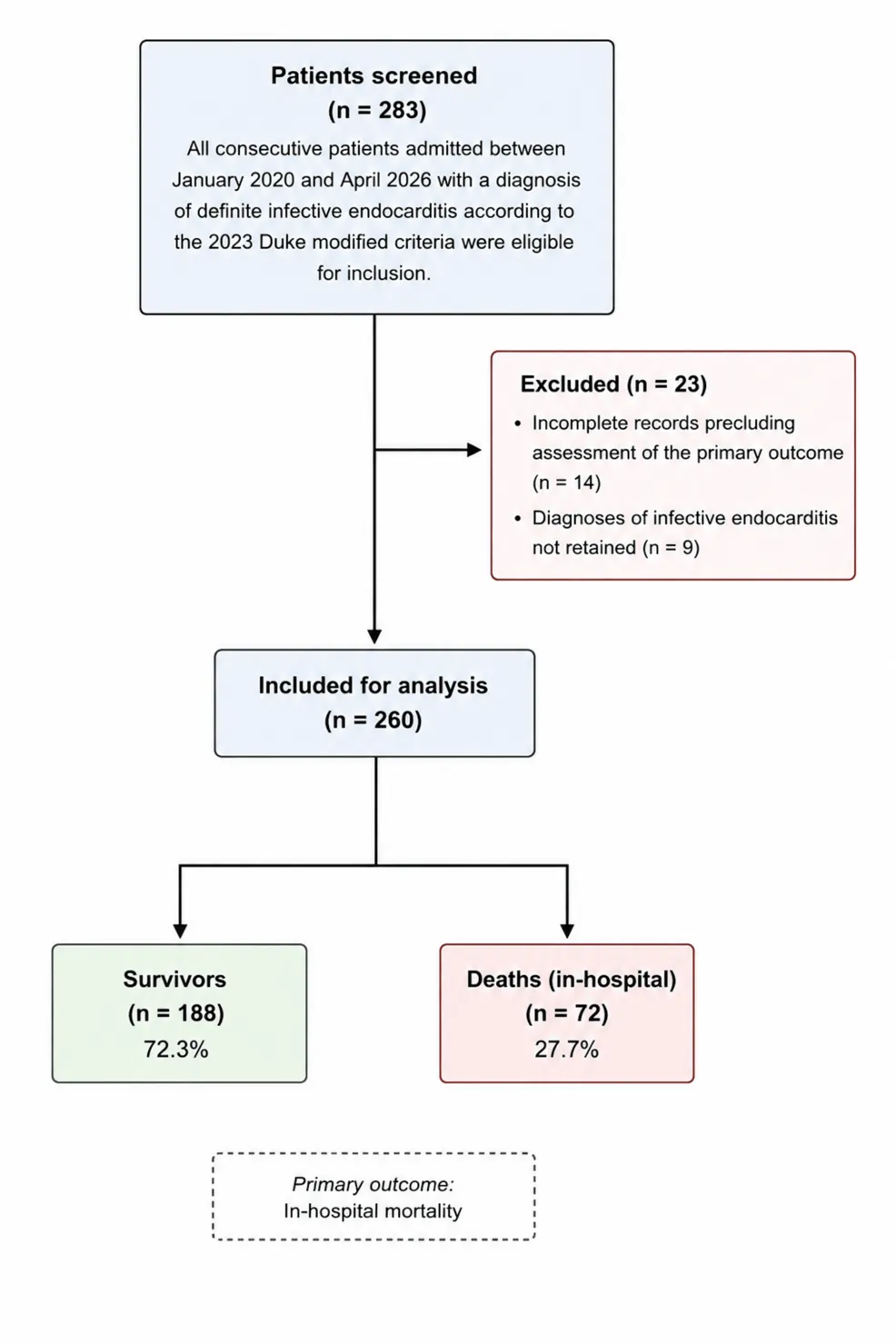
This retrospective observational cohort study was conducted at Mohammed VI University Hospital in Marrakech, Morocco, from January 2020 to April 2026, focusing on patients diagnosed with definite IE based on the 2023 Duke-International Society for Cardiovascular Infectious Diseases (Duke-ISCVID) criteria. Out of 260 patients included in the analysis, 188 (72.3%) survived until discharge, whereas 72 (27.7%) succumbed during hospitalization. The average age of the cohort was 47 years, with a predominance of males. The research aimed to unearth various clinical, biological, microbiological, and echocardiographic factors that could independently predict in-hospital mortality.
Through comprehensive data collection, which included demographic details, clinical presentations, biological markers, microbiological data, and echocardiographic assessments, the analysis employed both univariable and multivariable binary logistic regression techniques. Notably, factors such as septic shock, local cardiac complications, advanced age, large vegetation size, male gender, anemia, and severe renal dysfunction were identified as significant predictors of mortality risk. The final model demonstrated robust discrimination with a C-statistic of 0.84, indicating its potential utility in recognizing high-risk patients, although it should not be construed as a definitive mortality prediction tool.
The study's findings emphasize the necessity for early identification and management of individuals presenting with these high-risk features, advocating for a multidisciplinary approach in the treatment of infective endocarditis. The results also highlight the critical need for further multicenter studies to validate these findings and assess their applicability in varied clinical settings.
As reported by cureus.com.

