
Significant Infrastructure Advances Amid Persistent Needs
The International Monetary Fund (IMF) recently issued a report emphasizing the benefits of infrastructure investments related to Morocco's hosting of the 2030 World Cup, while also cautioning against potential risks of budget overruns and increased debt. Over the past two decades, Morocco has made considerable strides in infrastructure development, particularly in the transport, energy, and telecommunications sectors. Nevertheless, significant gaps remain, primarily driven by rapid urbanization, a burgeoning population, and rising demand for public services. The IMF asserts that addressing these deficiencies is vital for sustaining economic growth.
Massive Investments in Preparation for the World Cup
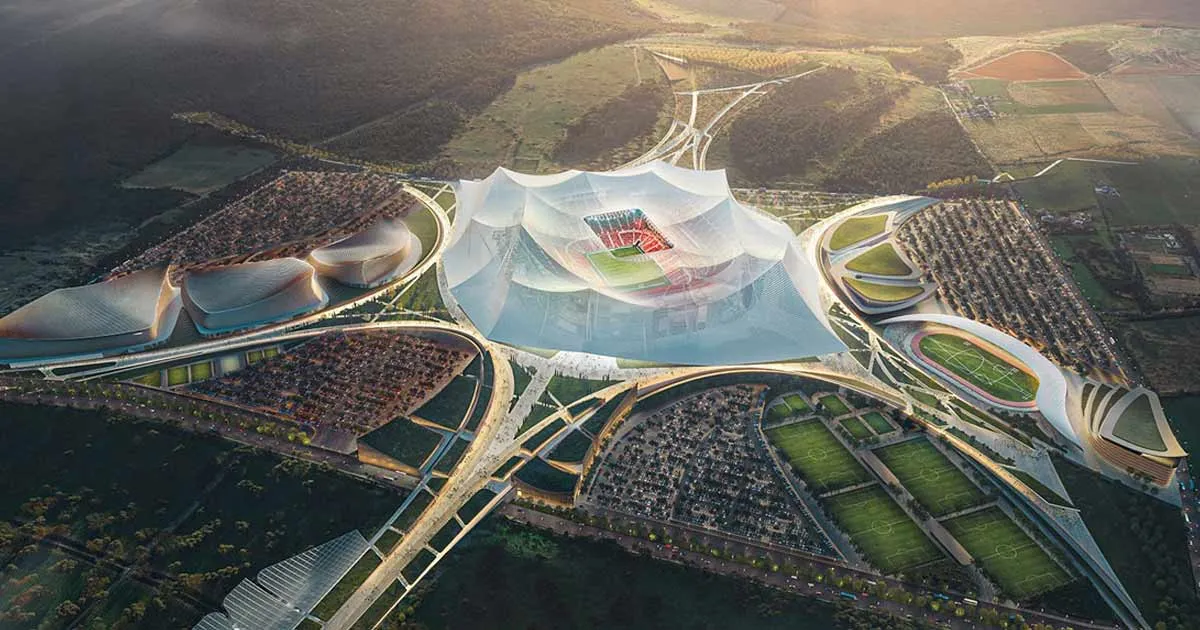
In anticipation of hosting the 2030 World Cup, Morocco plans to significantly ramp up its infrastructure investments, encompassing roads, railways, airports, and stadiums. The total estimated cost of these projects is around 190 billion dirhams, which corresponds to approximately 11.9% of the country's GDP. The financing strategy will primarily rely on domestic bank loans (67%), external funding (17%), local bonds (9%), and equity from public enterprises (7%). The IMF estimates that these investments could contribute an additional 2% to GDP growth by 2030, with potential long-term benefits of up to 3%. However, these investments might also result in a higher budget deficit and a public debt increase of about 8% of GDP by 2030, alongside temporary pressures on private investment and inflation.
The IMF underscores the critical importance of project management quality; improved efficiency could boost growth gains to 5%, whereas declining performance could reduce these gains to around 2 to 2.5%. The report also highlights historical productivity contributions from infrastructure, noting that sectors like ports and telecommunications have accounted for roughly one-fifth of Morocco's productivity growth since 2005. The report identifies three primary risks that could hinder these potential benefits: firstly, the leak of imports, as an estimated 60% of expenditures will go towards imported goods (e.g., high-speed trains, airport equipment), limiting the immediate economic multiplier effect. Secondly, the crowding-out effect may occur if public borrowing leads to higher interest rates, thus stifling private investment until 2030. Lastly, cost overruns are a common issue in large transport projects, often exceeding budgets by 30% or more, which could exacerbate public debt without yielding additional productive gains.
To mitigate these risks, the IMF recommends strict cost control, phased project financing, including maintenance cost considerations, and prudent debt management, ensuring that future economic returns adequately cover incurred costs and prevent sustained financial pressures. Overall, the IMF views the investments associated with the 2030 World Cup as a significant growth lever for Morocco, provided they are executed efficiently and within financial balance. The report anticipates a massive acceleration of public investments in connectivity and tourism infrastructure from 2024 to 2030 in preparation for the World Cup. The comprehensive program is projected to reach 11.9% of GDP by 2024, with allocations designated as follows: 6.0% of GDP for railways (ONCF), 2.4% for airport modernization and capacity expansion (ONDA), 2.2% for stadium construction and renovation (SONARGES), 0.9% for highways (ADM), and 0.5% for urban and tourism development.
In summary, the 2030 World Cup serves as a catalyst for a substantial upgrade of national infrastructure, with the ultimate economic benefits hinging on the rigor of execution and the management of budgetary risks. As reported by h24info.ma.