
Assessing the Effects of U.S. Tariffs on Moroccan Exports
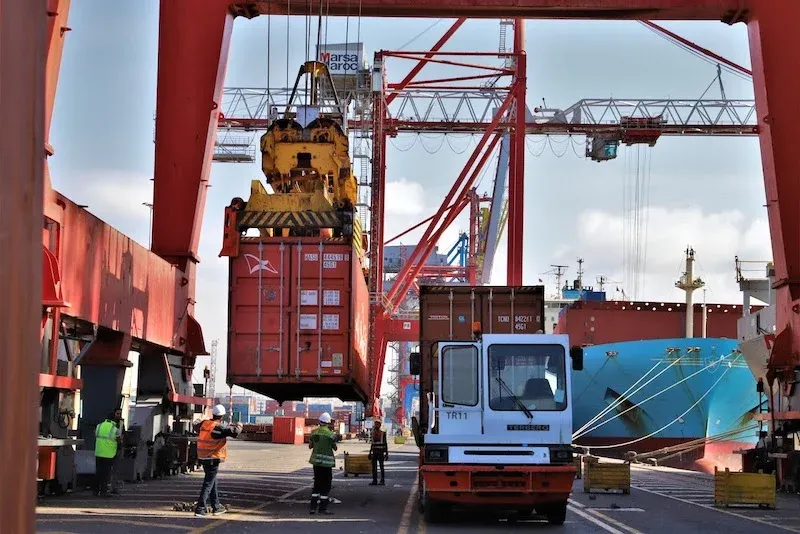
The General Confederation of Enterprises in Morocco (CGEM) has provided assurances regarding the potential impacts of U.S. tariffs on certain categories and products of Moroccan exports, following the announcement of new tariffs related to "forced labor" imposed by the Trump administration on July 24. In a statement to Hespress, Ali Al-Harithi, head of CGEM's Foreign Trade Development Committee, emphasized that preliminary data does not indicate that the 12.5% tariff on Moroccan exports will hinder the aspirations of Moroccan businesses in the U.S. market. Al-Harithi reiterated the CGEM's commitment to fully support the development of Moroccan enterprises and enhance their presence in the strategic U.S. market.
According to additional commentary from the CGEM, the organization plans to work closely with sectoral federations to conduct an objective assessment of the actual effects of this new tariff regime on Moroccan exports, as well as to explore any potential opportunities that may arise as a result. Following this evaluation, the CGEM intends to share its analysis and recommendations with relevant Moroccan authorities to facilitate ongoing dialogue with U.S. partners.
Understanding the Broader Context of U.S. Tariffs
The new tariffs, impacting 60 prominent global economies including Morocco, were officially enforced on July 24, 2026, immediately following the expiration of a temporary 10% global tariff. Al-Harithi highlighted the CGEM's keen interest in recent announcements from U.S. authorities, particularly the decision to apply a 12.5% tariff on certain imports from Morocco, while also noting that this measure affects around sixty countries and is not specifically targeted at Morocco.
The U.S. represents a strategic destination for Moroccan exports, and is prioritized for enhancing the international presence of Moroccan enterprises. In alignment with this vision, the CGEM has established a dedicated committee for the Americas aimed at strengthening economic relations with this region and preparing a strategic vision in coordination with relevant professional federations to assist Moroccan enterprises in accessing and expanding their presence in these markets.
It is important to note that the Office of the United States Trade Representative (USTR) has included Morocco in a list of 60 economies, including China and the European Union, which have been found to fail in implementing a ban on imports produced through forced labor, according to prior reports and documents reviewed by Hespress. The current U.S. administration's actions are based on Section 301 of the Trade Act of 1974, which deals with unfair trade practices, alleging that 60 trading partners have not effectively enforced a ban on forced labor.
Although the proposal encompasses most Moroccan products, it does include exceptions for certain categories, particularly goods already subject to Section 232 tariffs and specific exceptional sectors designated by the USTR, indicating that the additional tariff will not be universally applied to all Moroccan exports. In 2025, total U.S. imports from Morocco reached approximately $1.9 billion, while U.S. exports to Morocco were estimated at $5.5 billion, according to American estimates.
As reported by hespress.com.