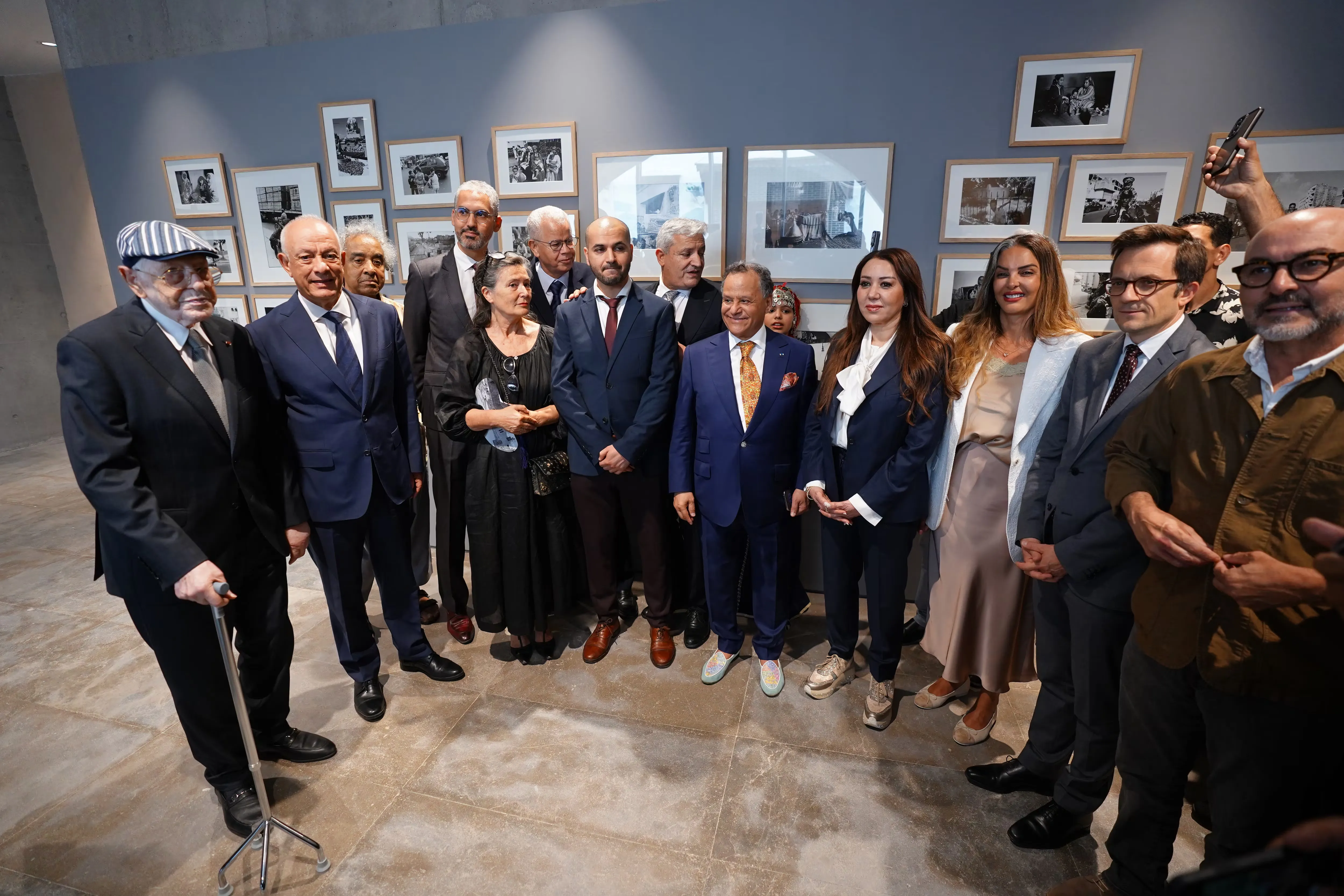

On June 23, the narrow streets of Larache, nestled in the heart of Casablanca's medina, were alive with excitement as the annual Night of Museums commenced, drawing art enthusiasts on a nocturnal journey from gallery to gallery. This evening marked not just another cultural event, but the grand opening of a significant new chapter for the recently rehabilitated medina, as the long-awaited Photography and Visual Arts Museum opened its doors to the public.
This architectural gem, designed by the renowned Japanese architect Tadao Ando, elegantly blends into its surroundings while unmistakably showcasing his signature style. It stands proudly on the site of a former 19th-century foundouk, revealing its treasures to the city that birthed it. The inauguration was a momentous occasion attended by notable dignitaries including Mohamed Mhidia, the wali of the Casablanca-Settat region, Nabila Rmili, the mayor of Casablanca, and Anne-Claire Legendre, the new president of the Arab World Institute in Paris, alongside Mehdi Qotbi and his team from the National Foundation of Museums of Morocco.
Officially joining the Foundation on January 30, 2026, following an agreement with the Casablanca wilaya, this museum is poised to serve as a vibrant hub for photography and a center for training in the visual arts, fulfilling its role as a showcase for artistic expression.
A Museum that Reflects the Spirit of Casablanca
Within the raw concrete walls, the inaugural exhibition titled _Casa_ unfolds, dedicated to the white city and its residents. This title reflects a popular, urban, and communal essence, deeply rooted in the daily lives of its inhabitants, who take center stage in this homage to the city through the ages. The exhibition captures the Casablanca locals in all their diversity, complexity, and lifestyle across three expansive floors, creating a palpable emotional resonance. Rarely has the essence of the white city been portrayed so authentically, revealing its truths without glossing over its shadows, smiling through its melancholy, or concealing its flaws. The city is unveiled in poetic beauty through the lenses of both Moroccan and international photographers who have recognized the allure in its strangeness.
Past cinemas, now abandoned, are majestically captured by Khalid Nemmaoui, while Deborah Benzaquen immerses herself in the sweat of a boxing gym, seizing the dreams, ambitions, rage, and fervor in the eyes of Casablanca's youth. Fatima Mazmouz restores the dignity of the women who populated the streets of the Bousbir district, offering a reinterpretation of the city’s colonial history. Emerging from the past, Bouchaïb Al Bidaoui, a figure of the aïta Marsaoui, showcases his elegance in sumptuous caftans. Through these colorful images from another era, the other face of a city is narrated, embodied by this incomparable artist who, in the 1950s, revitalized and popularized an art form long scorned before it was banned, all while challenging the norms of his time as a female chikha. The often chaotic architecture is depicted in both black and white and color, telling the history of a city once traversed by a river, where the urban fabric cradles tales of life.
To articulate the mythos of Casablanca, which has crafted its narrative without inheriting an imperial golden age, the exhibition features works from nearly fifty artists, each contributing to the vivid tapestry of memories, beliefs steeped in the poetic mist of the Sidi Abderrahmane islet, the emancipation of perspectives, self-assertion, and the characteristics of youth who are reinventing the city.
Among the displayed works, approximately twenty pieces were lent by the Arab World Institute in Paris, while nearly three hundred came from Nathalie Locatelli, the founder of Marrakech's Gallery 127, dedicated to contemporary photography from the Maghreb. Locatelli collaborated closely with the curatorial team, including Abdelaziz Idrissi, head of the museums department within the FNM, Soufiane Er-Rahoui, curator of the National Museum of Photography, and photographers Khalil Nemmaoui and Daoud Aouladsyad.
This exhibition also highlights photographs of Sultan Moulay Abdelaziz, alongside the works of Aassmaa Akhannouch, Khadija El Abyad, Mehdi Ait El Mallali, Leila Alaoui, Ahmed El Almi, Zineb Andress Arraki, Daoud Aouladsyad, and many others, weaving a rich narrative of art and culture that resonates within the heart of Casablanca.
As reported by fr.le360.ma.