
Emerging Startups Transforming Moroccan Tourism
A new wave of entrepreneurs is reshaping the landscape of Moroccan tourism, presenting a vision of a connected, experiential, and sustainable travel industry. This shift was highlighted during a recent national pitch session for tourism startups held in Marrakech, which served as a platform to rethink the national tourism model, merging innovation with entrepreneurship and investment. The vibrant city of Marrakech has become a showcase for this transformation, where ten fully Moroccan startups showcased their projects to a jury of investors, business angels, and venture capitalists. This event took place just before the International Conference on Technological Innovation and Tourism Investment, an initiative organized by the Moroccan Society of Tourism Engineering (SMIT) in collaboration with UN Tourism.
Among the finalists selected from over 176 applications nationwide, these startups are strategically positioned within three key sectors: the digitalization of tourism services, gastronomy, and immersive experiences. The SMIT plays a crucial role in this entrepreneurial dynamic, acting not merely as an organizer but as a strategic engineer of the tourism market. Each startup received structured support, including refining their business models, investor pitch preparation, and connections with financial partners. The clear objective is to transform innovative initiatives into bankable projects that can attract structured investment pipelines. This approach aligns with a broader strategy aimed at positioning Morocco as a regional hub for tourism innovation, reducing perceived risks for investors, and facilitating connections to funding opportunities.
Showcasing Market-Driven Solutions
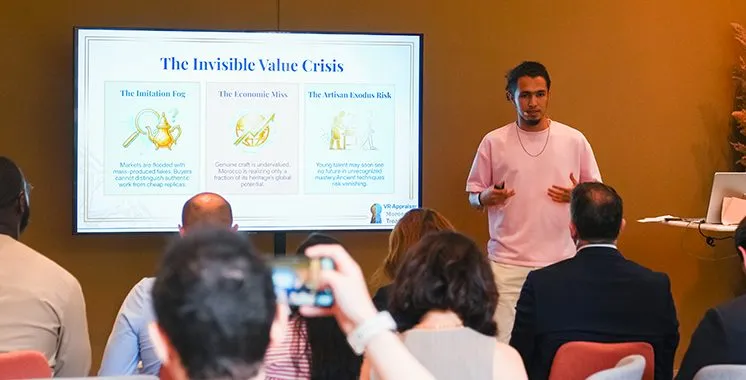
The pitch sequence emphasized the maturity and market orientation of the participating startups. In the digitalization category, Kolliks introduced a platform that enables tourists to purchase Moroccan products and ship them internationally, extending the shopping experience beyond the travel itself. Similarly, MVR World and Beyond The Map utilize virtual reality and artificial intelligence to enhance the tourist experience before, during, and after their stay. Furthermore, TravelEasy simplifies the traveler’s journey with responsible offerings, while TravelSportTech taps into the emerging sector of sports tourism, aligning with upcoming international events. Beyond digital innovations, the session also highlighted two underexplored yet high-potential segments: gastronomy and gaming. Medina Mirage offers immersive culinary experiences combining storytelling, stage design, and digital technology, tailored for deployment in medinas, riads, and high-end establishments. In the gaming sector, Mossika develops interactive musical journeys that extend cultural experiences beyond the trip, while VR Appraiser – Moroccan Treasures provides a virtual immersion into Moroccan souks, encouraging visitors to discover the real medinas. These initiatives reflect the emergence of a hybrid market at the intersection of tourism, culture, and creative industries—still in its early stages regionally but particularly appealing to investors. The jury members noted the operational maturity of the projects presented; these startups showcased not just concepts but thoroughly tested solutions backed by structured business models that effectively address the needs of today’s and tomorrow’s tourists.
This pitch session sends a clear message: tourism investment must be approached innovatively. The startups presented are not merely exploratory concepts; they represent the first assets of a growing investment portfolio underpinned by a strategic vision supported by public authorities. Thus, what transpired was more than just a competition; it illustrated the concrete emergence of a new tourism model in Morocco—one where innovation, entrepreneurship, and investment converge to redefine the tourism experience and create sustainable value.
As reported by aujourdhui.ma.