
Understanding the Urgent Intelligence Reports Leading to the Crisis
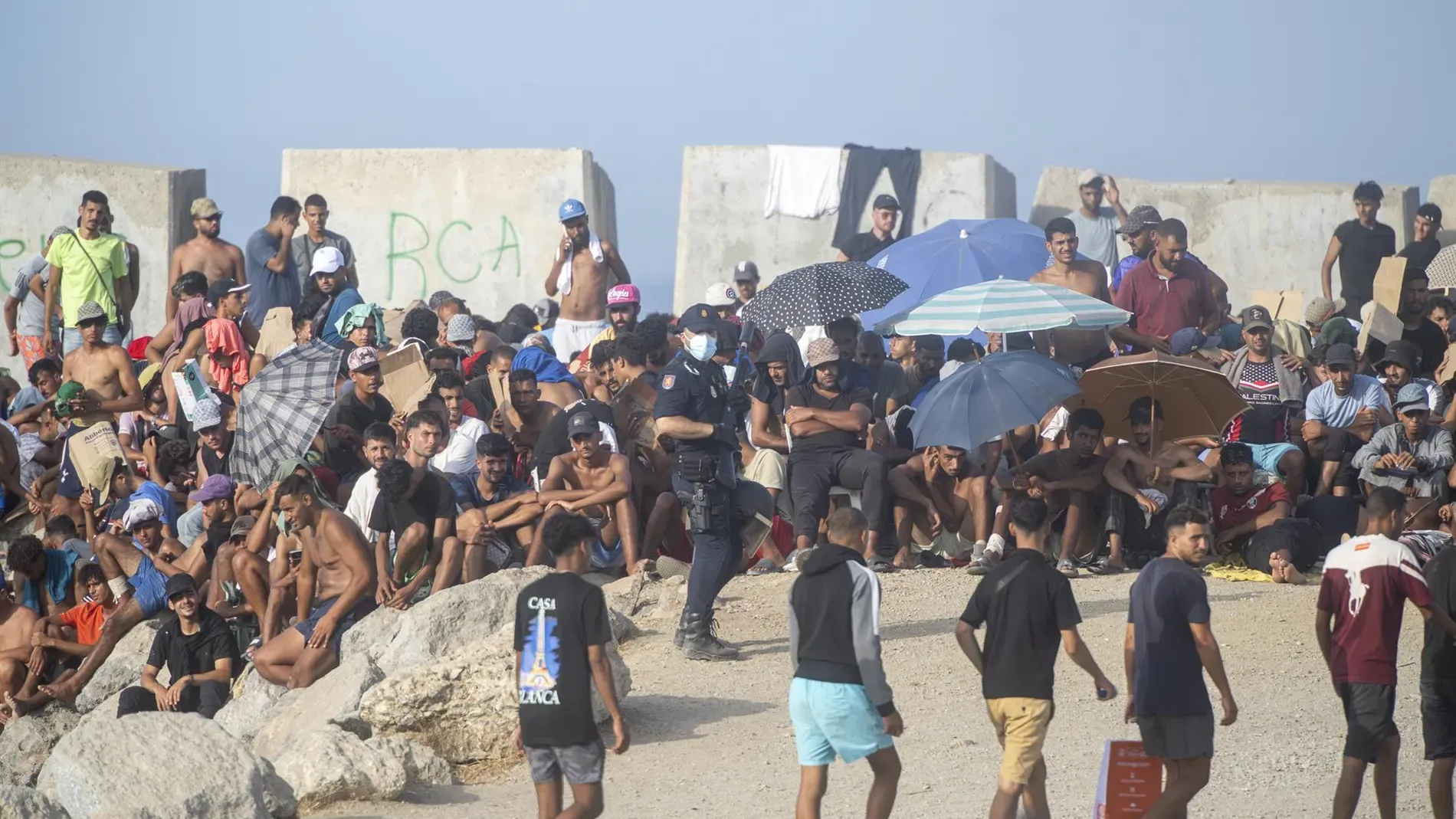
On July 29, a day prior to an extraordinary influx of around 80,000 individuals, the National Intelligence Center (CNI) of Spain issued an urgent communication to Morocco regarding the orchestration of an unprecedented assault on Ceuta. This document highlighted the alarming situation as most of the migrants attempted to enter the territory by swimming. The Spanish agents concluded their report by requesting the cooperation of Moroccan intelligence services to manage the situation effectively. In contrast, a report from the National Police sent to the Audiencia Nacional pointed out the involvement of uniformed gendarmes and undercover agents who allegedly facilitated the illegal entry into Spanish territory.
The document began by noting recent intelligence on the planning of various initiatives aimed at breaching Ceuta's borders, both by swimming and scaling the fence, particularly exploiting the festivities surrounding the Throne Day celebrations. The Spanish agents detailed their discovery of WhatsApp groups named "Assault on the Ceuta Fence," which were critical in organizing the events that transpired on July 30. Notably, this chat was identified by intelligence eight days before the actual incident, indicating a significant lapse in preventive measures.
The administrator of the group was found to possess two phone numbers—one registered in Spain and the other in Algeria—without any prior criminal record. Additionally, a Facebook group titled "Ceuta Fnideq" boasted a staggering 160,000 members, showcasing the extensive reach of the mobilization efforts. The CNI shared with Moroccan intelligence several posts from these chats that called for an assault on the autonomous city on July 30, coinciding with the Throne Day celebrations, which would divert the authorities' attention during the festivities.
Patterns of Migration and Government Response
This document forms part of the declassified information released by the government regarding warnings and communications made by various agencies throughout July concerning the potential for a mass assault on Ceuta. Spanish Prime Minister Pedro Sanchez announced that the Moncloa would publish a dossier consolidating all existing information at that time for the sake of transparency. According to reports, the CNI agents stationed in Ceuta—numbering approximately 25, as mentioned by the Defense Minister—engaged in WhatsApp discussions with the government delegation in the city starting three days before the assault, on July 27. On that day, political representatives convened with the National Police and the Civil Guard to address the increasing number of swimmers attempting to breach the borders.
Intelligence about this meeting was communicated to Spanish intelligence only two hours after it began, and notably, without the inclusion of subject matter specialists. The situation escalated, leading to operational requests from the Center the following day seeking clarity on how the meeting unfolded. On the morning of July 29, agents informed the delegation about various alerts concerning a preliminary agreement between Morocco and Spain that would enable the return of a group of migrants currently residing in the refuge center in Ceuta to Morocco. The report revealed a social media call for an assault on both land and sea scheduled for the next day, exploiting the distraction of Moroccan police due to the ongoing celebrations.
Three days prior to the assault, on July 27, agents submitted a report detailing the current situation regarding irregular immigration towards Spain. This document was directed to the government and shared with local authorities in Ceuta. Such reports analyze migration trends observed in recent months. Although the service indicated a decline in irregular entries into Spain since the beginning of the year—primarily driven by reduced maritime arrivals—agents noted a concerning increase in access attempts to the autonomous cities.
One significant concern for the CNI was a ruling from the Supreme Court earlier that month, which hindered the ability to reject migrants intercepted at sea at the border. This ruling could drastically impact irregular migration into the autonomous cities, especially in Ceuta, where the pressure has been mounting. In 2025 alone, there were 12,829 attempts to enter by swimming, with only 431 successful entries recorded.
As reported by larazon.es.