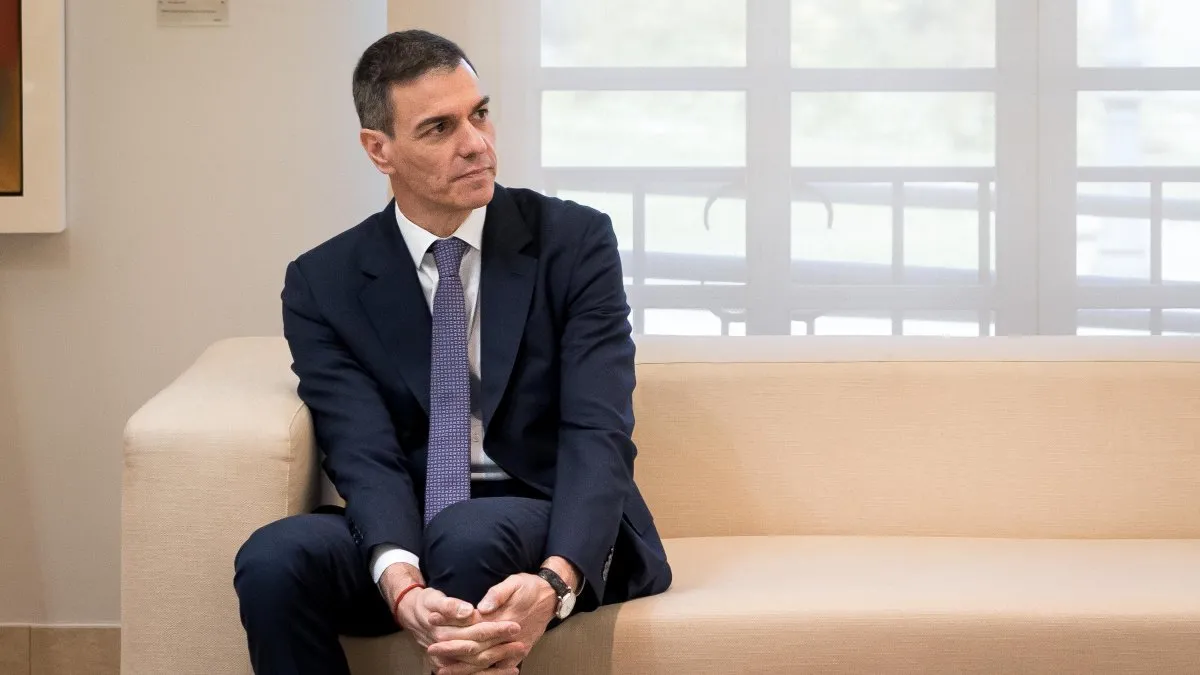

Pedro Sánchez's political approach towards Morocco has once again come under intense scrutiny in the Congress of Spain. The **People's Party (PP)** has seized the opportunity presented by the appearance of Foreign Minister José Manuel Albares to criticize the concessions made to Rabat. They argue that this strategy, according to the PP, has failed to deliver the promised stability that the government had assured. During the session in Congress, PP deputy Carlos Floriano expressed his concerns, pointing out the dependency that Moncloa has cultivated with its neighboring country. He directly confronted Albares, stating, **"Spain has constructed a relationship in which it makes concessions in the hope of gaining stability, only to find that this stability continues to rely on decisions made on the other side of the border."**
Muñoz Raises Concerns Over Government Hacking
Adding to Floriano's criticisms, Ester Muñoz, the spokesperson for the PP in Congress, highlighted one of the most sensitive issues in the Spain-Morocco relationship: the hacking of mobile phones belonging to members of Sánchez's government. Muñoz questioned whether the stance Moncloa is taking towards Rabat and its actions during the Ceuta crisis could be influenced by the information obtained from these cyberattacks on devices belonging to President Sánchez and ministers Margarita Robles and Fernando Grande-Marlaska. In a recent interview on Telecinco, she pondered **"to what extent the government may be influenced by Morocco and whether it is related to the information acquired from the hacking of government mobile phones."** Furthermore, she labeled it a **"disgrace to the intelligence of Spaniards"** that Moncloa attempts to dissociate Rabat from the massive influx experienced in Ceuta on July 30. The popular spokesperson rejected the notion that the movement of tens of thousands of individuals towards the autonomous city could be merely attributed to spontaneous mobilization via social media.
The criticisms from the PP have intensified, especially in light of the fact that many of the government’s parliamentary allies also seem unconvinced by Albares' narrative regarding the relationship with Morocco. **Junts, ERC, Bildu, PNV, and Podemos** have joined the PP in reproaching the government for its perceived "weakness" and "concessions" to Morocco. These coalition partners have also revisited the controversial shift by Sánchez in 2022, when the government endorsed Morocco's autonomy plan for Western Sahara, criticizing Albares for now claiming complete collaboration with Rabat amid the Ceuta crisis. They also questioned why the Foreign Ministry had not summoned the Moroccan ambassador in Spain.
Calls for Stronger Stance Against Morocco
Sánchez's parliamentary allies have demanded greater **"firmness"** in dealings with Morocco, warning that not only Morocco but also the United States and Israel might aspire to change the status of Ceuta and Melilla. Meanwhile, the political party Sumar has taken a more measured stance, with its deputy Agustín Santos simply urging the government to defend Spain's territorial interests against Morocco. In line with its usual rhetoric, **Vox** has also criticized the government, with deputy Ignacio Hoces accusing Albares of **"cowardice," "submission," and "betrayal."** This criticism has underscored the tumultuous relations between Spain and Morocco, especially during the ongoing crisis in Ceuta, reflecting widespread discontent regarding the management of these crucial diplomatic ties.
As reported by esdiario.com.