
Iran's Strategic Moves to Fortify Nuclear Facilities
A high-ranking Iranian source has revealed to "Al-Jarida" that Tehran has recently intensified its efforts to bolster the defenses of its nuclear facilities. This development comes as U.S. President Donald Trump has hinted at resorting to a "hard approach" should Iran continue to resist signing an agreement to end the conflict on American terms. The source, who has previously worked with the Iranian Atomic Energy Organization, disclosed that the organization has been actively redistributing highly enriched uranium and relocating it to fortified storage sites across various regions. This strategy aims to minimize the possibility of the uranium being targeted or accessed in the event of renewed strikes or special operations intended to capture it.
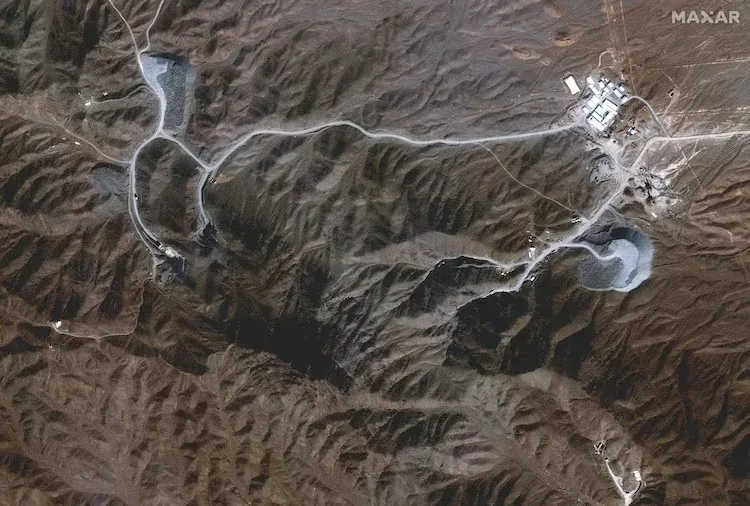
The source further elaborated that the site at Mount Paa's, which Trump recently threatened to strike, has been assessed by Iranian officials as vulnerable to American attacks. Consequently, the facilities deep within the mountain have largely been stripped of sensitive materials and equipment. Additionally, the source mentioned the existence of numerous undeclared nuclear sites throughout Iran, which reportedly house advanced enrichment technologies, separate from the well-known facilities in Natanz, Isfahan, Fordow, and Arak that are subject to International Atomic Energy Agency inspections.
According to this informed source, Tehran has managed to extract valuable intelligence from the dismantling of several unexploded GBU-57 American bombs, which were used against Fordow and Natanz during the twelve-day war and the ongoing conflict. This information is believed to have contributed to the development of defensive fortifications around specific sites, enhancing their capacity to withstand bunker-busting bombs. Iranian military engineers assess that several American bunker-buster bombs employ similar technologies, suggesting that the measures taken by Iran may offer a greater level of protection against such weapons.
The Iranian source did not rule out the possibility that Washington might resort to using munitions containing low-enriched uranium to target Iranian nuclear facilities if strikes resume. They cautioned that the deployment of such weapons could result in radioactive contamination, making the return to certain sites challenging for an extended period. This scenario, they opined, may compel Tehran to reassess aspects of its nuclear doctrine. Regarding its nuclear capabilities, the source claimed that Iran currently possesses sufficient materials that could, with the necessary political decision and technical conditions, yield approximately 25 nuclear warheads.
U.S. Warnings Intensify
In a statement made late Saturday into Sunday, Trump asserted that he had a decision regarding Iran, warning that the next steps could either take the "easy way or the hard way." Similarly, U.S. Defense Secretary Pete Hegseth issued a stark warning, stating that Iran now faces the option to relinquish its nuclear program willingly, without any leverage, or risk confronting the consequences of a hard approach. Hegseth emphasized that the U.S. blockade against Iran is stringent, noting that oil shipments through the Strait of Hormuz have exceeded levels seen prior to the onset of the conflict.
Meanwhile, Iranian Foreign Ministry spokesman Ismail Baqai confirmed the accuracy of "Al-Jarida's" report regarding Tehran's response to the U.S. reply to the "seven-day proposal." Baqai remarked that the American response aligns closely with their previous positions, particularly concerning the nuclear issue. He emphasized Iran's focus on the security of the Strait of Hormuz, asserting that the U.S. must take clear steps to ensure safety in this vital waterway.
Baqai also denied any Iranian offer to allow inspections of its nuclear facilities by the International Atomic Energy Agency in exchange for the easing of U.S. sanctions. Iranian Parliament Speaker Mohammad Baqer Qalibaf, believed to be in charge of negotiations with Washington, reiterated Tehran's commitment to the seven conditions for lifting restrictions in the Strait of Hormuz. He stressed that the era of wasting time and imposing unilateral demands has ended, insisting that the situation regarding Hormuz would not be resolved until Iran's conditions, outlined in a collapsed memorandum of understanding from early July, are met.
In separate remarks to ambassadors and diplomats in Tehran, Iranian Foreign Minister Abbas Araqchi stated that the Islamic Republic has clearly articulated its conditions for reopening the Strait, which hinge on certain commitments from the U.S. He added that while Iran hopes for a diplomatic resolution, they stand ready to respond if the U.S. opts for military action. Araqchi asserted, "If they move again toward military solutions, we are more prepared than ever and will take any necessary actions to defend ourselves." Moreover, Iranian Army spokesman Mohammad Akrami Nia announced that Tehran plans to extend the range of its missiles, given that U.S. forces are now positioned up to 1,000 kilometers from Iranian shores. He noted that the current conflict has highlighted the necessity of increasing missile ranges, and steps in this direction have already commenced.
As reported by kataeb.org.