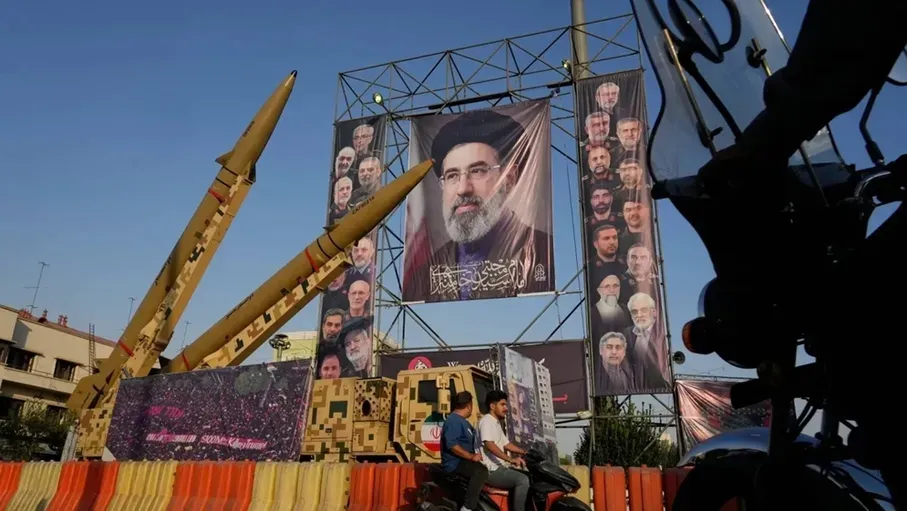

Iran's Military Preparations and Nuclear Facility Fortification
A recent report by the Wall Street Journal reveals that Iran is currently intensifying its military readiness for a possible confrontation with the United States. This includes bolstering defenses around its nuclear facilities and other sensitive sites while also enhancing its missile capabilities as part of a broader strategy to prepare for potential U.S. strikes that might follow the upcoming midterm elections in Congress. Iranian officials have publicly and privately warned that any new U.S. military actions would lead to increased aggression in the Middle East.
According to satellite imagery, Iran has been fortifying sensitive locations, including nuclear sites and border areas, to increase their resilience against attacks. Defensive measures have been strengthened at key sites such as Mount Al-Fas and Natanz through the construction of earthen barriers designed to hinder any ground assaults. Additionally, Iran is reportedly working on rehabilitating its missile and drone production facilities to replenish its military inventory, which has diminished in previous confrontations. Brigadier General Gholam Reza Jalali, head of Iran's emergency plans, announced that airports, ports, and power stations are being prepared for war conditions by equipping shelters and stockpiling essential supplies to ensure the continuity of vital services during crises.
Mobilizing the Domestic Front
Furthermore, the Wall Street Journal report indicates that the Iranian government is actively preparing its population for the possibility of a new war. This includes organizing pro-government rallies and conducting training sessions for civilians on the use of firearms and shoulder-fired anti-aircraft missiles. The Islamic Revolutionary Guard Corps has begun training its first female units in guerrilla warfare tactics and the use of firearms and drones. In a move that illustrates the extent of this mobilization reaching younger demographics, a unit from the Guard reportedly visited a kindergarten in Sabzevar, northeastern Iran, to share stories about past confrontations with children and displayed an American Tomahawk missile that they claimed to have neutralized.
In contrast, the United States is enhancing its military presence in the region, with a third group of aircraft carriers and an additional Marine reconnaissance unit heading to the Middle East. The Pentagon is also considering sending more air defense systems and munitions to its regional bases. President Donald Trump had previously ruled out launching any attacks before the midterm elections scheduled for November, yet he has publicly discussed the possibility of targeting Iran's nuclear facility at Mount Al-Fas, while U.S. officials confirm that the military is preparing multiple options for potential new strikes.
Concerns within the U.S. also extend to the risk of attacks on naval vessels and aircraft, particularly after Iranian missiles came alarmingly close to U.S. ships during attacks in September. Last week, the Pentagon relocated 12 B-1 bombers from a British military base amid fears of a drone strike planned by the Iranian Revolutionary Guard. The report highlights that Iran possesses limited capabilities to defend against advanced U.S. aerial assaults or high-altitude bombers, prompting its attempts to deter such strikes through threats of widening the scope of confrontation.
Moreover, this hostile rhetoric serves to distract from internal crises and the escalating economic hardships faced by the Iranian populace, exacerbated by tightened U.S. sanctions and pressure on airlines to avoid flights to Iran, effectively tightening the blockade on the country. According to Sanam Vakil, head of the Middle East program at Chatham House in London, the current state of war readiness aligns with Iran's interests as it finds itself at a diplomatic, economic, and political stalemate. Through a new conflict, Tehran might find a way to extricate itself from the quagmire it has created.
As reported by alghad.com.