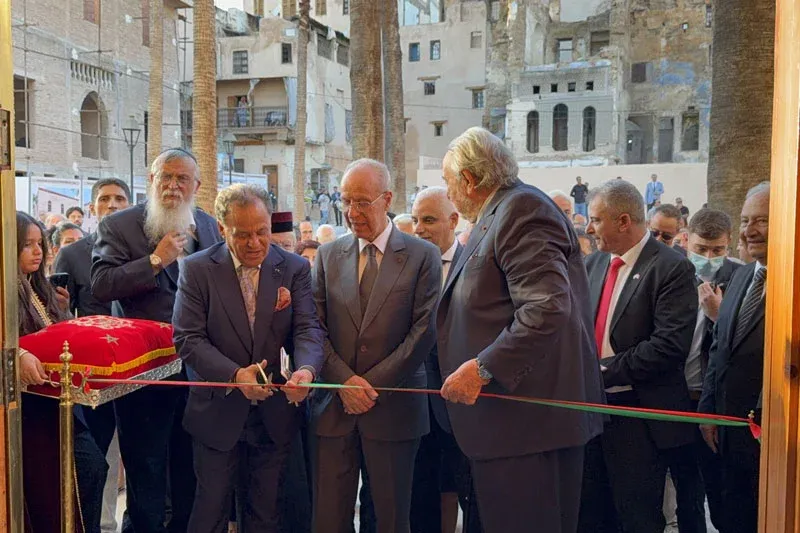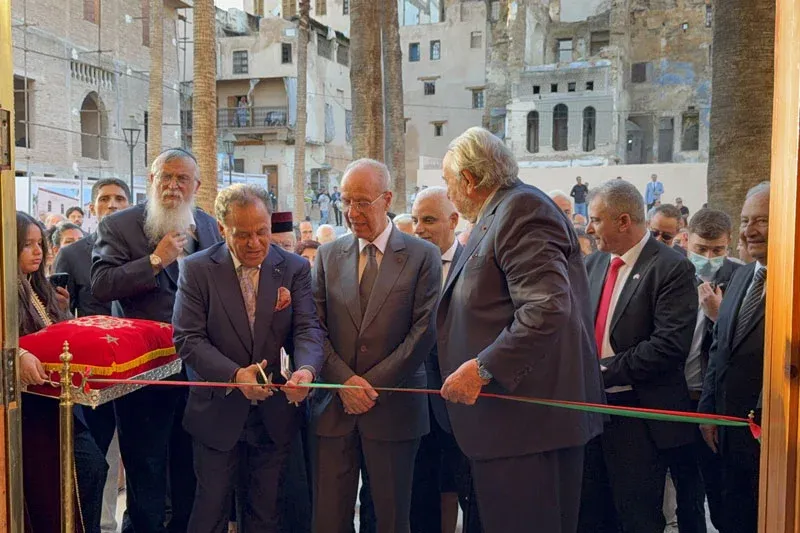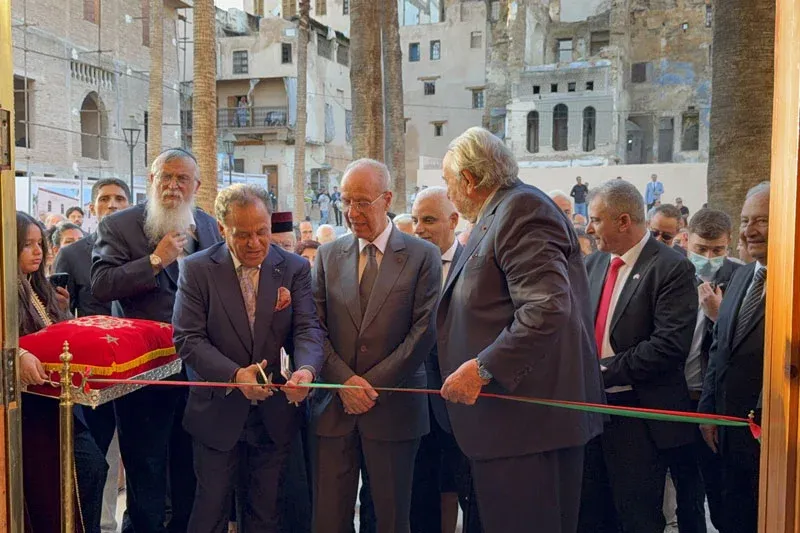

In the heart of Old Fez, two museums stand side by side, narrating the rich tapestry of Moroccan life: the "Batha Museum of Islamic Arts" and the newly inaugurated "Moroccan Jewish Culture Museum in Fez." This latter museum opened its doors on the evening of October 11, 2023, following the earlier launch of its counterpart, and has been described by Serge Berdugo, the Secretary-General of the Moroccan Jewish Communities, as "the twin museums." The establishment of the first museum dedicated to Jewish Moroccan culture dates back to 1997, marking its significance as the first of its kind in a predominantly Muslim country, continuing to welcome visitors in the city of Casablanca.
Official Opening Ceremony
The inauguration ceremony witnessed the presence of prominent figures from the Moroccan Jewish community, including the Secretary-General of their council, alongside local officials, the governor of the Fez-Meknes region, and representatives from the National Museum Foundation, which oversees museum affairs in the country. The Minister of Awqaf and Islamic Affairs, who was tasked by the King to attend the opening, also made an appearance. He noted that Fez itself is a "museum in its entirety," emphasizing that the newly opened museum signifies Morocco's commitment to shared values, even amidst uncertain times. The Moroccan Jewish Culture Museum in Fez preserves a crucial part of Moroccan history, safeguarding the diversity of Moroccan Judaism. This new space specifically focuses on Jewish culture in Fez, highlighting the linguistic and heritage diversity of Moroccan Jews, including those from regions like the High Atlas who spoke exclusively Berber.
Minister Ahmed Toufiq reminded attendees of the historical concern shown by the Alaouite sultans in protecting the "People of the Covenant," explaining that this concept encompasses those under the protection of Islam from all forms of injustice. He provided historical examples of Moroccan sultans who acknowledged that "the oppression of the People of the Covenant is indeed a form of injustice, and their lives and properties must be safeguarded." Serge Berdugo, in his address, stated that "this museum is not merely a memory of a community but a space for knowledge and dialogue that introduces the Moroccan civilization built on diversity." He added that "culture lies at the heart of the societal project of His Majesty King Mohammed VI," emphasizing the museum's role in promoting values of common memory, peace, and diversity. Berdugo described the twin museums, the Batha Museum of Islamic Arts and the Moroccan Jewish Culture Museum, as vital cultural institutions that reflect essential values of Moroccan civilization, which is uniquely rich and diverse.
A Royal Message
Located in the Mellah district of Fez, historically known for housing Jewish Moroccans across the country, the new museum features signage in Arabic, Amazigh, Hebrew, and French, with informative panels presenting its exhibits in Arabic, English, and French. Among the first items to greet visitors are excerpts from letters by King Mohammed VI, including one from March 2009, which emphasizes the duty of memory and outlines the moral, ethical, and political contours of the world to come, advocating for peace based on justice and dignity shared equally among all. Another royal message commemorates the reopening of the "Fassi Prayer House," dating back to the 17th century, following its restoration. This letter commends the initiative and all institutions involved in its preservation as a historical monument, underscoring the richness and diversity of Morocco's spiritual and cultural heritage, which has been intricately woven with the Jewish Moroccan identity over the past three centuries.
The museum does not only feature contemporary messages but also showcases historical documents from various eras, presenting a timeline of sultans' decrees that safeguarded the rights of Moroccan citizens, regardless of their religious affiliations. The Moroccan Jewish Culture Museum in Fez utilizes quotes and documents spanning centuries, including writings from historians and social scientists like Ibn Khaldun, who commented on the presence of Jews among the Berber tribes and their intellectual contributions to Moroccan society.
Beyond written records, the museum exhibits legal documents sourced from the Royal Archives, illustrating the legal life and public affairs of Moroccan Jews, such as a decree from Sultan Moulay Abd Rahman mandating respect for the Sabbath and prohibiting work assignments for Jews on that day. The museum occupies two floors overlooking the Jewish cemetery in Fez, offering a panoramic view of the city, both ancient and modern. It reflects upon the Moroccan constitution's articulation of cultural richness, stating that national unity has been crafted through the integration of all its Arab-Islamic, Amazigh, Sahrawi, African, Andalusian, Hebrew, and Mediterranean components, reiterating that the museum serves not only as a space for exhibitions but as a living testament to Morocco's diverse identity and an invitation to celebrate its rich cultural heritage.
The museum presents tangible evidence of the religious and secular lives of Moroccan Jews, offering insights into legal frameworks, religious practices, communal life, and cultural celebrations. Visitors can explore artifacts such as the Mellah door, grave markers, menorahs, and mezuzahs, as well as religious and legal texts from Moroccan Jews, showcasing a continuity of tradition similar to that of Moroccan Muslims. Notably, historical records document the contributions of 652 rabbis and notable figures, including 25 women.
Additionally, the museum highlights the popular aspects of Jewish Moroccan life beyond formal religious practices, presenting examples of amulets and visual documentation of visits to "Siddiqim," or righteous Jewish saints, in their graves across the kingdom. It offers a detailed exploration of daily religious life, festive celebrations, funerary customs, and their origins and meanings, such as the "Bar Mitzvah" ceremony.
The museum also delves into the educational life of Moroccan Jews, their musical traditions, and the professions associated with the Jewish community in the kingdom. This includes the design of religious artifacts, such as Torah mantles, and items associated with Jewish holidays. Furthermore, it provides insights into challenging periods in communal history alongside times of prosperity. The museum features a temporary exhibition showcasing aspects of the daily religious, educational, and celebratory life of Moroccan Jews, a collaboration with the Museum of Moroccan Jewish Cultural Heritage in Casablanca, overseen by its director, Zhour Rahihil, along with Abdelaziz Idrissi, the director of the new museum.
As reported by hespress.com.