
Strengthening Economic Cooperation in the Euro-Mediterranean and Gulf Regions
His Excellency Mr. Ahmad bin Salman Al-Musallam, the Speaker of the Council of Representatives and Chairman of the Executive Committee of the Parliamentary Division of the Kingdom of Bahrain, has emphasized that the wise foreign policy of Bahrain, under the leadership of His Majesty King Hamad bin Isa Al Khalifa and supported by His Royal Highness Prince Salman bin Hamad Al Khalifa, the Crown Prince and Prime Minister, is grounded in the firm belief that sustainable security and peace cannot be achieved through isolation but rather through constructive collaboration and effective partnerships. He pointed out Bahrain's commitment to enhancing its bilateral and multilateral relationships with Mediterranean and European countries, which contributes to establishing stability, supporting development, and promoting common interests. Mr. Al-Musallam highlighted that Bahrain, an island nation located at the heart of the Arabian Gulf, fully comprehends that maritime security is economic security, and freedom of navigation is a lifeline for the entire world.
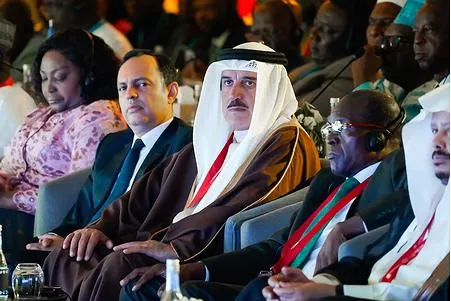
This assertion was made during Mr. Al-Musallam's speech at the high-level opening session today (Friday) of the fourth session of the Economic Parliamentary Forum for the Euro-Mediterranean and Gulf regions, which is held under the patronage of His Majesty King Mohammed VI of the Kingdom of Morocco, organized by the Mediterranean Parliament and the House of Councillors of Morocco, in partnership with the Parliamentary Network of the World Bank and the International Monetary Fund, from June 19-20, 2026, in the city of Marrakech, Morocco.
In his speech, he articulated that the interdependent relationship between economics and politics is one of the key pillars upon which nations base their strategies, manage their affairs, and achieve their national interests. He added: "We gather today in this important economic forum to anticipate major economic transformations, diagnose regional challenges, identify strategic opportunities, and emphasize the need to strengthen the foundations of regional cooperation, as the push towards achieving a Euro-Mediterranean and Gulf framework opens up more opportunities for economic integration among our countries and peoples."
The Importance of Maritime Security for Economic Growth
Mr. Al-Musallam noted that the security and prosperity of the Mediterranean Sea, along with the stability of the Strait of Hormuz, are essential pillars for achieving the desired economic growth at a time when interests intersect and challenges complicate. He elaborated that parliaments represent one of the most critical foundations for dialogue and international cooperation, as they play a pivotal role in coordinating positions, reconciling viewpoints, and enhancing mutual understanding regarding the issues and challenges facing nations and peoples. In a world where economic and security challenges transcend geographic boundaries, the importance of joint parliamentary work emerges as an effective tool for translating the aspirations of people into legislation and policies that contribute to consolidating security and stability while supporting sustainable development pathways.
He called for deepening economic cooperation among the Euro-Mediterranean and Gulf countries, deeming it a necessity to confront common challenges and enhance growth and prosperity opportunities. He emphasized the need for joint projects in renewable energy, linking electricity networks, securing maritime corridors, and protecting vital infrastructure, asserting that economic power is the true guarantee of political sovereignty. Discussions about Mediterranean security and global economics must address the imminent dangers facing the Strait of Hormuz in the Arabian Gulf.
Mr. Al-Musallam observed that the significance of economic cooperation is heightened amid current global developments, particularly since the Mediterranean is one of the world's most vital economic arteries, accounting for over 30% of global maritime trade. Additionally, the Strait of Hormuz is a strategically crucial passageway through which more than 20% of global oil and gas supplies transit, currently facing direct threats from Iran, which has been closing the strait and disrupting navigation in a flagrant challenge to international law.
In this context, he affirmed that the rapid developments occurring in the region, especially due to aggressive Iranian actions, necessitate a reevaluation of security regarding supply chains and energy routes. Attacks on oil tankers, threats to maritime passages, and attempts to destabilize the Arabian Gulf are not merely regional issues but represent a direct threat to global economic security, increasing insurance costs and creating fluctuations in energy markets that adversely affect citizens in Europe and North Africa.
Mr. Al-Musallam urged the Parliamentary Assembly of the Mediterranean to issue a clear and explicit statement condemning Iran's aggressive actions against international navigation security and rejecting any attempts to blackmail the world by closing the Strait of Hormuz. He stressed that maritime security is a collective responsibility, and those who threaten Hormuz today may threaten other international straits and maritime passages tomorrow.
He clarified that the Kingdom of Bahrain welcomed the announcement of a memorandum of understanding between the United States and Iran that includes a framework for negotiation and a ceasefire, viewing it as an essential step towards de-escalation and building trust, ultimately leading to a comprehensive agreement that contributes to establishing security, stability, and lasting peace in the Middle East and enhancing international peace and security.
Mr. Al-Musallam reaffirmed Bahrain's position advocating for Iran to fulfill its international obligations in accordance with international law and good neighborliness principles, and compliance with Security Council Resolution No. (2817), which has been endorsed by 136 countries, as well as the Human Rights Council Resolution No. (38), adopted by consensus. This would ensure freedom of navigation in the Strait of Hormuz and all international waterways, prevent the imposition of fees, and cease support for armed proxies and militias, along with ending destabilizing activities.
On another note, Mr. Al-Musallam reiterated Bahrain's unwavering stance in supporting the rights of the Palestinian people to establish their independent state with East Jerusalem as its capital, in line with the Arab Peace Initiative and international legitimacy resolutions, for a just, comprehensive, and sustainable peace.
He expressed confidence that the Mediterranean parliaments possess the wisdom and experience necessary to adeptly navigate the ships of our peoples towards safety, calling for this forum to serve as a launching point for a new parliamentary economic charter based on respect for sovereignty, freedom of navigation, and the rejection of all forms of extortion and aggression, stating: "The future of our children, the security of our economies, and the stability of our peoples are a trust in our hands."
In conclusion, Mr. Al-Musallam expressed his sincere gratitude and appreciation to the Kingdom of Morocco for hosting this forum and organizing it at such a distinguished level during this critical time, noting that Morocco's selection to host this meeting embodies the wisdom of His Majesty King Mohammed VI in promoting dialogue between the shores of the Mediterranean and the Arabian Gulf.
As reported by alayam.com.