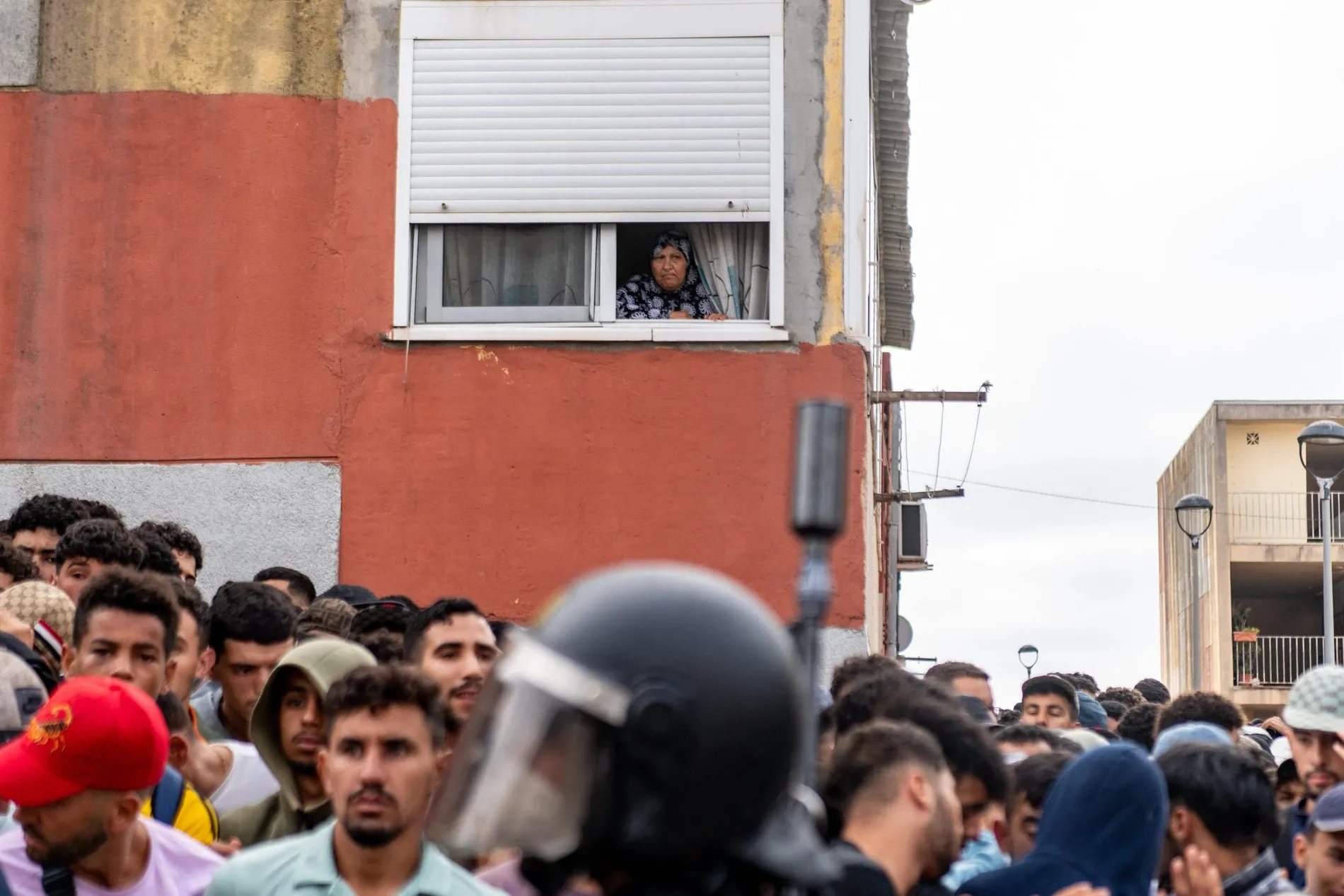

In response to the surge of migrants in Ceuta, Italy has implemented travel controls with Spain, a measure that will continue despite no migrants being recorded entering from the Spanish exclave. Italian Interior Minister Matteo Piantedosi emphasizes that the threat from migrants has not yet subsided, leading to the decision to extend random checks in travel to Spain until at least September 15, as a precaution for national security. This temporary measure was put in place on August 1, right after the arrival of tens of thousands of migrants from Morocco to Ceuta. Piantedosi stated that since thousands of migrants remain in Ceuta, the conditions that prompted the reintroduction of controls on August 1 still persist.
Italian Foreign Minister Antonio Tajani echoed these sentiments, asserting that the extension of travel checks is unrelated to the upcoming elections in Italy, which are set for next year, or any political rivalry between the right-leaning Italian government and the leftist coalition in Madrid. He clarified that the primary focus is on combating terrorism and irregular migration. Italy and Spain do not share a land border, hence the temporary suspension of free movement manifests not on the roads but at Italian ports and airports, where travelers arriving from Spain are subjected to scrutiny.
Theoretically, these checks were meant to be limited to travelers from third countries, identifiable through passenger lists. However, in practice, thousands of Spanish and even Italian citizens were required to present identification upon arrival in Italy, leading to significant delays during peak travel season as flights from Spain were redirected to areas designated for non-Schengen arrivals. The Italian Interior Ministry reported that in August alone, nearly 500,000 individuals traveling by ship and plane from Spain were screened based on passenger lists, with about 180,000 travelers being checked upon their arrival in Italy. Authorities identified 31 individuals lacking the necessary visas or travel documents, preventing their entry; most were from Argentina, Colombia, and Peru. Furthermore, eight Moroccans without a Schengen visa were apprehended, though none were believed to have arrived from Ceuta as Spanish authorities are currently not permitting migrants from the exclave to enter the mainland.
In the wake of Italy's border controls, Spain quickly instituted its own measures, affecting nearly 13,000 air passengers arriving from Italy. Although Madrid has not disclosed the number of rejections, reports indicate that on the first day of controls, ten individuals were denied entry. Spain has also extended its border checks until at least September 22. Prime Minister Giorgia Meloni has made it clear that she will not deviate from her stance in the dispute with Madrid, emphasizing that "defending borders, combating human trafficking, and ensuring effective repatriations will continue to be the government's line of action." Meloni was recently celebrated by thousands at a rally in Bari, marking the longest uninterrupted term of any cabinet since World War II, with her government having held office for exactly 1,413 days since its inauguration on October 22, 2022.
During the 2022 election campaign, Meloni had vowed to take a strong stand against illegal migration, particularly across the central Mediterranean. After an uptick in arrivals reaching over 157,000 in her first year, measures taken by her coalition are expected to significantly reduce numbers in subsequent years, with projections estimating arrivals will drop to around 66,000 next year. This reduction is attributed not only to stricter operational rules for private rescue ships in the central Mediterranean but also to bilateral and European agreements with North African countries like Algeria, Libya, and Tunisia, aiming to curtail boat migration towards Italy. This year, a further decrease of 60 percent in arrivals is anticipated, potentially bringing the total below 30,000.
However, the issue of migration remains far from resolved for Meloni. In June, the 27 EU member states agreed on a Common European Asylum System, which Meloni played a key role in negotiating. Under this agreement, Italy is obliged to accept secondary migrants who have moved from their initial entry point in Italy to other EU countries, with estimates suggesting this could involve up to 80,000 individuals. Currently, Rome is facing 34,500 requests for the repatriation of secondary migrants from Berlin alone, raising the pressure to cease blocking these mandatory returns.
Moreover, the rise of the far-right National Future party led by retired Army General Roberto Vannacci poses additional challenges for Meloni. Vannacci criticizes her perceived leniency towards Brussels, dismisses the obligations of the asylum system, and advocates for a significant remigration from Italy. Recent polls indicate that his party has become the second strongest force within the political right, trailing behind Meloni's Brothers of Italy party but ahead of coalition partners Lega and Forza Italia. To bolster her diminishing profile as a fighter against illegal migration, Meloni has found the conflict with Madrid over the "invasion" of Ceuta to be quite timely. Thus far, however, no migrants have reportedly made their way from Ceuta to Italy.
As reported by faz.net.