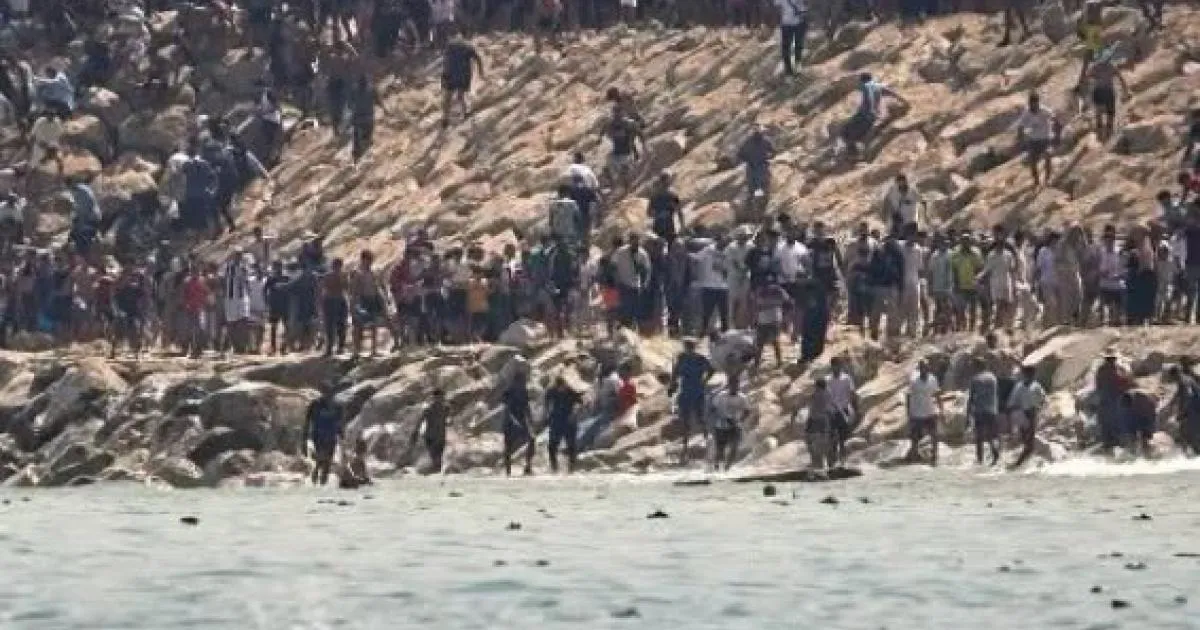

Italy has reiterated its warnings regarding the developments linked to irregular migration in the city of Ceuta, emphasizing that the primary source of risks threatening European border security is fundamentally connected to Morocco. This caution comes in light of concerns about a potential new wave of mass entries of migrants into the city.
Italian Foreign Minister Antonio Tajani stated that Rome continues to tighten surveillance measures along its borders due to fears that irregular migrants, along with individuals who may pose security threats, could reach European territories. In an interview with the Italian newspaper Corriere della Sera, Tajani explained that Italian authorities are closely monitoring the arrival operations, noting that they have already intercepted individuals who were not authorized to enter Italy.
The Italian minister asserted that the core issue related to migration does not stem from European monitoring procedures but rather from the flows coming from Morocco. This was a direct reference to the tense situation in Ceuta, which serves as a primary pressure point on the European Union's external borders. These statements come at a time when European authorities are bracing for the possibility of another mass entry attempt into Ceuta from Moroccan territory, following warnings about potential movements of migrants in the coming days.
Tajani further clarified that Italian authorities will evaluate the extent to which these warnings are based on tangible field data before determining the necessary measures to counter any potential developments. In this context, the Italian Foreign Minister noted that temporary restrictions related to the Schengen area are not an exceptional measure in Europe, reminding that Italy has maintained similar measures concerning its border with Slovenia for over two years, as it represents a crossing point that could serve as an outlet for migrants into Italy and other parts of Europe.
The developments in Ceuta place Morocco at the heart of the European debate surrounding border security and irregular migration, amid fears that the area might turn into a recurrent pressure point on the southern borders of the European Union, especially with the rising warnings regarding attempts of mass crossings into European territories.
As reported by entv.dz.