
An Integrated Model in a Changing Market
JESA's positioning is grounded in a simple yet profound belief: large-scale industrial, energy, and infrastructure projects can no longer be viewed as a series of isolated steps. The decisions made at the outset significantly influence costs, timelines, operational performance, environmental impact, and the long-term value creation of an asset. For clients, an increasing number of stakeholders can lead to complexity, risks, and a loss of coherence in project execution.
To address these challenges, JESA champions an integrated approach. The company engages from the earliest phases of strategic consulting, financial structuring, business planning, and feasibility analysis. It then supports the engineering, design, project delivery, commissioning, and asset management phases. This comprehensive end-to-end service is one of JESA's key differentiators in the region.
The offering is organized around several complementary areas of expertise. Consulting services through digital solutions cover strategy, finance, decarbonization, carbon compliance, data architecture, and artificial intelligence tailored to industrial organizations. Engineering and design encompass the Pre-FEED, FEED, detailed design, BIM, and Digital Twins phases. JESA Technologies, based in Florida, USA, brings specialized expertise in phosphates, fertilizers, and innovative processes. Project delivery adheres to rigorous governance, planning, and control standards, backed by over 300 certified PMP project managers and engineers. Lastly, asset management optimizes maintenance strategies, reliability, and performance of operational assets.
Transformation as a Response to New Industrial Challenges
The year 2025 marks a significant milestone in JESA's journey. The company has initiated a transformation of its operational model to enhance agility, competitiveness, and innovation capacity. This is not merely an organizational adjustment, but a deeper evolution in how it creates value.
After sixteen years of designing and delivering complex projects, JESA is adapting its model to meet a more demanding industrial environment. Clients now expect more flexible solutions, better-controlled costs, secured timelines, faster decision-making, and a stronger integration of sustainability challenges. This transformation aims to empower the company to support both mid-sized projects and multi-billion dollar programs while maintaining the same standards of governance and performance.
The digital dimension is central to this evolution. The J-Control Tower, JESA's proprietary artificial intelligence platform, unifies the project lifecycle and provides decision-makers with real-time predictive insights on costs, timelines, and risks. The company also leverages BIM, Digital Twins, Advanced Work Packaging, and specialized planning and reporting tools. The JX-Lab complements this framework by testing innovative delivery solutions on real projects before broader deployment.
Sector diversification is another cornerstone of this strategy. While JESA retains a historical focus on phosphates and fertilizers, its expertise has now expanded to five key sectors deemed vital for the continent's development: water & environment, energy, mining, buildings & infrastructure, and the fertilizer and processing industry.
JESA's water and environment division claims contributions to major desalination, wastewater treatment, and reuse projects, delivering an accumulated desalination capacity of 300 million cubic meters per year through EPCM (Engineering, Procurement, and Construction Management). This includes the J2K water pipeline, stretching over 200 kilometers from Jorf Lasfar to Khouribga, with a capacity of 80 million cubic meters annually. Another desalination capacity of 260 Mm3/year is under development, along with an additional 160KM distribution network to ensure water supply for the Gantour region.
The company has also delivered national capacity for seawater and brine recycling systems totaling 320 Mm3/year and 54 million cubic meters annually of wastewater treatment capacity, including a transport network connecting the new treatment plant in Marrakech with the industrial platform in Benguérir over more than 80KM.
In the energy sector, JESA focuses on renewable energy production infrastructures (solar, wind), very high voltage stations with GIS or AIS technologies, transport, conventional energy production, and low-carbon transitions such as green hydrogen, green ammonia, and biofuels. The Mines solar program in Benguérir and Khouribga showcases a total of 202 MWp delivered under EPCM, including the Oulad Farès plant, which at 105 MWp is one of the largest industrial photovoltaic installations in Morocco. These projects exemplify how engineering contributes to the gradual decarbonization of heavy industries while enhancing the energy competitiveness of client sites.
In mining, fertilizers, and chemicals, JESA leverages its historical expertise. The company reports contributions through EPCM and PMC (Project Management Consultant) missions to a cumulative fertilizer production capacity of over 10 million tons annually. Through JESA Technologies, it emphasizes over 50 years of global experience in phosphate and fertilizer engineering, providing advanced process solutions to major players in the phosphate industry worldwide.
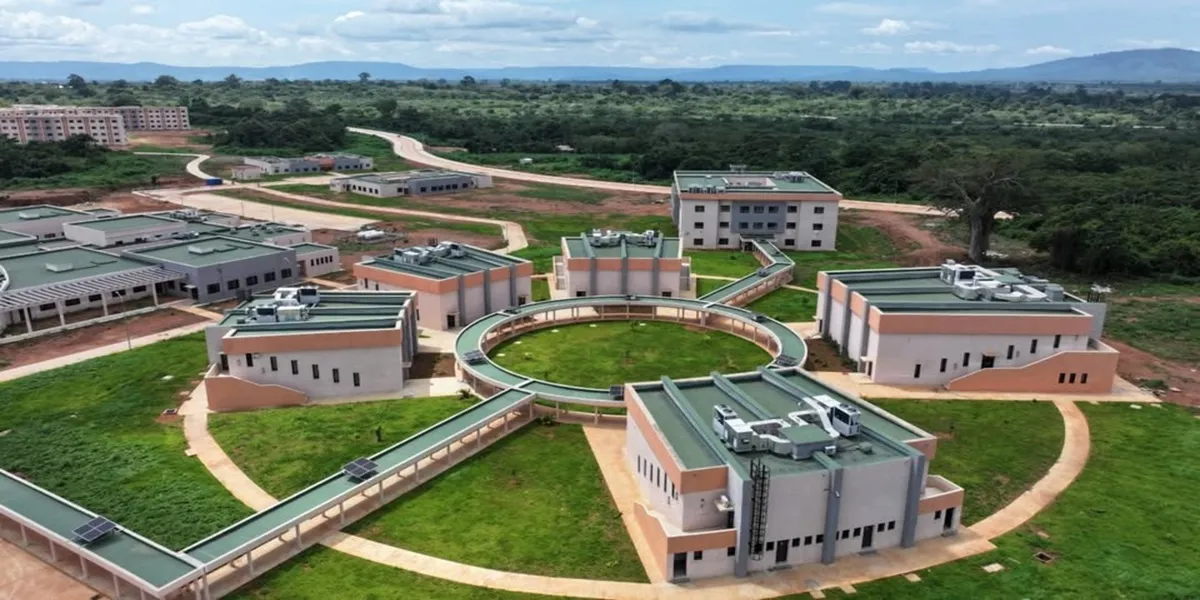
The buildings and infrastructure sector further broadens the company's scope of action. JESA highlights the Mohammed VI university complexes delivered under PMC, port and maritime infrastructure projects, logistics platforms, art structures, and complex healthcare and educational infrastructures. In Ivory Coast, the company has also contributed to sports and urban infrastructure, including the Olympic City CAN project in AnyamaEbimpé.
For JESA, the challenge extends beyond engineering. The company aims to create a broader impact on the industrial ecosystem through significant local integration, with 70% of partners and subcontractors being Moroccan. Asset management reflects this commitment with 99% local workforce and 88% local sourcing on managed assets. These figures allow JESA to position every project as a lever for skill development, industry structuring, and local value creation.
The human capital is one of the strongest pillars of this positioning. JESA employs over 4,000 staff, 98% of whom are Moroccan. Through the JESA Institute, the company reports having provided over 115,000 hours of training to more than 10,000 professionals across over 150 organizations in Morocco and Africa. It also integrates around 100 young engineers each year through its Fresh Graduates Programs, aiming to train them in complex project environments right after graduation.
Safety is a crucial aspect of this approach. The NEFS philosophy, which stands for No Exception for Safety, is a culture applied throughout JESA's ecosystem, encompassing employees, partners, suppliers, and subcontractors. In 2026, the company plans to launch the JESA HSE Academy, offering certified training paths tailored to the realities of African construction sites.
JESA's continental ambition is driven by Moroccan expertise. In an African market where investment needs are immense, the ability to design projects is no longer sufficient. Countries, industries, and infrastructure operators seek partners who can secure decisions, manage risks, meet deadlines, and optimize long-term asset performance. JESA aims to meet this demand with an integrated model backed by digital tools, broad sector expertise, and a primarily Moroccan skill base.
Thus, its continental ambition is fueled by a dual movement. It first relies on Morocco, where the company has developed a foundation of expertise in the most demanding industrial sectors. It then projects itself towards Africa, particularly West Africa, where its interventions span energy, sanitation, mining infrastructure, road, educational, and urban projects.
Through this trajectory, JESA illustrates a broader evolution of the Moroccan economy—one where the country no longer merely hosts industrial projects but develops its own capabilities in engineering, management, and complex project oversight. In this regard, the company embodies a rise in sophistication, not just selling technical know-how but offering the ability to transform projects into high-performing, sustainable assets tailored to the continent's realities.
For JESA, the next step will be less about the sheer size of projects and more about the depth of its role. Being present from the investment decision through to execution and then supporting the operation and performance of assets is the continuity that today underpins its positioning. This represents a Moroccan engineering paradigm structured to international standards, addressing Africa's significant industrial challenges.
As reported by leseco.ma.