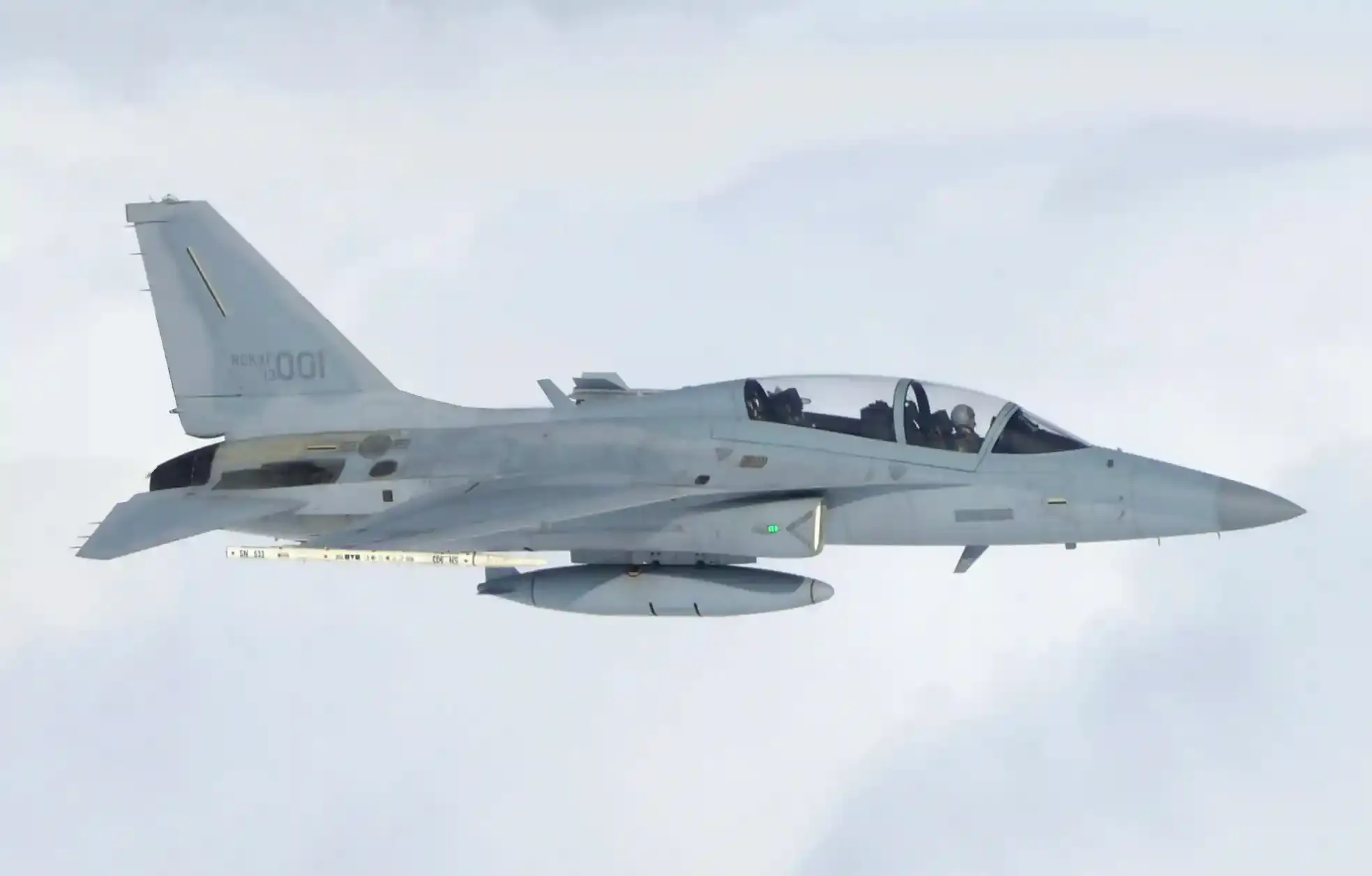

KAI's Groundbreaking Presence at the Marrakech Airshow
On September 3, 2026, the Arab Defense site reported a significant development in the realm of defense companies participating in the Marrakech International Airshow. South Korea's Aerospace Industries (KAI) has announced its debut at the event, where it will showcase its aircraft in Morocco, marking the first time a South Korean defense company has reached this level of engagement in the kingdom. This participation holds particular importance, given previous reports suggesting Morocco's interest in acquiring the FA-50 light fighter jets produced by KAI. The FA-50 is viewed as a viable option for modernizing Morocco's fleet of advanced training aircraft, with the potential for multi-role combat capabilities as well.
Potential Implications for Moroccan Defense
KAI's inaugural appearance at the Marrakech Airshow coincides with increasing indications of potential negotiations or collaboration between the company and Morocco. While participation in a defense exhibition does not guarantee a confirmed arms contract, the timing raises questions about the possibility of announcing a new deal during the exhibition or shortly thereafter. The Marrakech International Airshow is characterized by the presence of numerous companies that have established industrial or defense relationships with Morocco, whether through previous arms deals, new contracts, or industrial and defense cooperation projects. Thus, KAI's participation may reflect a significant evolution in defense relations between the South Korean firm and Morocco.
If Morocco indeed moves forward with the acquisition of the FA-50, the aircraft would offer combat capabilities that extend beyond the concept of an advanced training plane. Designed as a lightweight multi-role platform, the FA-50 can perform air combat, ground attack, and anti-ship missions, in addition to advanced training functions. The significance of this aircraft for Morocco lies in its potential future use in the gradual replacement of older aircraft, including Mirage F1 and F-5 models, while leveraging a substantial portion of the existing armament system already in the inventory of the Royal Moroccan Air Force.
The FA-50 boasts a maximum speed of approximately 1,700 kilometers per hour, with a payload capacity of around 5,400 kilograms, which grants it relatively significant capabilities for a light and compact fighter. Depending on its configurations, the aircraft can employ a wide array of weapons, including AIM-120 AMRAAM air-to-air missiles for beyond-visual-range combat, AIM-9 Sidewinder missiles, as well as various types of precision-guided munitions and bombs used in ground attack and maritime strike roles.
Notably, modern variants of the FA-50 are equipped with an advanced radar developed by Raytheon, an American company, offering enhanced target detection, tracking capabilities, and resistance to electronic warfare and jamming. Raytheon has a prominent position in the fighter aircraft radar market, with its products associated with major American fighter programs such as the F-35, F-22, F-15, and F-16, including Morocco's new F-16 fighters. This grants the FA-50 the ability to operate in more complex combat environments compared to traditional training aircraft, especially when integrated with modern air-to-air missiles and precision strike systems.
Furthermore, an additional advantage for Morocco is the FA-50's adaptability to utilize existing munitions in its arsenal, which could minimize the need for establishing an entirely separate armament system for the new aircraft. Depending on the armament and integration configurations adopted, the FA-50 can carry weapons compatible with the current Moroccan fighter fleet, including MICA missiles associated with the Mirage F1 fleet, along with Sidewinder missiles and JDAM family guided bombs among other aerial munitions.
Should the move towards the FA-50 be confirmed, it would allow Morocco to retain some previous investments in munitions and logistical support, rather than completely discarding them as older aircraft are phased out. When making a direct comparison between the FA-50 and the older aircraft currently in Moroccan service, one must consider the substantial differences in design generations and the technologies employed, and thus numerical comparisons alone do not fully reflect the differences in capabilities.
In terms of speed, the FA-50 is comparable to some older aircraft, reaching a maximum speed of around 1,700 kilometers per hour; however, the most significant disparity lies in its payload capacity, which reaches approximately 5,400 kilograms, in contrast to the roughly 3,200 kilograms of the F-5. Additionally, in terms of cockpit design, avionics, radar, electronic warfare capabilities, situational awareness, and operational reliability, the FA-50 represents a major technological leap compared to aircraft designed from older generations.
Consequently, KAI's participation in the Marrakech International Airshow is of particular significance, not only as the company's first presence of this nature in Morocco but also in light of previous reports regarding Rabat's interest in the FA-50 fighter jets. The most pressing question remains whether KAI's involvement will be limited to showcasing its products and aircraft or if it will coincide with the announcement of a new agreement or deal with Morocco, potentially making the Marrakech Airshow a pivotal platform for announcing a new phase in Moroccan-South Korean defense cooperation.
As reported by defense-arabic.com.